Greek banks and the wider Athens market are back under technical pressure after a second straight decline, with traders now focused on whether the sector can hold near-term support levels or extend the pullback into a broader correction.
Greek banks slip below key support levels

The General Index closed at 2,582.10, down 0.83%, while the FTSE 25 fell 0.97% to 6,602.94. The banking index lost 1.73% to 2,977.13, leaving it just above first support at 2,972 and vulnerable to a slide toward 2,950-2,960 if selling persists. Resistance sits at 3,000-3,030, and technicians say a move back above that zone would be needed to restore the short-term setup.
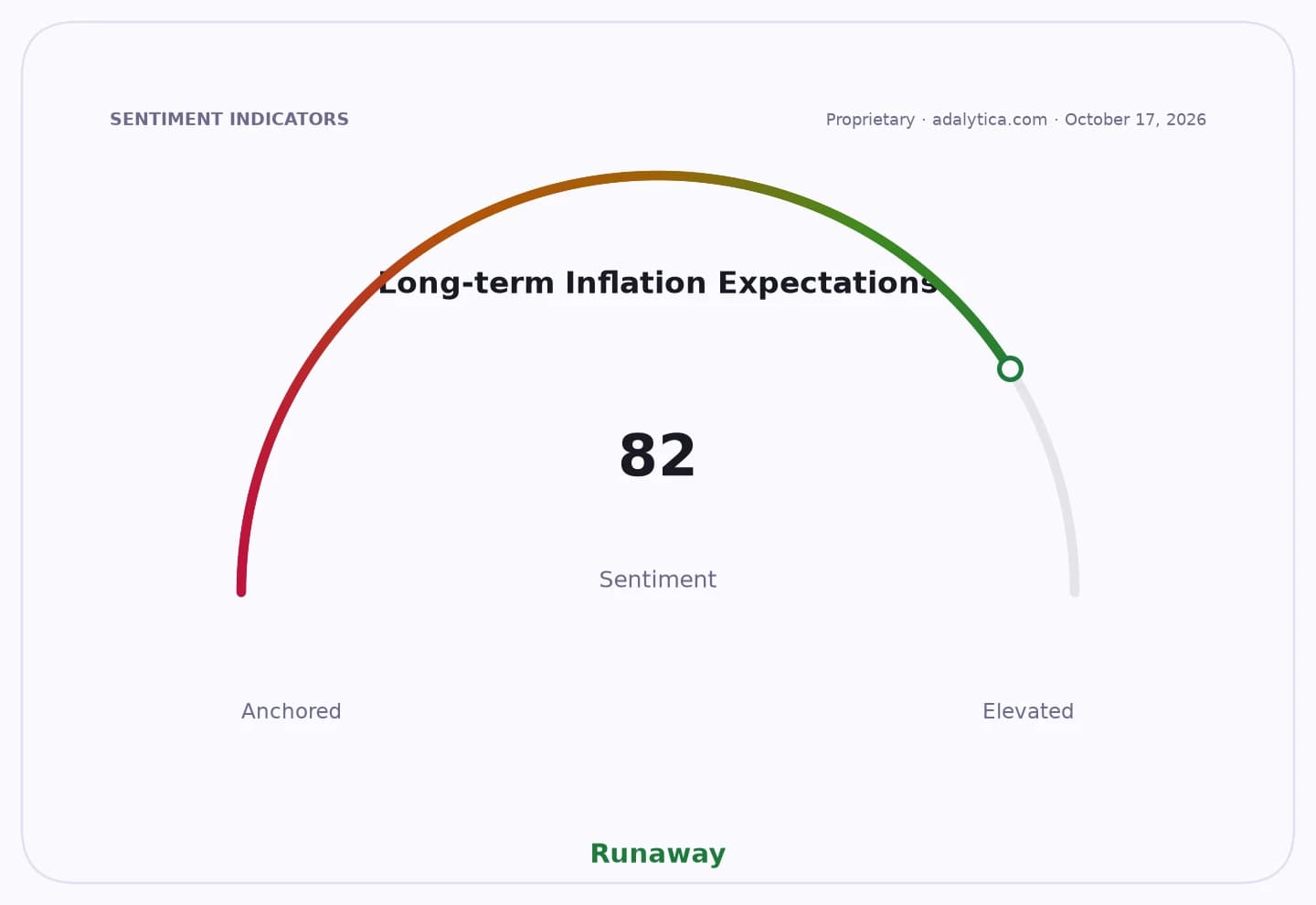
Sentiment IndicatorsⓘProprietary · adalytica.com · October 18, 2026
This is a snapshot — live sentiment, awareness and momentum for 130+ markets update continuously in the dashboard.Open AlphaPulse

The tone matters because banks have been the market’s main engine during recent advances, and they are often the first place investors look when broader risk appetite weakens. Heavy turnover on the downside is adding to caution, suggesting sellers are still in control and that any rebound will need broader participation, not just a bounce in a handful of names.
The four systemic lenders all finished lower and remain below their 60-day moving averages, a sign that the recent setback is not just a one-day pause. National Bank of Greece fell 2.05% to 16.045 euros, Alpha Bank dropped 1.76% to 4.190 euros, Piraeus Bank lost 1.61% to 9.514 euros and Eurobank slipped 1.41% to 4.392 euros. In technical terms, the market is watching whether each stock can defend first support zones, with the next levels lower close enough to matter if momentum worsens.

That backdrop comes as investors are also reassessing the global rates story. In the U.S., Wall Street recovered from earlier losses as Treasury yields eased, but producer prices rose 6.3% year on year in September, keeping inflation and funding costs in focus. The 10-year Treasury yield was seen around 5.10% and the 2-year near 4.77%, a reminder that bank valuations remain sensitive to the path of rates, funding costs and credit demand.
For European and Greek bank investors, the key issue is not just whether rates stay high, but whether earnings resilience can offset slower markets and more selective positioning. A sustained break below support on the bank index would likely invite more de-risking, especially with month-end derivatives expiry set to amplify intraday swings. By contrast, a hold above 2,972 and a recovery through 3,000-3,030 could signal that the retreat is still a consolidation rather than the start of a deeper unwinding.
| Entity | Gains | Losses |
|---|---|---|
| Bank bears | ▲Lower prices | ▼Banking sector momentum |
| Greek bank longs | ▲A confirmed rebound | ▼Near-term upside conviction |
| Greek market bulls | ▲A hold above support | ▼Confidence in the rally |
| Short-term traders | ▲Volatility around expiry | ▼Clear directional trend |