Two major H&R REIT shareholders are lining up to vote against the trust’s planned $4.8 billion breakup, raising the risk the deal gets slowed, revised or rejected just as management tries to monetize a shrinking portfolio at a modest premium.
H&R REIT shareholders oppose $4.8B breakup vote
RBC Global Asset Management, which holds 9.3 million H&R units, has said it will oppose the transaction, and Mill Pond Capital, with 2.2 million units, has also come out against it. The pushback matters because the breakup requires shareholder approval at a special meeting on Nov. 13, and the dissent from two sizeable holders makes the outcome less certain.
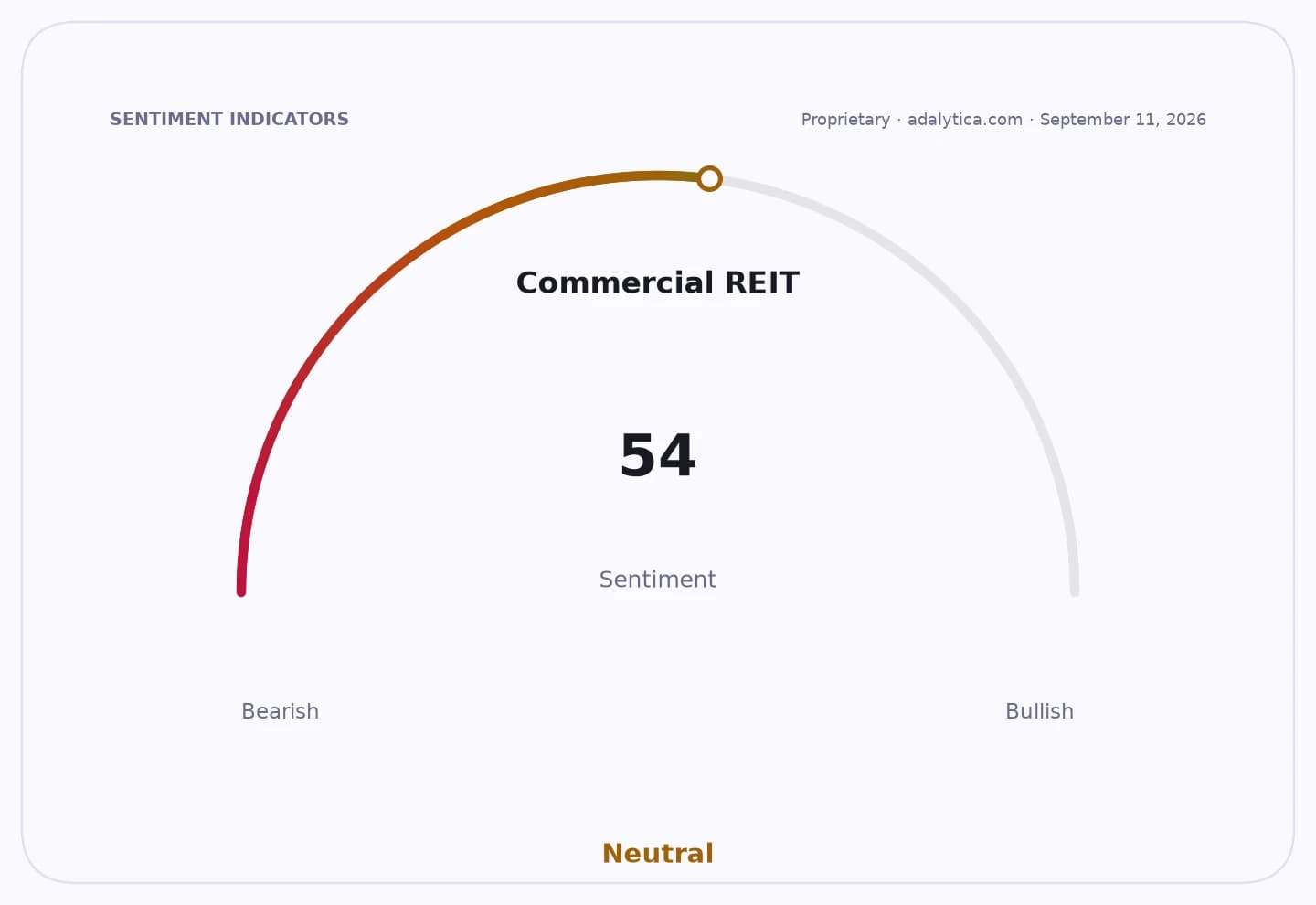
Sentiment IndicatorsⓘProprietary · adalytica.com · October 13, 2026
This is a snapshot — live sentiment, awareness and momentum for 130+ markets update continuously in the dashboard.Open AlphaPulse
The resistance also puts a spotlight on governance and valuation concerns around one of Canada’s more visible REIT restructurings. Mill Pond said in a five-point letter that the proposed structure appeared to benefit CEO Tom Hofstedter at shareholders’ expense, a charge that could resonate with other investors weighing whether the 14.5% premium to H&R’s June 10 price is enough compensation for handing over a multi-asset portfolio in pieces.
H&R’s board agreed in August to sell off the trust’s portfolio to buyers including Blackstone Real Estate, PSP Investments, Crestpoint Real Estate Investments, GO Residential REIT and an entity tied to Hofstedter’s family. The deal would effectively unwind a long-running repositioning strategy that has already reduced the trust to 107 assets from 365 a year earlier, with H&R saying its remaining 20.5 million square feet of property carries a fair-market value of about $6.5 billion versus a public market capitalization of roughly $1.8 billion.
For investors, the dispute is about more than one vote. If the breakup is blocked, H&R may have to continue selling assets piecemeal into a weak commercial property market, potentially delaying value realization and keeping the discount to net asset value in place. If it passes, shareholders get the premium and a faster exit, while buyers — especially Blackstone and the other co-purchasers — lock in a platform of industrial, residential and office assets.
The timing is also sensitive for the broader REIT sector, where sentiment has been uneven and investors remain selective on complex property restructurings. H&R shares last changed hands at C$6.84 on Oct. 13, below the implied deal value, while technical readings showed the stock trading under its 50-day and 200-day moving averages, a sign the market is still treating the transaction as far from done.
The key catalyst now is the Nov. 13 meeting. Until then, the fight will likely center on whether management can win over enough institutional holders to secure approval or whether the opposition from RBC and Mill Pond becomes the foundation for a broader blockade.
| Entity | Gains | Losses |
|---|---|---|
| H&R REIT management | ▲Deal certainty, portfolio exit | ▼Control, if vote fails |
| RBC Global Asset Management / Mill Pond | ▲Higher leverage in vote | ▼Potential deal premium |
| H&R unitholders supportive of deal | ▲14.5% premium, cash exit | ▼Upside if assets rerate higher |
| Blackstone / co-buyers | ▲Access to discounted real estate | ▼If breakup is blocked |