Hawaii’s economy is losing momentum just as higher prices and shorter visitor stays begin to bite into the state’s most important engine, tourism.
Hawaii Economy Growth Slows as Tourism Softens

The state Department of Business, Economic Development and Tourism now expects growth to slow to 1.3% this year from 2.5% in 2025, with only a modest pickup to 1.6% in 2027 before edging higher over the following two years. For investors, that’s the key message: Hawaii is still expanding, but the pace is no longer strong enough to offset pressure on consumer spending, construction and travel-related businesses.
Sentiment IndicatorsⓘProprietary · adalytica.com · September 22, 2026
This is a snapshot — live sentiment, awareness and momentum for 130+ markets update continuously in the dashboard.Open AlphaPulse
The forecast reflects a mixed picture underneath the headline slowdown. Employment, wages and tax revenues are still rising, but the state said government contracts awarded and private building permits are falling. That matters because construction has been one of the few bright spots in the local economy, and a pullback in permits often precedes softer activity in housing, commercial projects and related suppliers.
The damage is most visible in building approvals, which dropped in all four major counties in the second quarter. Honolulu saw permit value plunge $368.6 million, or 32%, from a year earlier, while Hawaii, Maui and Kauai counties also posted double-digit declines. That is a warning sign for contractors, materials companies and local developers that the post-rebound surge is fading.
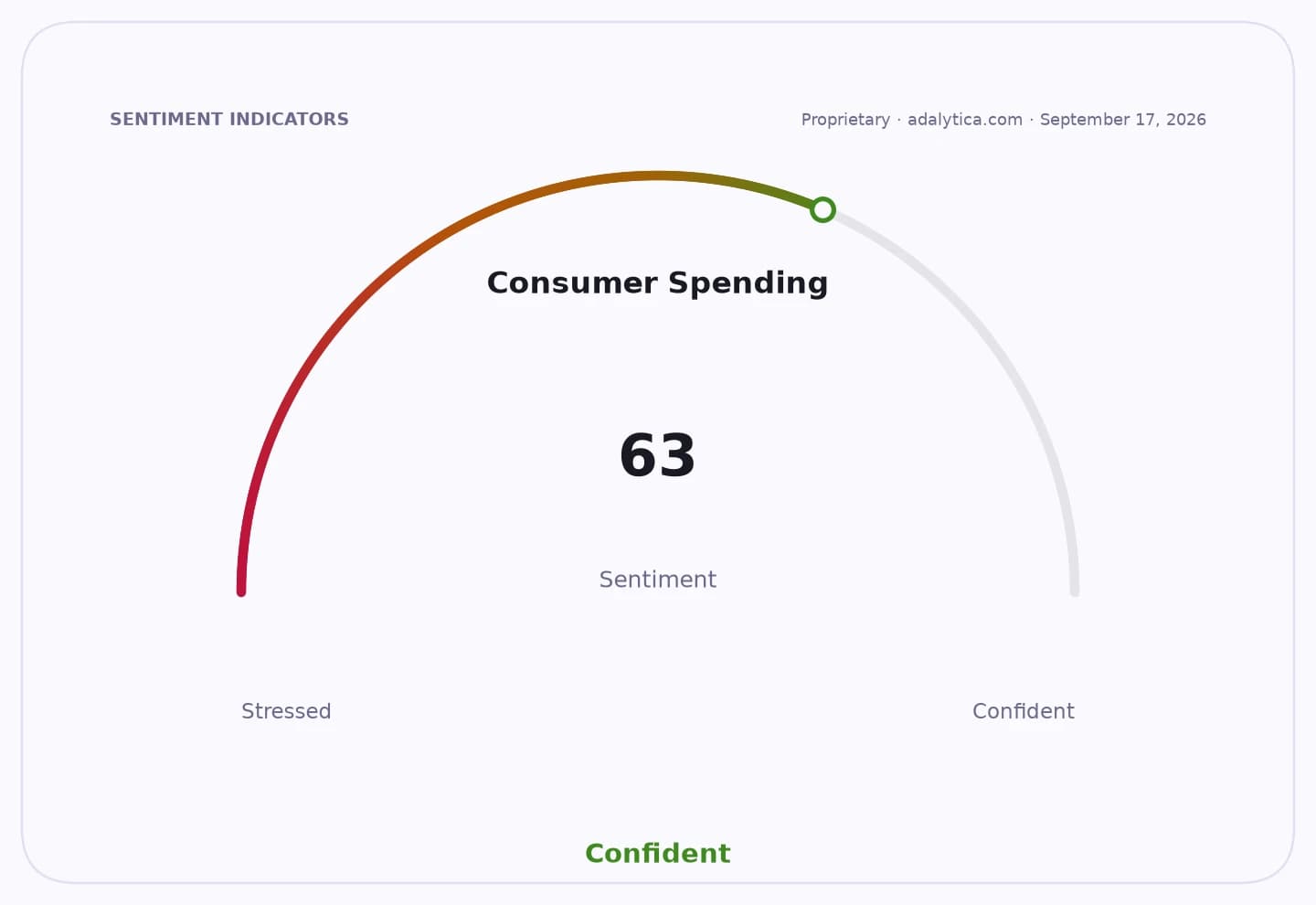
Consumer Spending — 30-day sentimentadalytica.com
Explore this data interactively — full history, time series and cross-market comparisons.Open AlphaPulse
Tourism remains the deciding factor. Hawaii expects 9.7 million visitors this year, up just 0.9%, but the number of days those travelers spend in the islands is forecast to fall 4.5%. That would pull visitor spending down to $22.4 billion, a 2.3% decline. In a state where hotels, airlines, restaurants and retailers depend on length of stay as much as arrivals, fewer days can matter more than a small rise in headcount.
There are still pockets of strength. Construction added 1,300 jobs through July, up 3.3% from a year earlier, while healthcare and social assistance added 2,100 jobs, up 2.8%. Domestic tourism has also held up better than international travel, with East Coast arrivals and spending rising sharply. But those gains are being offset by weak foreign demand, especially from Japan, Canada, Korea and Oceania, all of which are expected to see double-digit declines in the September-to-November period.
Inflation is making the slowdown harder to absorb. The Urban Hawaii Consumer Price Index was up 5.6% in July from a year earlier, with energy prices jumping 22.5%. That squeezes household budgets, raises operating costs for businesses and can weigh on discretionary travel spending — especially when mainland travelers are also facing higher interest rates and fuel volatility.
For investors, the story is less about a recession than a narrow, uneven expansion. Hawaii is still growing, but the mix is shifting away from easy tourism gains and toward a more fragile economy where spending, construction and job growth need to do more work. That makes hotel operators, airlines and local retailers more dependent on pricing power and long-term demand trends, while companies tied to building and infrastructure may face a softer pipeline in the near term. The state’s 2027 and 2028 forecast suggests stabilization, but the next year looks like one for patience, not optimism.
| Entity | Gains | Losses |
|---|---|---|
| Hawaii construction firms | ▲steady job gains | ▼falling permit pipeline |
| Hawaii hotels and retailers | ▲higher daily spend | ▼shorter visitor stays |
| Airlines serving Hawaii | ▲resilient arrivals | ▼weaker international demand |
| Consumers and local businesses | ▲some employment growth | ▼higher inflation and energy costs |