US retail sales rose a better-than-expected 1.2% in August, offering a fresh sign that household spending is still carrying the economy after a July pullback.
US Retail Sales Rose 1.2% in August
The rebound matters because consumer demand drives roughly two-thirds of US economic activity, and a bounce after one weak month suggests the spending slump is not yet turning into a broader retrenchment. The data also comes as unemployment sits at 4.1%, a level that still points to a relatively resilient labor market.
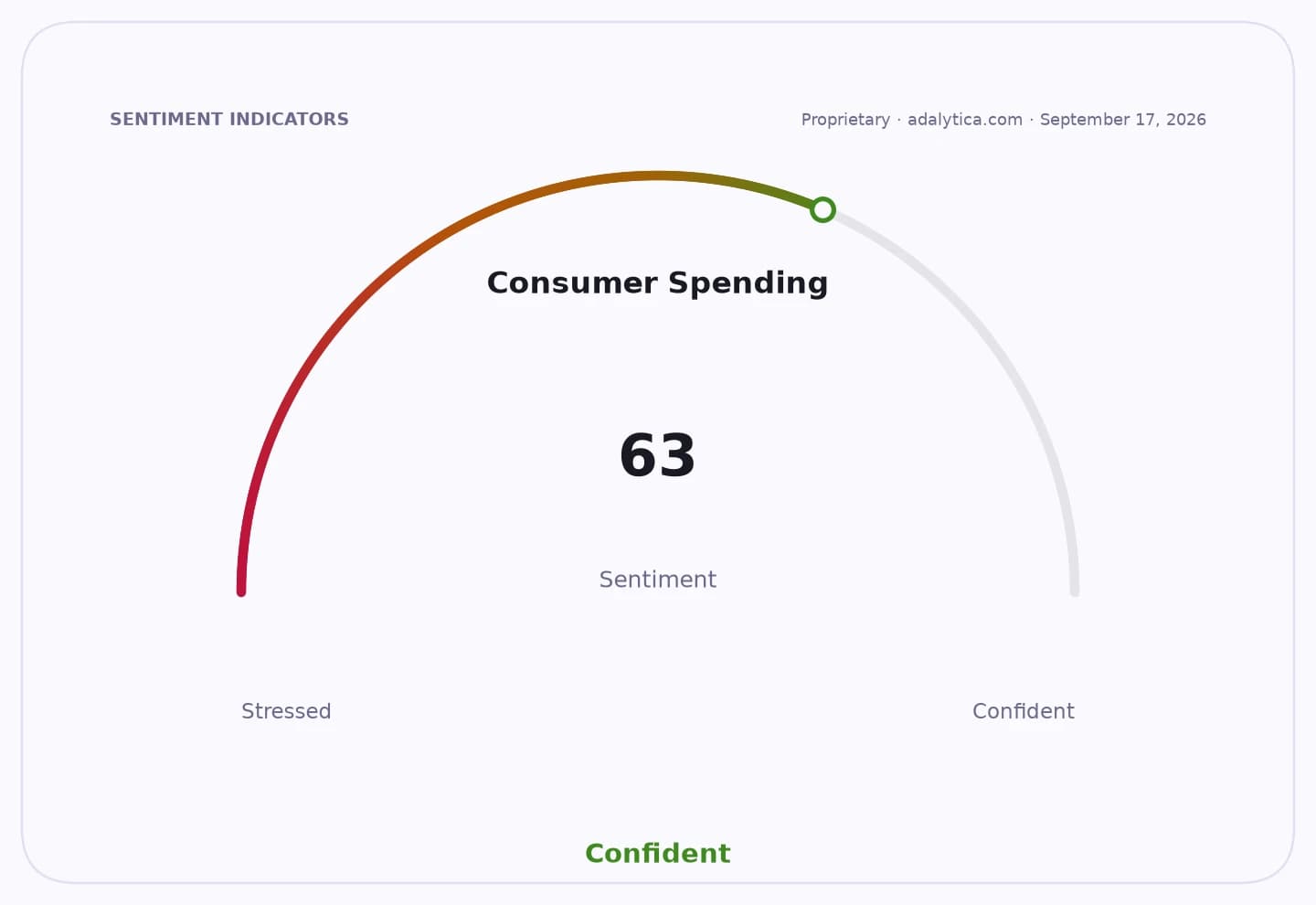
Sentiment IndicatorsⓘProprietary · adalytica.com · September 17, 2026
This is a snapshot — live sentiment, awareness and momentum for 130+ markets update continuously in the dashboard.Open AlphaPulse
For investors, the report is another check on the outlook for growth, rates and consumer stocks. A stronger-than-expected spending print can support expectations for steadier GDP growth, but it can also complicate the path for Federal Reserve easing if demand remains firm and inflation proves sticky.
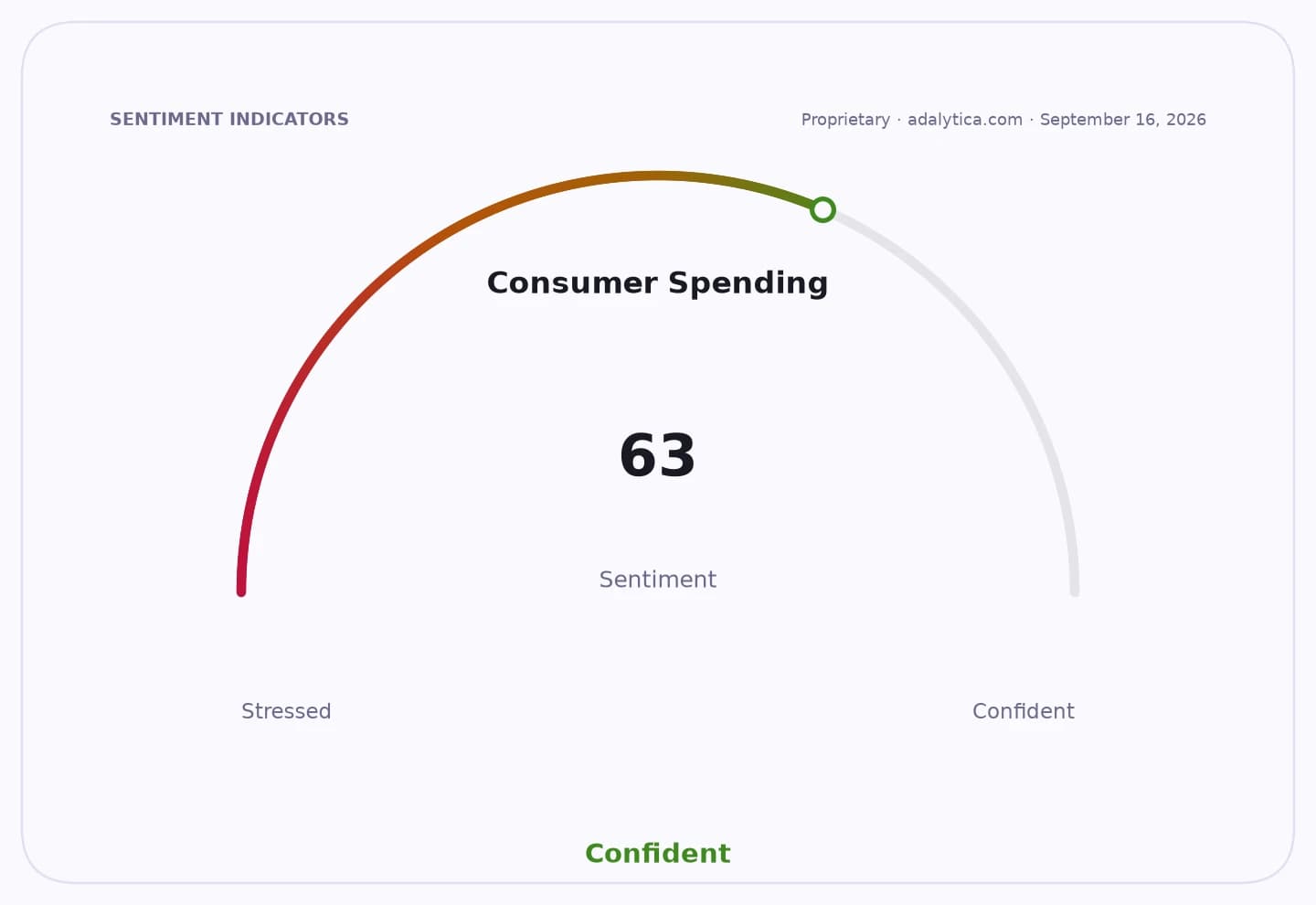
The backdrop across consumer indicators remains mixed. The University of Michigan’s consumer sentiment index sits at 55.2 for July in the data series, while Adalytica’s consumer confidence recession gauge shows fear at 26, underscoring that households remain uneasy even as they keep spending. Adalytica’s consumer spending sentiment is neutral at 63, but retail goods spending sentiment is still in extreme fear territory at 7, pointing to uneven appetite across categories.
Retail shares reflected that tension. The Consumer Discretionary Select Sector SPDR Fund, XLY, has fallen to 110.88 from an August peak of 118.59 and now sits below both its 50-day and 200-day moving averages, suggesting the group is still struggling to convince traders that spending strength will hold. Amazon and Walmart, two of the biggest bellwethers for consumer demand, have also pulled back from recent highs.
The August gain may ease talk of an imminent consumer-led slowdown, but the real test is whether households keep spending into the fall without leaning harder on credit or cutting back elsewhere. The next read on retail spending, along with inflation data and holiday-season guidance from major retailers, will be key for judging whether August was a one-month rebound or the start of a more durable trend.
| Entity | Gains | Losses |
|---|---|---|
| US retailers | ▲Higher sales volume | ▼Margin pressure if demand is uneven |
| Consumers | ▲More spending power in the data | ▼Weak confidence if higher prices persist |
| XLY consumer discretionary stocks | ▲Relief from recession fears | ▼Still below key moving averages |
| Federal Reserve | ▲Better growth backdrop | ▼Less room for near-term rate cuts |