American consumers drove spending up a record 8.2% in May, but the surge mainly reflected a partial reopening bounce after two months of historic lockdown-related collapse, not a clean return to normal demand.
U.S. consumer spending rises 8.2% in May

That matters because household spending is the main engine of the U.S. economy, and the rebound came against a backdrop of an economy still likely shrinking at its steepest pace on record in the second quarter. The Commerce Department data suggest the worst of the shutdown shock may have passed in some sectors, but the level of activity remains far below pre-pandemic trends and vulnerable to further labor-market damage.
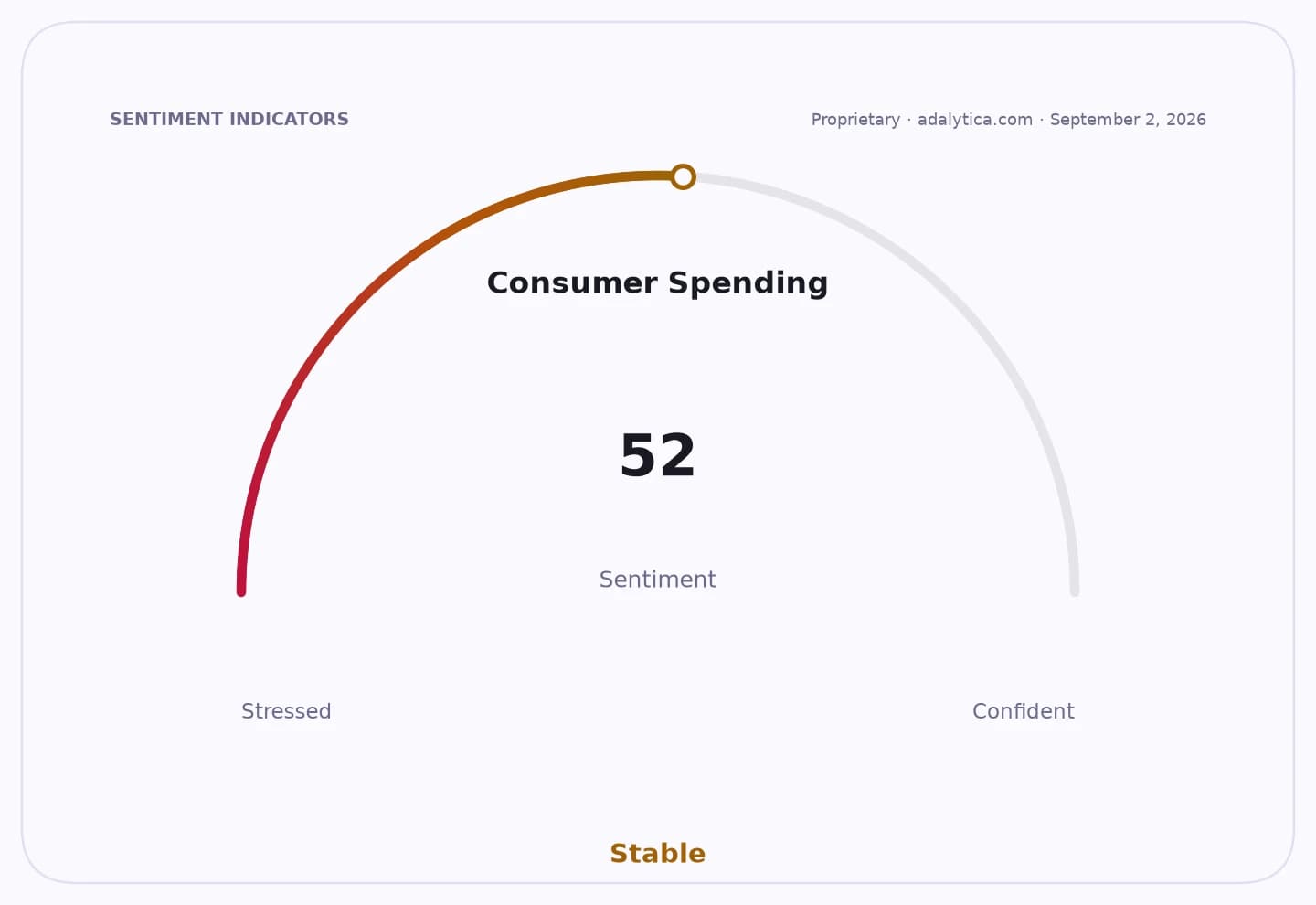
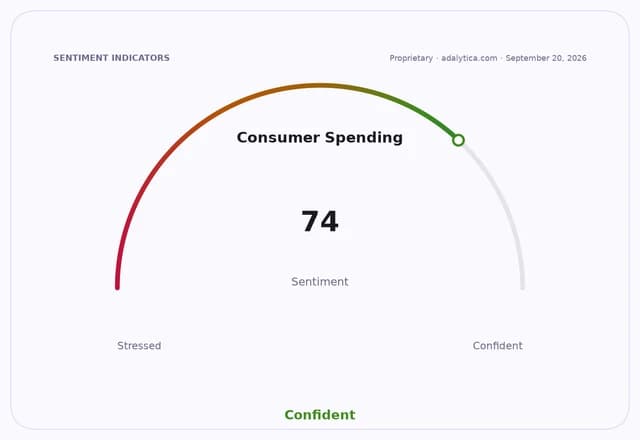
Sentiment IndicatorsⓘProprietary · adalytica.com · September 20, 2026
This is a snapshot — live sentiment, awareness and momentum for 130+ markets update continuously in the dashboard.Open AlphaPulse
The May increase followed declines of 6.6% in March and 12.6% in April, when the pandemic shuttered businesses, triggered mass layoffs and emptied restaurants, shops and travel hubs. Reopened stores and dining rooms helped bring consumers back, and the unemployment rate has eased from April’s 14.8% peak to 4.1%, but the recovery is uneven and heavily dependent on policy support, virus containment and job restoration.
For investors, the report is a reminder that a snapback in consumption can coexist with fragile fundamentals. Equity markets tend to price the pace of reopening, but earnings for retailers, airlines, hotels and discretionary brands depend on whether spending is sustained beyond the first burst of pent-up demand. The consumer-discretionary ETF XLY has been trading below its 50-day moving average, while the broader market proxy SPY has held above both its 50-day and 200-day averages, underscoring a rotation in confidence rather than a broad, durable risk rally.
The backdrop also argues for caution on the policy path. A strong monthly spending rebound does not eliminate the need for fiscal and monetary support if income losses, tighter credit and higher savings preferences persist. Consumer sentiment remains deeply depressed by historical standards, suggesting households are still wary even as they resume shopping.
The key question now is whether May marked the start of a broad-based recovery or just an initial release of demand suppressed during lockdowns. If job gains continue and confidence stabilizes, the consumer could power a stronger-than-feared second half. If not, the economy may still struggle to convert reopening into lasting growth.
| Entity | Gains | Losses |
|---|---|---|
| Retailers and restaurants | ▲Reopening sales | ▼Shutdown-era losses |
| Consumer discretionary stocks | ▲Spending rebound hopes | ▼Weak-demand risk |
| Broad market SPY | ▲Recovery optimism | ▼Recession fears |
| Unemployed households | ▲Jobs returning | ▼Income shock persistence |