Retail sales rose 1.2% in August, a bigger gain than economists expected, showing U.S. consumers are still carrying the economy even as inflation, fuel costs and softer sentiment test household budgets.
U.S. Retail Sales Rose 1.2% in August
The Commerce Department’s report, which followed a revised 0.5% decline in July, pointed to spending broadening across categories rather than being driven by one-off events. Economists surveyed by FactSet had expected a 0.7% increase.
Sentiment IndicatorsⓘProprietary · adalytica.com · September 16, 2026
This is a snapshot — live sentiment, awareness and momentum for 130+ markets update continuously in the dashboard.Open AlphaPulse
The stronger reading matters because consumer spending is the main engine of U.S. growth. Even after stripping out gasoline station receipts, sales rose 1.1%, and the control group used to calculate GDP climbed 1.4%, a pace that supports third-quarter growth estimates.
Shoppers spent more on cars, clothing, furniture and online purchases, while restaurant sales also improved. Motor vehicle and auto parts dealer sales increased 0.6%, clothing and accessories stores rose 0.7%, furniture and home furnishings gained 0.9%, and online retailers posted a 2.6% jump.
The report also suggests households are still absorbing painful price pressures. Average regular gasoline prices climbed to $4.37 a gallon on Wednesday, about 47% above pre-war levels, while diesel prices were up 68%, and consumer prices overall rose 3.4% year over year in August.
For investors, the data reinforces the case for a consumer that remains resilient but increasingly selective. That mix tends to favor big-box chains and discounters with pricing power and scale, while signaling pressure for discretionary retailers, as recent earnings from companies such as Casey’s showed slower sales growth can quickly overshadow better-than-expected profits.
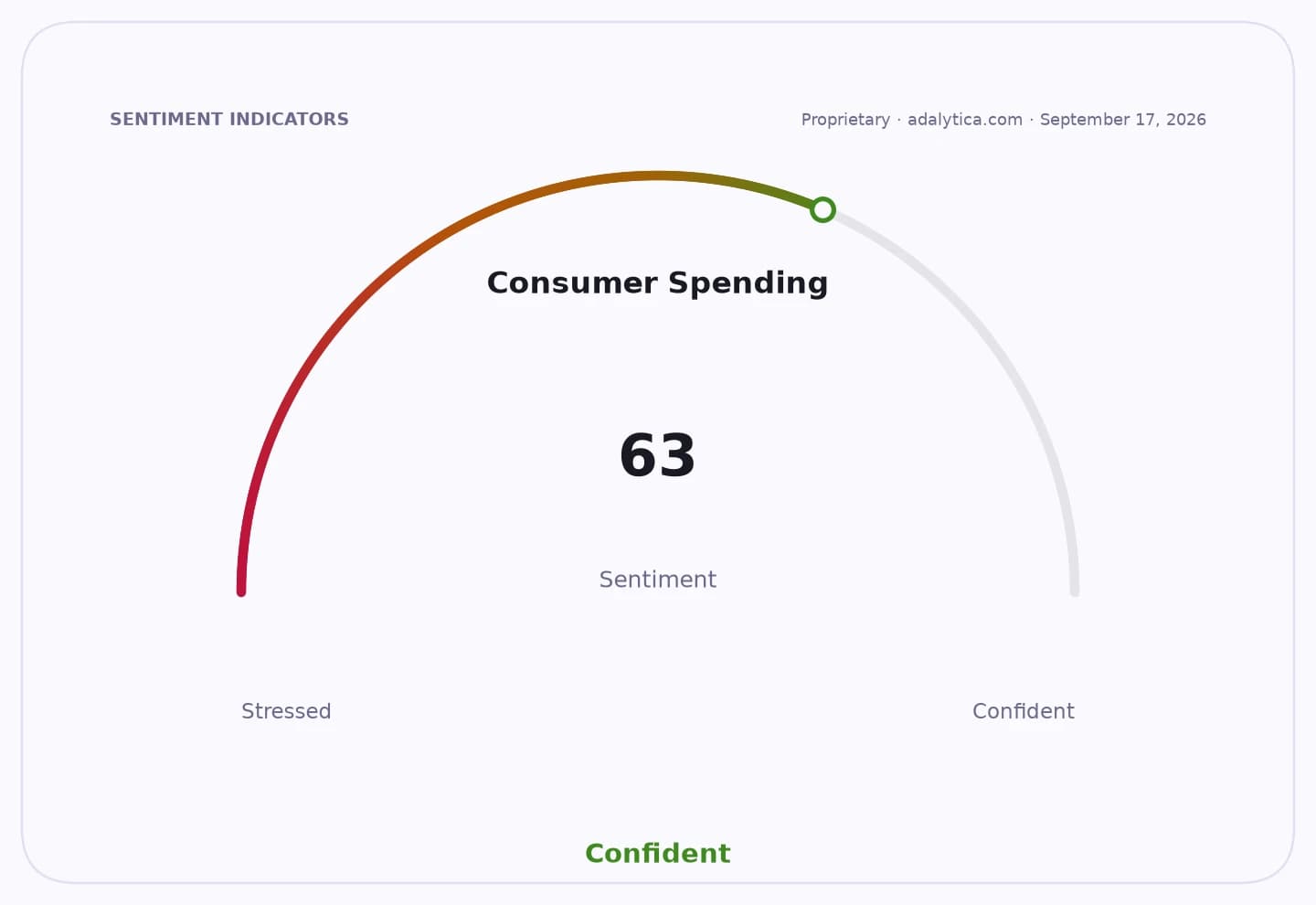
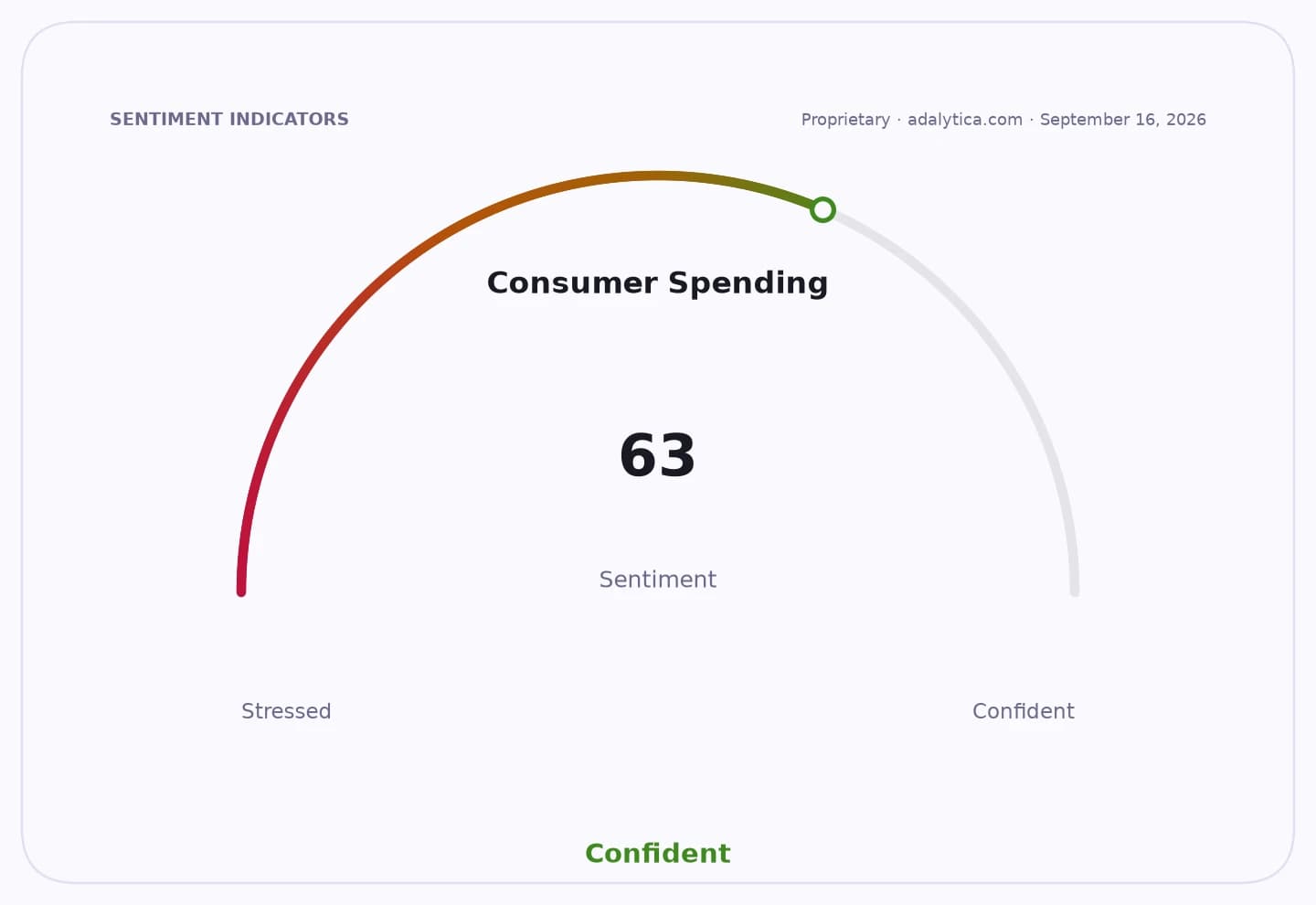
Adalytica’s Consumer Spending Sentiment gauge was neutral at 63, but its Retail Goods Spending Sentiment sat in “Extreme Fear” territory at 7, underscoring how spending data and household mood are diverging. The National Retail Federation said retail sales have run better than expected this year, though it warned higher fuel costs could eventually force consumers to pull back.
The near-term focus now shifts to whether August’s strength was a one-month rebound from July’s pullback or the start of a more durable stretch of demand. If gas prices stay elevated and inflation remains sticky, investors will be watching closely for signs that even the strongest consumers start to run out of room.
| Entity | Gains | Losses |
|---|---|---|
| U.S. retailers | ▲Higher sales volumes | ▼Margin pressure from inflation |
| Big-box chains like Walmart | ▲Traffic from value-seeking shoppers | ▼Smaller discretionary players |
| Consumers with stable incomes | ▲Ability to keep spending | ▼Lower-income households facing fuel shocks |
| Discretionary retailers | ▲— | ▼Softer demand if spending shifts to essentials |