Hok-Elanto’s plan to enlarge Malmi Nova by about 30,000 square metres has become a test of what kind of city centre Malmi should be: a bigger grocery hub, or a more mixed urban district with housing, services and better public space.
Hok-Elanto Malmi Nova expansion faces planning debate
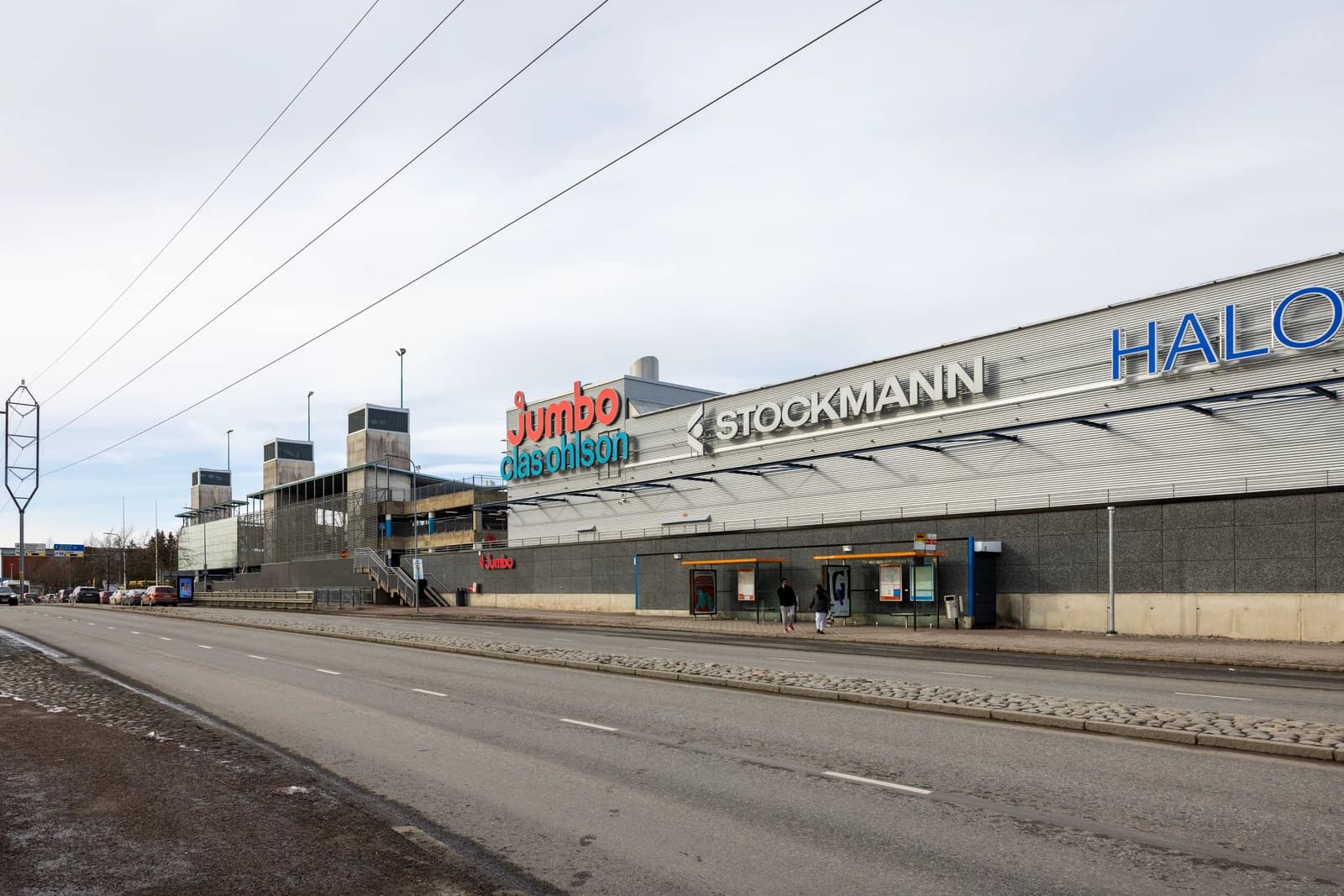
The development reservation now before Helsinki’s city environment committee would give Hok-Elanto’s property company time until the end of 2028 to advance the project at Ala-Malmi, where the operator wants to add a larger food store and strengthen everyday retail. For investors and landlords, the proposal is notable because it shows how Finnish co-operative grocers are still willing to commit capital to dominant suburban catchments even in areas already crowded with food retail.
But the resident response suggests the commercial case is not straightforward. In a survey with 138 replies, most respondents supported some form of development, yet many rejected the current box-like concept and argued the area needs more than another supermarket. Comments called for fashion, books, cafés, restaurants, specialist shops, youth facilities and leisure uses, reflecting a broader demand for footfall-driving destinations rather than pure grocery convenience.
That tension matters economically because the success of a shopping centre expansion increasingly depends on its ability to create a wider spend per visit, not just defend grocery turnover. Malmi already has Prisma, K-Citymarket, Lidl, Alepa and several ethnic grocers, so Hok-Elanto’s push for a larger S-Group food store risks running into saturation if the extension does not broaden the tenant mix. A grocery-led scheme may still work as a defensive move, but it may generate less incremental value than a more mixed-use redevelopment would.
The planning question is also about urban economics. Residents repeatedly flagged weak pedestrian and cycling links between Ala-Malmi, Ylä-Malmi, the square, station, bus terminal, Malmitalo and the swimming hall, and criticised the existing pedestrian underpass known as the “Malmi tube” as unsafe and inconvenient. If the expansion improves permeability and public realm, it could lift the site’s retail catchment and support higher rents over time. If it does not, the project risks becoming another auto-oriented retail box in a market where consumers increasingly expect convenience, accessibility and experience in the same place.
The plan also introduces practical trade-offs. The proposed extension would replace a parking structure that currently includes obligatory spaces for nearby plots, and residents were divided over car access, with some wanting to preserve easy parking and others arguing Malmi is not a place for an auto market. The bus terminal’s location near the centre is another pressure point, with some respondents insisting it should remain close to the mall.
For Hok-Elanto, the upside is clear: a larger centre could reinforce its grocery position in a dense, transit-linked district. The bear case is that the added space fails to match local demand, particularly if it leans too heavily on food retail in a neighbourhood that already has plenty of it. The committee’s decision will show whether Helsinki wants this to be primarily a retail expansion or a broader urban regeneration project.
| Entity | Gains | Losses |
|---|---|---|
| Hok-Elanto | ▲Larger retail footprint | ▼Higher planning risk |
| Malmi residents seeking services | ▲Better public realm, mixed uses | ▼Grocery-heavy scheme |
| Existing grocers | ▲Stronger catchment defence | ▼More competition, saturation |
| Car-oriented users | ▲Retained parking access | ▼Fewer parking-led priorities |