India is preparing the most consequential overhaul of its accounting rulebook in years, a move that could determine whether domestic firms can grow into global-scale professional-services groups and challenge the Big Four.
India plans accounting rule overhaul for audit firms

The Institute of Chartered Accountants of India is working on changes to the Chartered Accountants Act that would reshape how firms merge, raise capital and expand into allied services, according to media reports. The reform effort goes beyond simply encouraging more audit-firm consolidation. It is aimed at building larger Indian networks with the breadth to compete on audit, tax, consulting, risk and transactions — the mix that has made the global Big Four dominant.
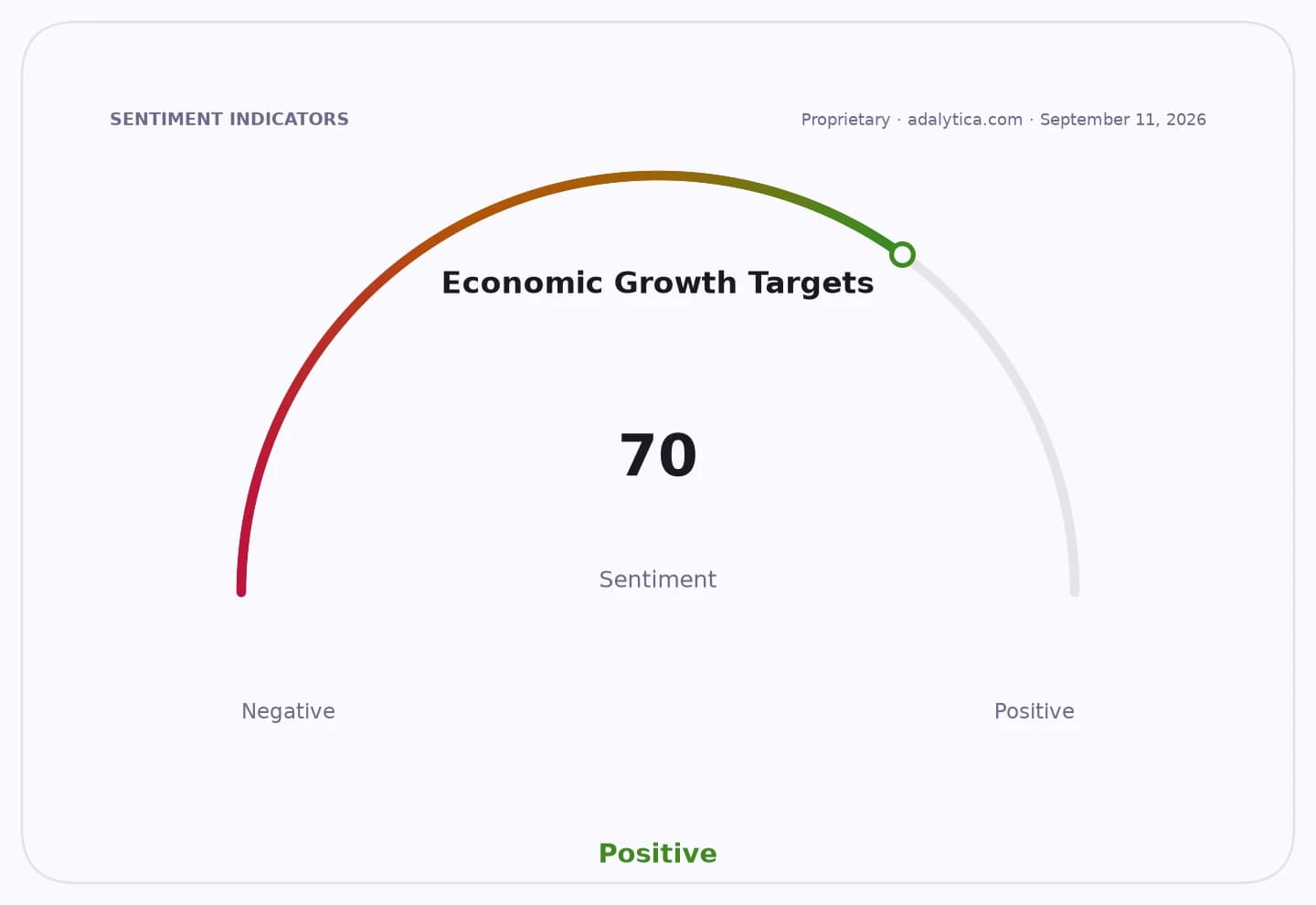
Sentiment IndicatorsⓘProprietary · adalytica.com · September 25, 2026
This is a snapshot — live sentiment, awareness and momentum for 130+ markets update continuously in the dashboard.Open AlphaPulse
That matters economically because India’s professional-services market is large, but much of the value from its biggest assignments still flows to international networks. In listed-company audits, the Big Four account for the majority of market capitalisation coverage, while only a small number of domestic firms handle multiple large mandates. Fragmentation leaves Indian firms unable to bid for complex, multi-service work or to invest at the scale needed for overseas expansion, technology and specialist talent.
The policy shift also has a strategic dimension. Indian officials are increasingly treating professional-services capability as a question of economic sovereignty and data security, not just industry structure. Reports have suggested the government has examined tighter controls on global audit networks in sensitive sectors such as defence, banking, telecoms, energy and digital infrastructure, while also asking regulators for ways to strengthen the domestic ecosystem.
For investors, the implications run across listed outsourcing, consulting and accounting names, as well as the global networks that dominate India’s high-end work. A successful reform would open a bigger domestic market for Indian firms, but it could also intensify competition for multinational and public-sector mandates. For the global players, the risk is not an immediate loss of market share but a slower erosion of pricing power if Indian firms gain scale, regulatory support and procurement access.
The government is trying to clear that path from both ends. ICAI has already loosened merger rules and allowed LLP-based firms to aggregate, while the finance ministry has reportedly pushed procurement reforms that would reduce turnover, net-worth and headcount barriers in consultancy tenders on GeM. Those changes could help smaller domestic firms win more public work, build track records and then use that base to compete for larger corporate mandates.
There are still major hurdles. Scale alone will not create a credible Indian rival to the Big Four. Firms will need to integrate partners, systems and quality controls, while also building multidisciplinary platforms that can offer legal, tax, engineering and advisory services alongside audit. They will need capital, overseas reach and safeguards to prevent conflicts between assurance and consulting. The pause in ICAI’s global-networking guidelines underscored how sensitive the balance remains between opening the market and preserving independence.
The broader narrative is that India has moved from a political aspiration — “why not build our own Big Four?” — to a regulatory project. The question now is whether the new rulebook can produce firms large enough, broad enough and trusted enough to compete globally, or whether consolidation will stop short of creating institutions with true international scale.
| Entity | Gains | Losses |
|---|---|---|
| Indian audit firms | ▲Bigger mandates | ▼Fragmented model |
| Big Four networks | ▲Short-term dominance | ▼Long-term pricing power |
| Government | ▲Domestic capability | ▼Reliance on foreign firms |
| Corporate clients | ▲Wider local choice | ▼Fewer global-standard options |