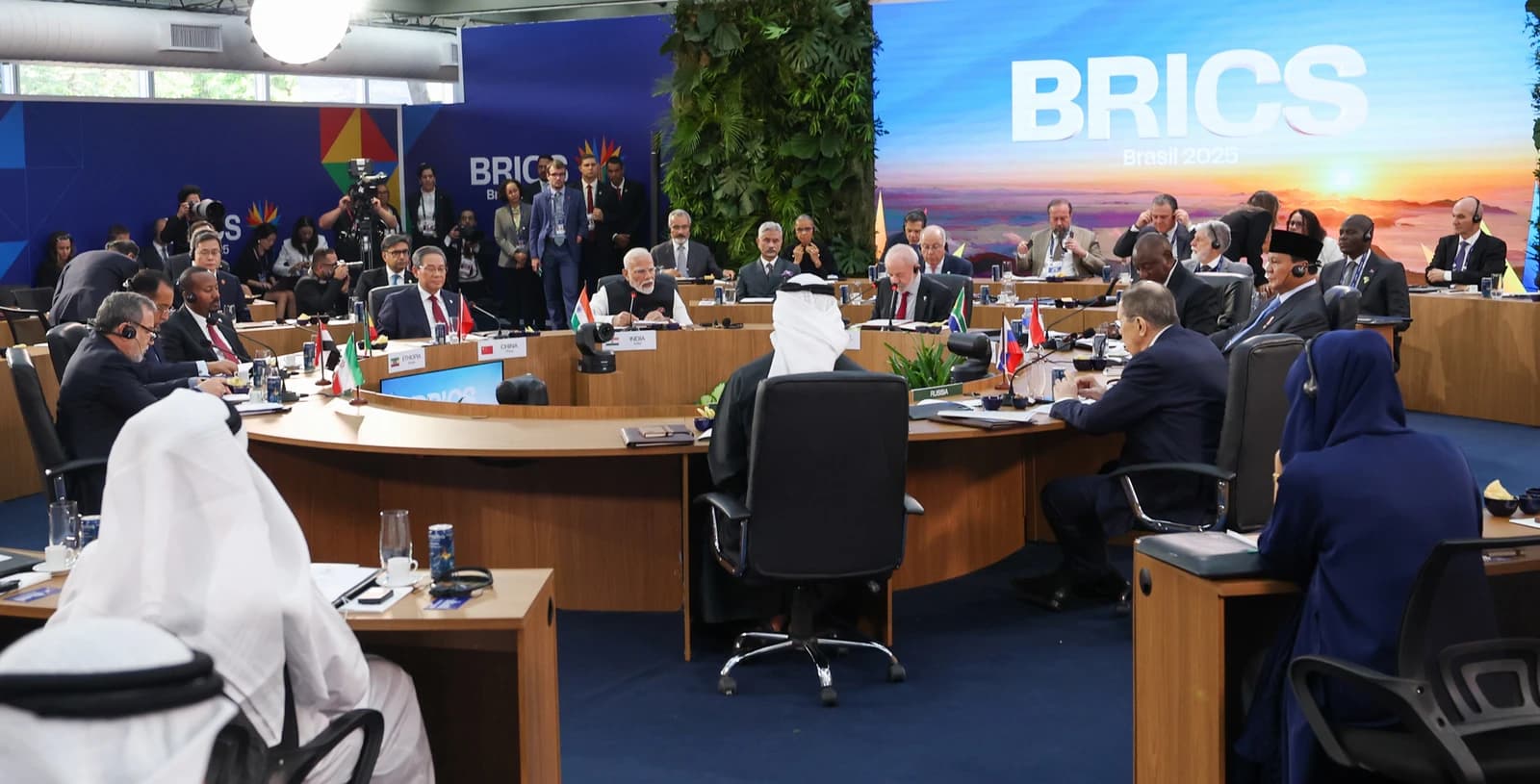
India is positioning itself as a leader in deep tech, artificial intelligence and robotics by translating its BRICS diplomacy into a concrete push for startup finance, industrial automation and international standards-setting.
India BRICS tech push targets AI and robotics

That matters because the fastest-growing parts of the technology economy are moving beyond software into physical AI, smart manufacturing and advanced research infrastructure — areas that can lift productivity, deepen industrial competitiveness and create new exportable intellectual property. For India, success would help shift the growth model from services-led expansion toward a more capital- and innovation-intensive economy. For investors, it raises the stakes for Indian IT services, industrial technology, electronics manufacturing and the broader supply chain tied to AI-enabled production.
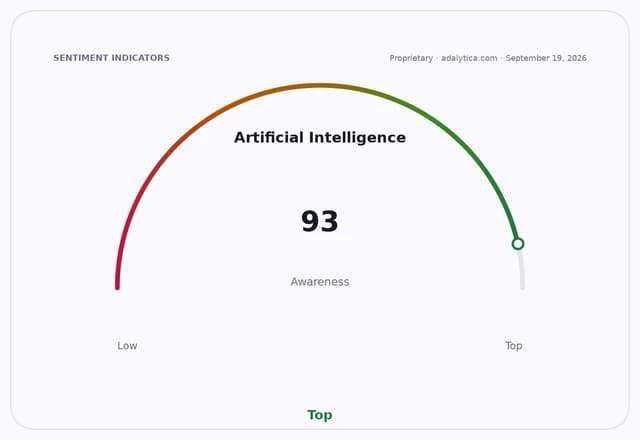
Sentiment IndicatorsⓘProprietary · adalytica.com · September 19, 2026
This is a snapshot — live sentiment, awareness and momentum for 130+ markets update continuously in the dashboard.Open AlphaPulse

The immediate catalyst is the New Delhi declaration from the BRICS summit, which backed deeper cooperation in science, technology and innovation and specifically called out AI, quantum technology, Industry 4.0, robotics and advanced digital manufacturing. Indian officials said the bloc’s proposed startup innovation fund could support innovation-led growth and give local founders a new source of capital, while follow-up meetings are expected to turn the political agreement into an implementation framework.
India is also trying to use the summit to strengthen its own policy credibility. Officials said Prime Minister Narendra Modi pressed for a system that can move agreements into execution quickly, an important point in a country where policy ambition often outpaces delivery. That framing is strategic: India wants to present itself not just as a beneficiary of the next industrial wave, but as a model for how emerging economies can coordinate on high-end technology development.
Artificial Intelligence — 30-day sentimentadalytica.com
Explore this data interactively — full history, time series and cross-market comparisons.Open AlphaPulse
The industrial angle is as important as the diplomatic one. The plan calls for smarter factories, technology sharing, standards cooperation and talent development in robotics, alongside a special team focused on safe, reliable, inclusive and energy-efficient AI. Those details suggest India is not limiting itself to consumer AI or back-office automation; it is trying to build capabilities around production systems, advanced manufacturing and the infrastructure needed to compete in physical AI.
That broader shift has market implications. Companies with exposure to Indian digital engineering, enterprise software, factory automation and R&D services could benefit if the policy push leads to larger public-private investment pools or more cross-border projects. The case for India is bullish if the startup fund, standards work and industrial partnerships unlock domestic hardware, semiconductor and robotics ecosystems. The bear case is that funding announcements and summit language do not automatically solve India’s persistent gaps in capital intensity, research depth, energy availability and execution.
The timing also fits a global market narrative in which AI enthusiasm remains high, but investors are increasingly focused on where the next leg of value creation will come from. Adalytica’s AI sentiment snapshot shows extreme fear alongside extreme awareness, a sign that attention is elevated even as confidence remains fragile. In that environment, countries that can tie AI to tangible industrial output, not just software productivity, may attract more durable strategic capital.
For India, the test now is whether BRICS cooperation becomes real deployment: fund formation, pilot projects, standards agreements and talent pipelines. If it does, the country could move from being a major consumer of imported AI tools to a more influential participant in the design, manufacturing and governance of the technologies reshaping global industry.
| Entity | Gains | Losses |
|---|---|---|
| India | ▲Innovation leadership | ▼Policy execution risk |
| BRICS startups | ▲New funding access | ▼Slow rollout risk |
| Industrial automation firms | ▲Demand for smart factories | ▼Capital-intensive rivals |
| Global incumbents | ▲Larger India market | ▼Local competition intensity |