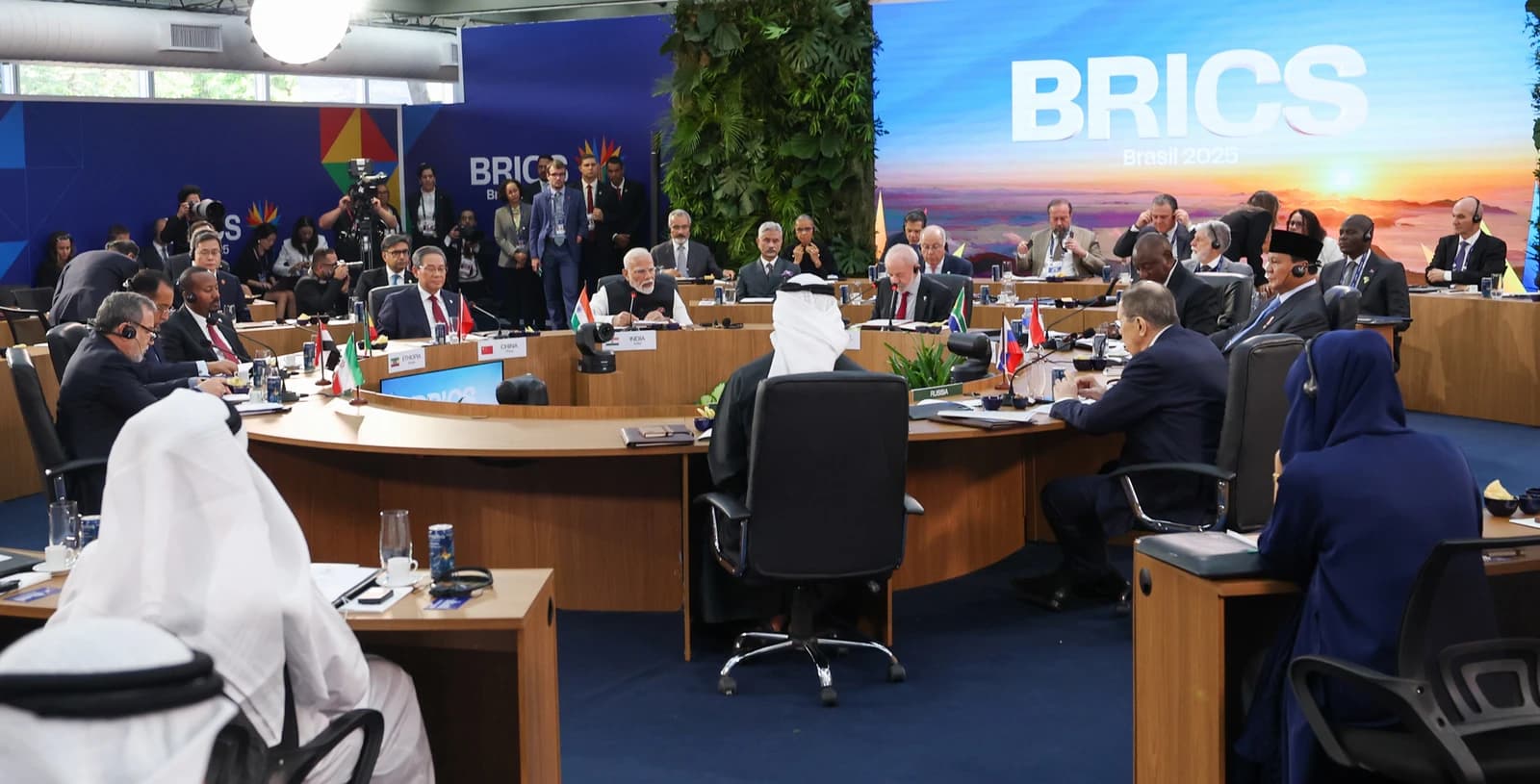
BRICS is moving to turn artificial intelligence into a geopolitical as well as economic issue, with Russia saying the bloc is on track to speak more forcefully on AI than the G7 as India hosts leaders in New Delhi.
BRICS AI Policy Push at New Delhi Summit
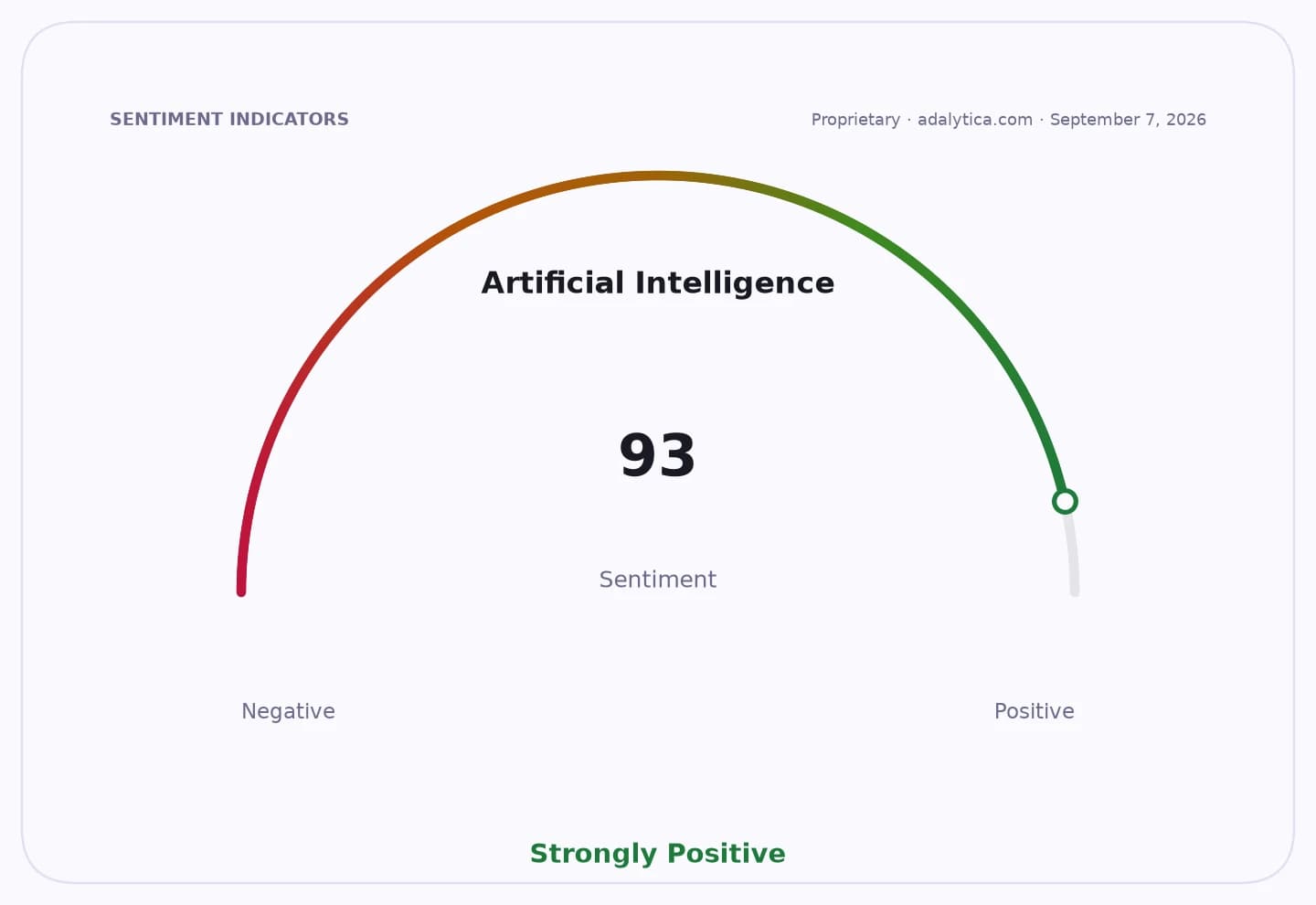
The message matters because AI policy is fast becoming part of the contest over standards, market access and technological influence. If BRICS countries coordinate more closely, they could challenge Western efforts to shape global AI rules around safety, copyright, data governance and state oversight, while also presenting themselves as a separate pole for the developing world.
Sentiment IndicatorsⓘProprietary · adalytica.com · September 7, 2026
This is a snapshot — live sentiment, awareness and momentum for 130+ markets update continuously in the dashboard.Open AlphaPulse
Russian deputy foreign minister Sergei Ryabkov said the grouping has been consolidating around the theme for three years and is moving toward an “AI alliance,” though he acknowledged members are at different stages of technological development and have distinct national priorities. He said BRICS would likely speak on the issue “not weaker — and perhaps stronger —” than the Group of Seven, which Moscow says is trying to monopolize the debate.
For investors, the significance is less about the rhetoric itself than the policy direction it suggests. A more organized BRICS approach could accelerate fragmentation in global AI governance, increasing compliance burdens for multinational technology firms and raising the odds of divergent rules on data localization, model deployment and public-sector use. It could also deepen demand across emerging markets for locally controlled AI infrastructure rather than US- or Europe-led platforms.
India’s role is central. Ryabkov said New Delhi wants the bloc’s integration agenda to run through all summit activities, under the slogan “Humanity First.” India has tried to position its presidency around development, inclusion and technology access, a framing that gives BRICS a way to talk about AI as a growth and public-policy tool rather than only a frontier for Big Tech.
The timing is important. BRICS has expanded beyond its original five members and is now trying to prove that enlargement can still produce a coherent agenda. AI offers a politically useful common denominator: China wants broader strategic autonomy, Russia wants to show the bloc can set its own terms, and India wants to present itself as a convenor for the global south. But the same diversity that gives BRICS reach also makes binding coordination difficult.
Ryabkov’s comparison with the G7 underscores the broader narrative: the battle over AI is no longer just about chips, models and corporate valuations. It is increasingly about who writes the rules. For markets, that means more policy risk for global technology names and more opportunity for domestic champions in markets that favor sovereign control over digital infrastructure.
The next test will be whether BRICS can convert summit language into specific mechanisms on AI cooperation, procurement or standards. If it does, the bloc could become a more consequential player in the regulatory landscape that shapes how AI is built, deployed and monetized outside the West.
| Entity | Gains | Losses |
|---|---|---|
| BRICS | ▲More policy clout | ▼Less Western alignment |
| G7 | ▲— | ▼Rule-setting dominance |
| India | ▲Convening power | ▼Pressure to balance members |
| Global tech firms | ▲Emerging-market access | ▼Fragmented compliance rules |