Gold prices in India are holding near historic highs, with the MCX December contract at ₹1,49,610 per 10 grams and the Indian Bullion and Jewellers Association rate for 24-carat gold at ₹1,49,430, keeping buyers on edge and reinforcing gold’s role as a hedge in a volatile macro backdrop.
India gold prices near record highs above ₹1.49 lakh
The immediate market significance is that bullion has become expensive enough to change buying behavior, especially in a market where retail consumers tend to step in on dips and jewelers closely track exchange and wholesale benchmarks. With Saturday’s domestic trading shut, traders are effectively carrying forward Friday’s surge, when the MCX contract rose ₹1,893 per 10 grams, underscoring how quickly price resets can hit physical demand across Delhi, Chennai and other city markets.
The move matters economically because gold is both a consumption good and a store of value in India, one of the world’s largest buyers. Higher prices tend to curb jewelry purchases at the margin, particularly for weddings and discretionary buying, while supporting the value of inventories held by traders and bullion dealers. It also raises working-capital needs for the trade, since a retailer or wholesaler needs more cash to hold the same amount of stock. In that sense, the rally can transfer pain from consumers to downstream sellers even as it benefits those already long the metal.
The broader backdrop remains supportive. Gold’s U.S. benchmark futures closed at $4,195.9 an ounce on the latest available trade, well above the 50-day moving average but still below the 200-day average, a sign the market has reset sharply higher even after recent consolidation. On conventional technical readings, U.S. gold is not overbought in a way that suggests a blow-off top, with RSI near 32 and MACD still negative but improving. In India, the MCX gold contract’s RSI at 34.6 points to a market that has cooled from overextended levels without fully losing momentum.
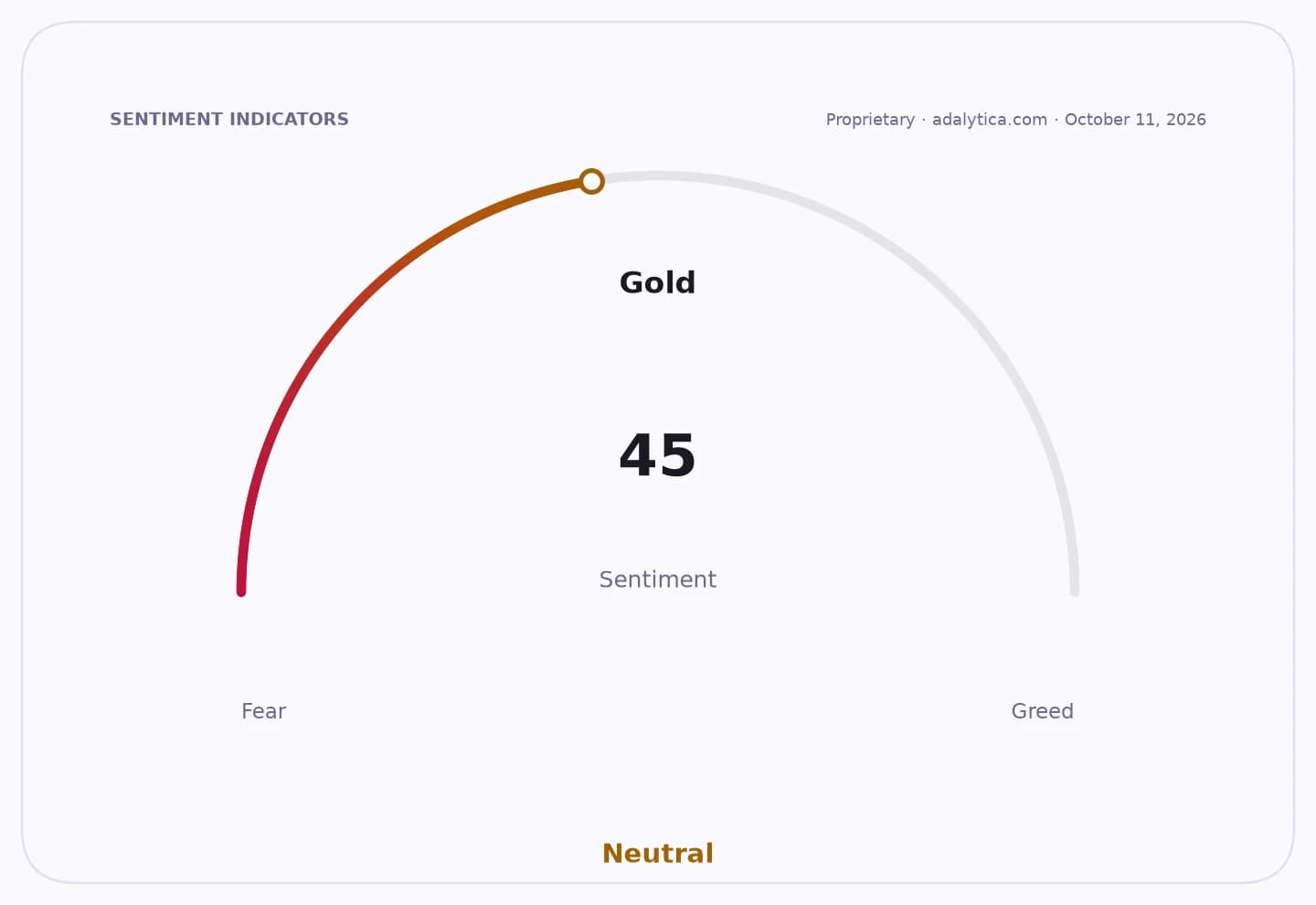
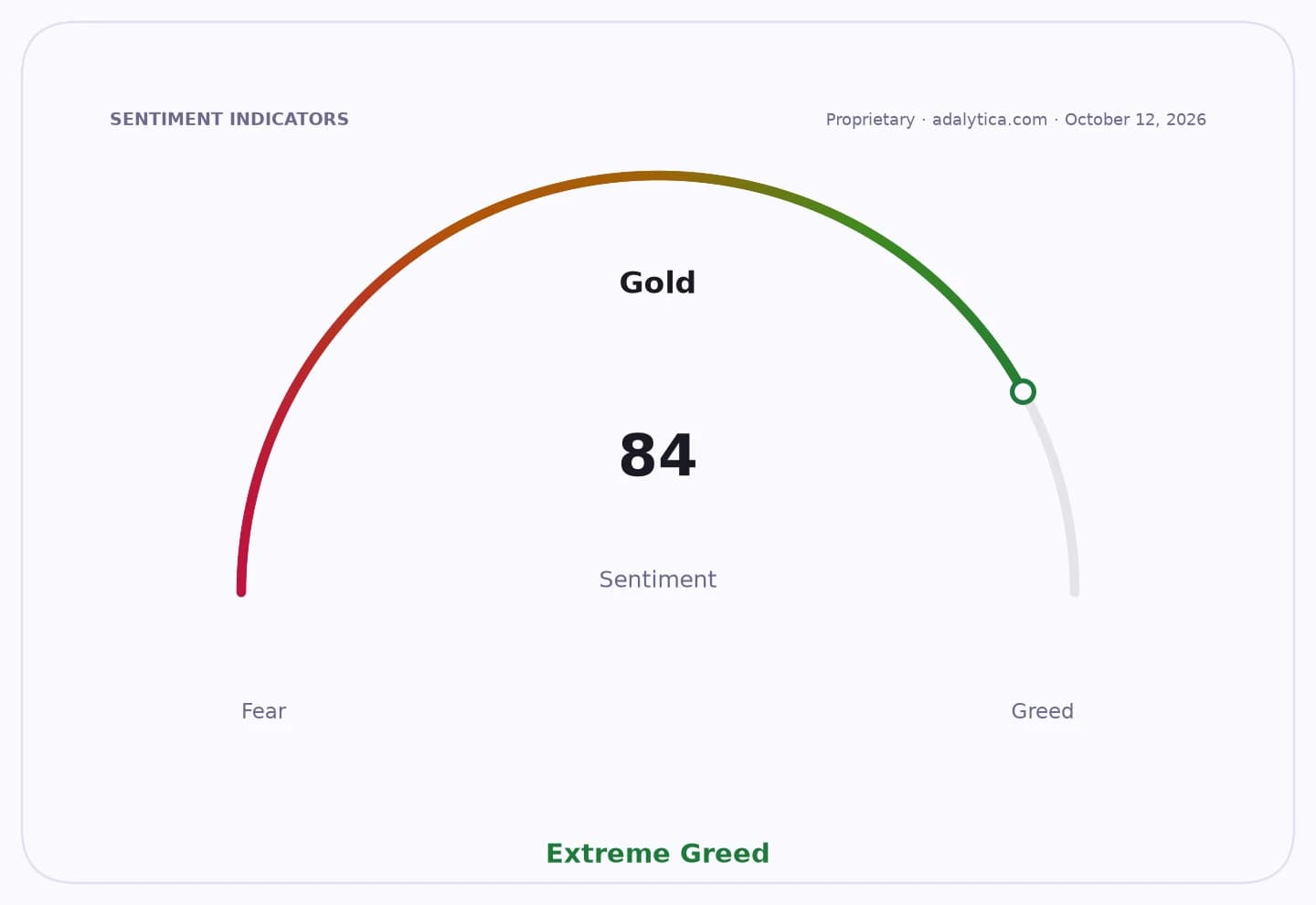
That fits with the larger investor narrative: gold is still being bid as a portfolio hedge, but the latest leg higher looks driven more by conviction than panic. Adalytica’s Gold Fear & Greed Index sits at 84, in “Greed” territory, while the U.S. dollar signal has also strengthened, a combination that can keep bullion volatile rather than straightforwardly directional. For investors, that means chasing rallies at these levels carries more risk than buying on a clean breakout, while producers, refiners and bullion holders may see continued support for margins and asset values.
The key question now is whether domestic physical demand can absorb prices near ₹1.5 lakh per 10 grams without a sharper drop in jewelry volumes. If global rates stay firm and the rupee remains under pressure, Indian city prices could stay elevated even if overseas momentum pauses. If international bullion cools, however, the first impact is likely to be felt in retail demand rather than exchange-traded interest.
| Entity | Gains | Losses |
|---|---|---|
| Bullion holders | ▲Higher mark-to-market value | ▼None on current pricing |
| Jewelers/retail buyers | ▲Inventory revaluation | ▼Slower consumer demand |
| Traders/hedgers | ▲Volatility opportunities | ▼Wider margin requirements |
| Consumers | ▲Safe-haven protection | ▼Higher purchase costs |