India is considering forcing thermal power plants to mix as much as 5% imported coal with domestic fuel, a move aimed at easing a tightening supply crunch that has pushed spot power prices to their highest monthly level since 2022.
India considers 5% imported coal blending
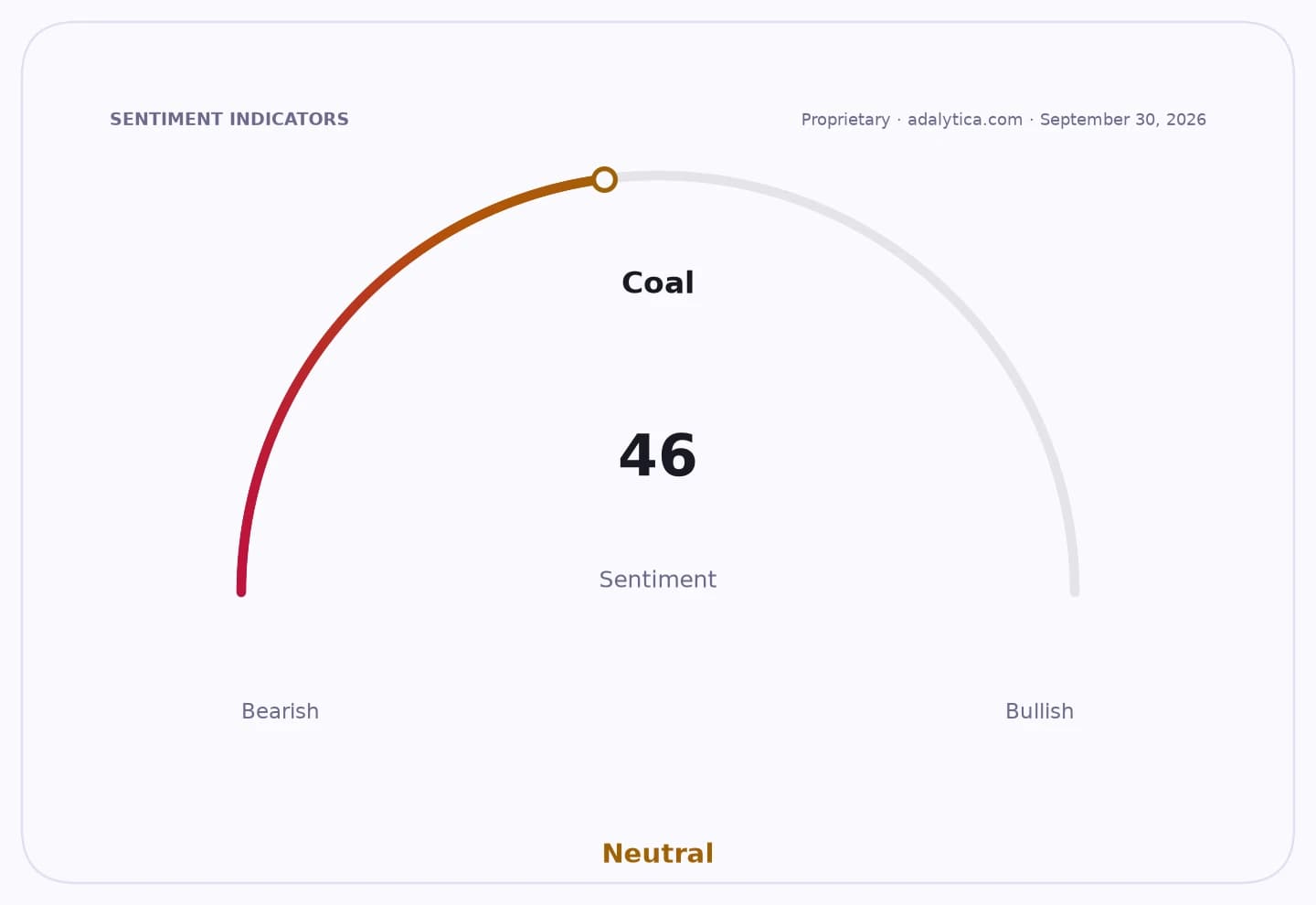
The proposal would mark a sharp reversal for New Delhi after two years of trying to lift domestic coal output and trim imports. Economically, it underscores that India’s power system still lacks enough flexibility to absorb weather shocks, rail bottlenecks and mine disruptions without leaning on overseas fuel. For investors, it points to firmer near-term demand for seaborne coal, higher fuel costs for generators and further strain on already indebted state distributors.
Sentiment IndicatorsⓘProprietary · adalytica.com · September 30, 2026
This is a snapshot — live sentiment, awareness and momentum for 130+ markets update continuously in the dashboard.Open AlphaPulse
Coal inventories at Indian power plants have fallen nearly 49% over the past three months to September, almost twice the pace of last year’s decline, according to the source report. Nearly 40% of coal-fired plants now hold less than three days of stocks, leaving utilities with little buffer as demand has stayed elevated even after the summer peak. Officials are said to be discussing the measure partly to preserve domestic coal for next summer, when electricity demand could rise again.
The timing reflects a broader squeeze across the system. Warm weather has kept electricity consumption elevated, a weak monsoon has reduced hydropower output, and heavy rains in eastern coal-producing states have disrupted mining. Rail congestion has also slowed deliveries to power stations. Renewable generation rose about 21% from a year earlier, but Crisil said it still fell short of the round-the-clock supply needed to fully replace fossil fuel generation.
The crunch is already feeding through to prices. Spot power averaged 7.71 rupees per unit so far in September, the highest monthly level since 2022, data showed. That matters because higher power costs are ultimately borne by state electricity distributors, many of which are already heavily leveraged and struggle to recover costs from consumers. Any mandated coal blending would likely help stabilize supply, but it would also lift import bills at a time when overseas coal is getting more expensive.
Traders say imported coal prices have climbed across major supply origins as global demand and freight costs rise. Indonesian coal prices are up about a fifth since May, while Russian prices have risen 14% and South African rates 19%. That limits the benefit of import blending for generators and suggests the policy would be more about keeping plants running than lowering costs. It also reinforces the case for coal exporters and shipping interests, even as it raises the fuel bill for India’s utilities.
For the market, the policy discussion is a reminder that India remains one of the world’s most important swing buyers of thermal coal whenever domestic logistics falter. The country’s imports are already at a 15-month high, and the government has previously used blending directives between December 2021 and March 2024 to ease shortages. A fresh mandate would likely support seaborne demand into the year-end, even if the final decision is still at an early stage.
The bull case for the move is straightforward: it prevents an outright supply squeeze, protects against more volatile power prices and buys time for domestic inventories to rebuild ahead of next summer. The bear case is that it raises generation costs, weakens the policy push for energy self-sufficiency and risks locking in another round of imported fuel dependence just as India tries to scale renewables.
For investors, the key catalyst is whether New Delhi turns the discussion into a formal directive. If it does, coal miners and exporters outside India could see a modest demand tailwind, while state utilities and power producers face higher input costs. If the government holds off, power prices could stay elevated until stock levels recover, keeping pressure on distributors and reinforcing the market’s focus on India’s fragile coal logistics.
| Entity | Gains | Losses |
|---|---|---|
| Imported coal suppliers | ▲Higher demand | ▼— |
| Indian power plants | ▲Better fuel security | ▼Higher fuel costs |
| State power distributors | ▲Fewer outages | ▼More expensive purchases |
| Domestic coal miners | ▲Preserve supply for summer | ▼Less near-term offtake |