Iran’s economy minister says the country has no shortages of basic consumer goods, a sign Tehran is trying to project stability even as sanctions and shipping disruptions keep pressure on imports, production costs and household purchasing power.
Iran Says Basic Consumer Goods Are in Supply
That matters because food and essentials are the first place inflation turns politically sensitive. If the government can keep staple shelves stocked, it can buy time. If it cannot, price controls, rationing and subsidy strain quickly spill into broader economic stress. Tehran is also said to be looking for alternative routes to secure industrial raw materials, which suggests the real bottleneck is not just finished goods but the supply chain feeding domestic production.
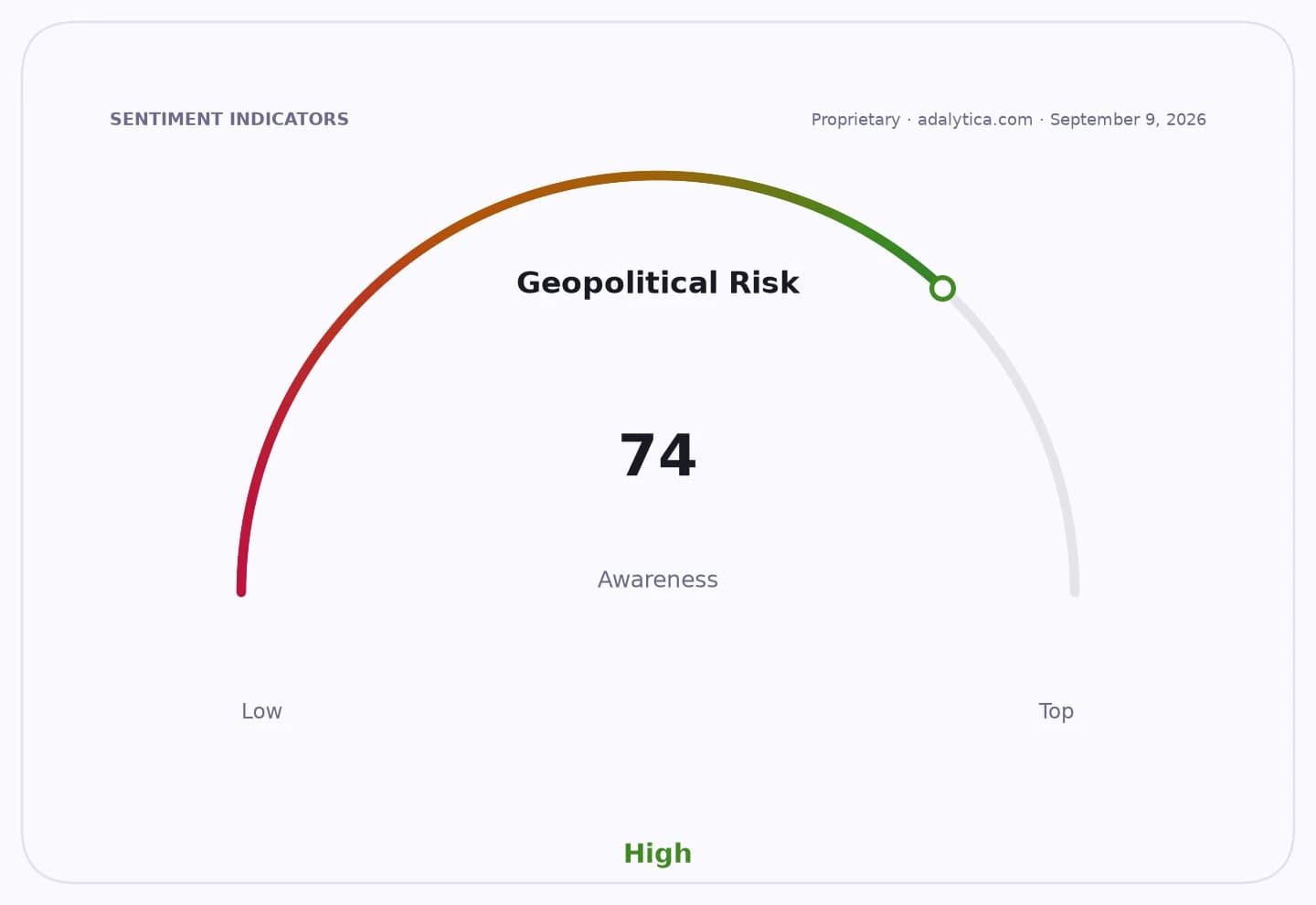
Sentiment IndicatorsⓘProprietary · adalytica.com · September 9, 2026
This is a snapshot — live sentiment, awareness and momentum for 130+ markets update continuously in the dashboard.Open AlphaPulse
For investors, the message is bigger than Iran’s supermarket aisles. The country sits inside a regional trade corridor already rattled by conflict risk around the Strait of Hormuz and Bab el-Mandeb, where higher transport and fuel costs can ripple through global shipping, insurance and commodity markets. When geopolitical friction rises, the winners tend to be logistics, energy security and defense-related names; the losers are import-dependent businesses and consumers absorbing higher costs.
The market is still underestimating how often “no shortages” headlines are really stress-management headlines. Governments rarely emphasize resilience unless the system is under pressure. Iran’s claim that essentials are available, alongside its search for alternative input channels, points to an economy forced into substitution rather than normalization. That is a classic sanctions economy: basic goods remain present, but at the cost of higher friction, weaker efficiency and persistent inflationary drag.
Adalytica’s Global Stability Sentiment reading remains neutral, while the U.S. dollar signal shows greed and the S&P 500 sits in extreme fear, a combination that fits a world where investors are still paying up for safety and supply-chain resilience. In that setup, the best positioning is not to chase broad market exposure, but to lean into the firms and funds that benefit when geopolitics lengthen supply lines and make every shipped barrel, container and ton of freight more valuable.
The actionable takeaway: treat Iran’s “no shortages” claim as evidence of managed scarcity, not economic health, and stay positioned for more upside in energy, shipping, defense and supply-chain toll roads if regional tensions keep pricing risk into global trade.
| Entity | Gains | Losses |
|---|---|---|
| Iran government | ▲Buys time politically | ▼Credibility if shortages emerge |
| Energy and shipping names | ▲Higher risk premia | ▼Consumers facing higher costs |
| Import-dependent businesses | ▲Limited upside from pass-through pricing | ▼Margins from higher logistics costs |
| U.S. consumers | ▲Safe-haven demand may support some assets | ▼Fuel and transport bills |