Iraq’s effort to link education, decent work and social protection is increasingly important because it could ease a job market that leaves young people and women on the sidelines while giving small businesses more reliable customers and workers.
Iraq Jobs Reform, Youth Unemployment, and Social Security
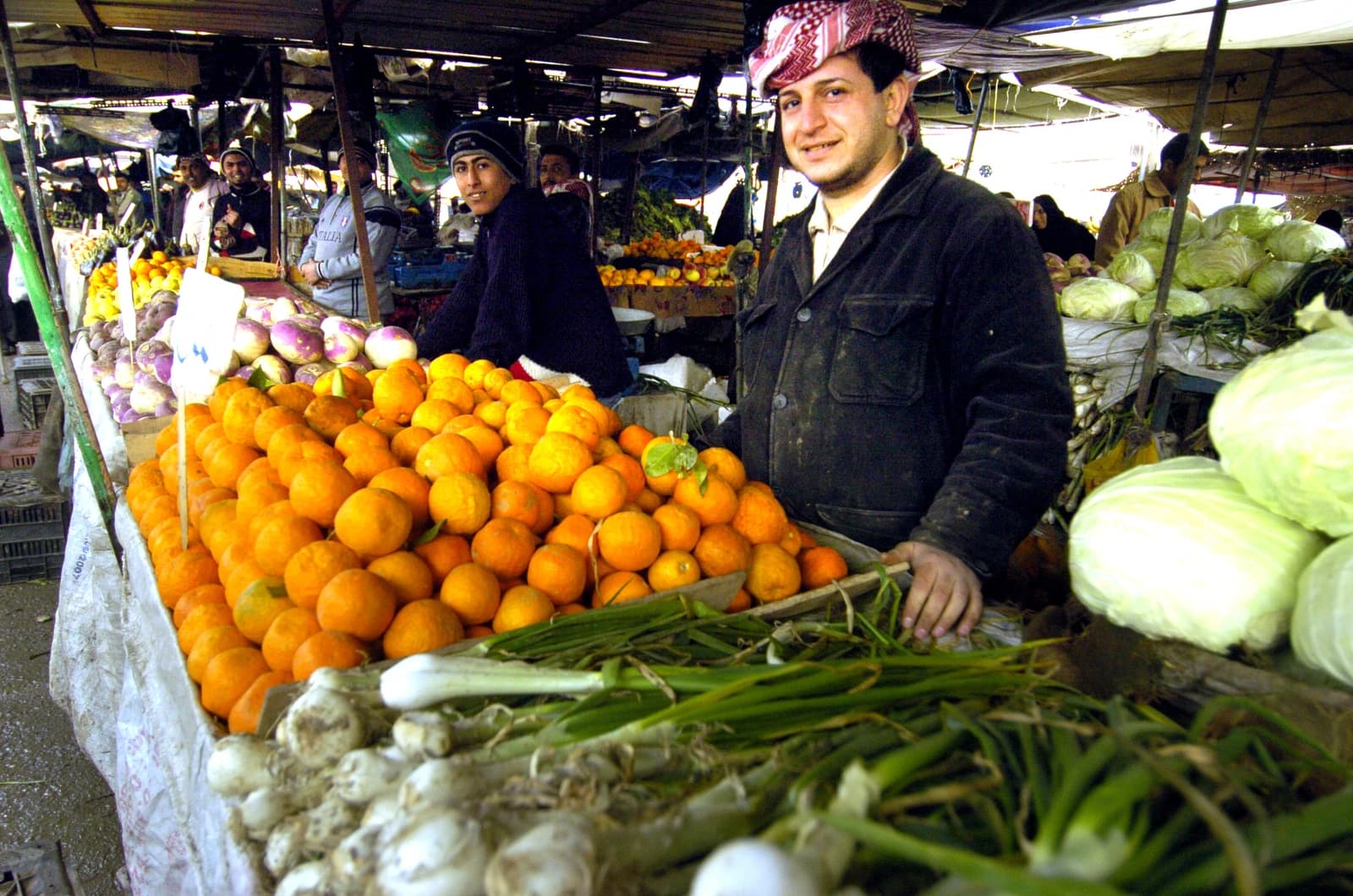
A Baghdad conference this month brought together more than 160 researchers, officials, employers and worker representatives to press for practical reforms, but the immediate economic significance lies in whether the debate translates into hiring, skills matching and better protections rather than another round of policy pledges. Iraq’s labour market remains one of the region’s most fragile: a 2021 labour force survey showed unemployment at 16.5%, with youth unemployment at 35.8%, while 66.6% of jobs were informal.
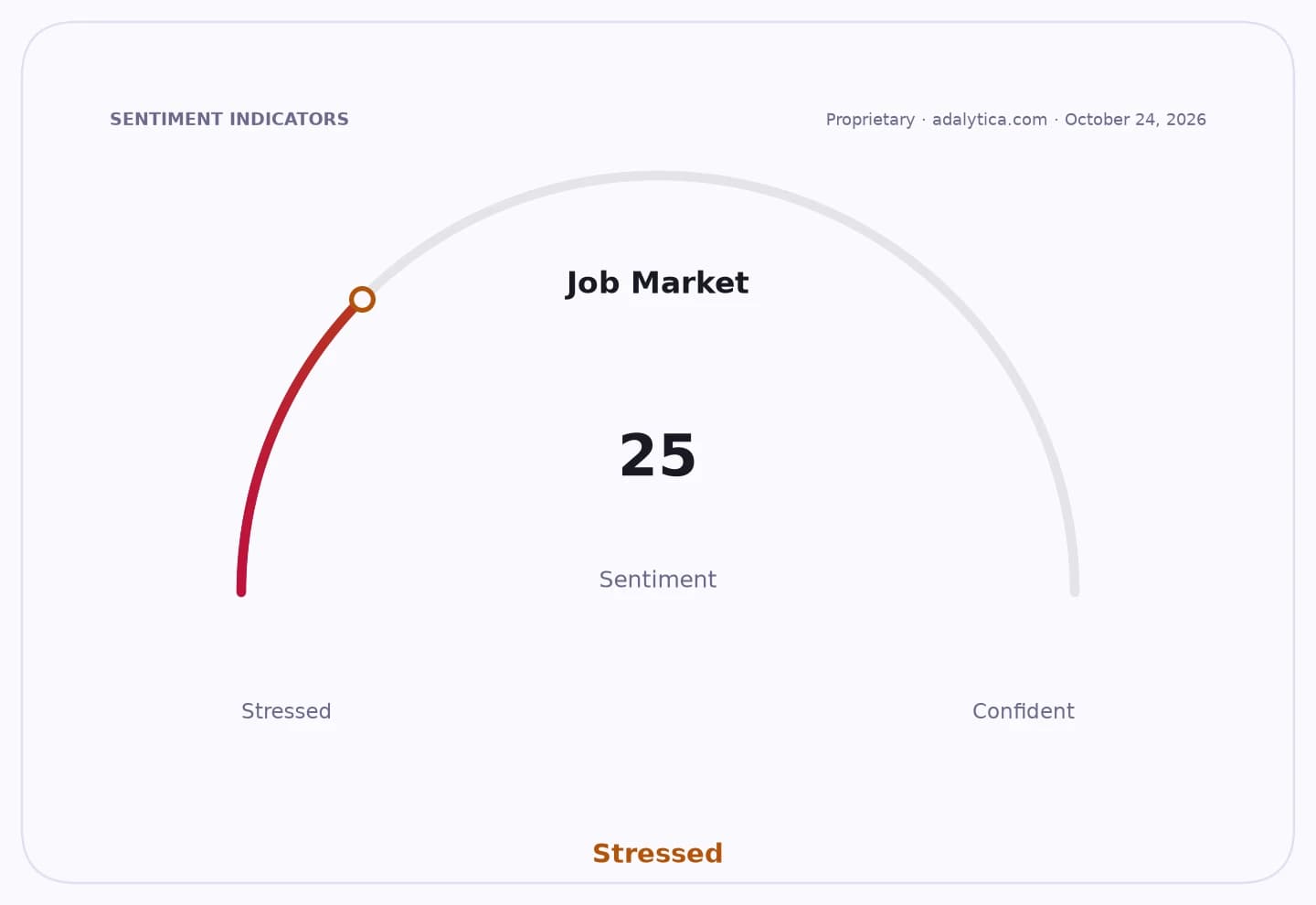
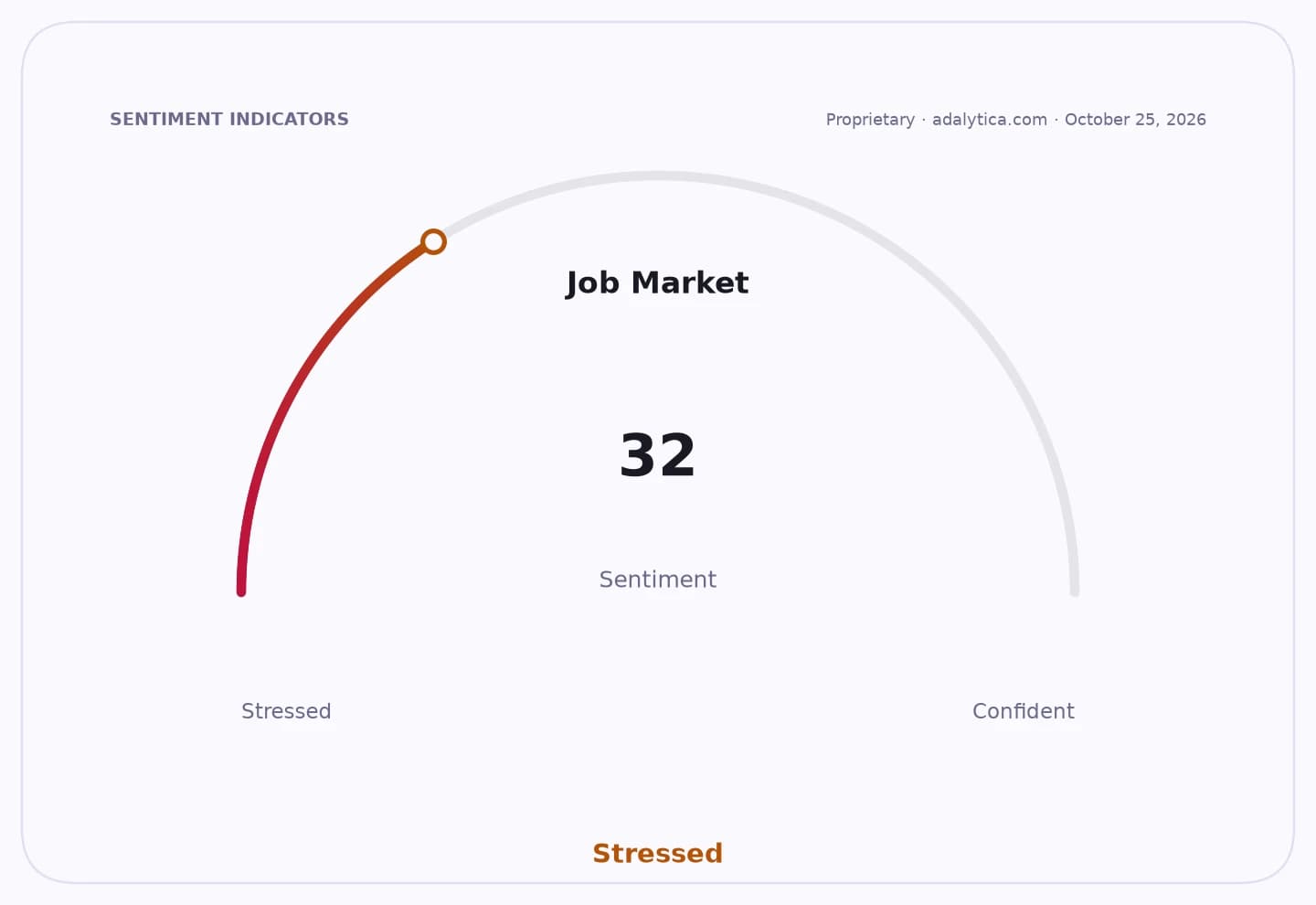
Sentiment Indicators
Job Market
That combination matters for investors and local firms because weak formal employment limits household purchasing power and makes demand more volatile for retailers, wholesalers and service companies. Better-quality jobs would not only raise incomes but also support consumption of essentials such as food, transport and housing, which in turn can improve the revenue base for neighbourhood businesses. But the effect depends on whether job creation is broad enough to reach households beyond the public sector and capital-heavy industries.
The conference, organised with the European Union, the International Labour Organization and Iraq’s Supreme Judicial Council, did not produce a new jobs budget, binding timetable or quantified hiring target. That leaves implementation as the key test. Training programmes that are not tied to verified vacancies could leave graduates better credentialed but still unemployed, a recurring problem in economies where education systems evolve faster than the private sector’s capacity to absorb labour.
For smaller employers, the upside is more practical than abstract. Training aligned with business needs can help fill routine but essential roles in inventory control, equipment maintenance, bookkeeping and digital payments. That could reduce recruitment frictions and raise productivity, particularly for firms that struggle to hire workers with the right mix of basic and technical skills. The downside is that compliance costs could rise if formalisation advances faster than support for small firms that must learn payroll, registration and contribution requirements.
Women’s participation is another major economic lever. The same 2021 survey showed female labour-force participation at just 10.6%, versus 68% for men, underscoring how much productive capacity remains untapped. Addressing childcare, transport and workplace discrimination could widen the labour pool and create second incomes in households, which would likely be good for consumption and for domestic demand more broadly. For employers, it would expand the candidate base at a time when skilled labour shortages remain a constraint.
Iraq’s 2023 social security reform gave the country a legal framework to extend coverage toward informal workers and the self-employed, and to add maternity and unemployment benefits. But legal rights only matter if registration, enforcement and benefit delivery work in practice. For policymakers, the more durable measure of success will be whether training places lead to sustained employment, whether women stay in the workforce, and whether formalisation comes with predictable rules rather than administrative burdens that push smaller businesses back underground.
For investors, the story is less about immediate market-moving policy than about the medium-term health of Iraq’s domestic economy. If the government can convert education spending and social protection reforms into better job matching, stronger labour participation and more formal work, it would support consumer demand and improve operating conditions for local businesses. If not, Iraq risks producing more qualifications without more livelihoods, and the gap between policy ambition and economic reality will remain a drag on growth.
| Entity | Gains | Losses |
|---|---|---|
| Iraqi workers | ▲Better job access | ▼Precarious informal work |
| Women and youth | ▲Wider labour participation | ▼Exclusion from formal jobs |
| Small businesses | ▲More skilled labour, stronger demand | ▼Higher compliance burden |
| Policymakers | ▲Measurable employment progress | ▼Policy credibility if delivery stalls |