Italy’s government is preparing a 2027 budget worth 23.5 billion euros, with the biggest stakes for families, the health system and companies facing a still-fragile economy and tighter fiscal room.
Italy budget plan focuses on families, health and firms
The plan matters because the spending mix will show whether Rome is using what limited budget space it has to support domestic demand, ease pressure on households and protect business investment — or whether deficit and debt concerns will force a more restrained package. With public finances already under scrutiny across Europe and growth still uneven, the allocation will be read as a signal of the government’s priorities for consumption, labor-market support and competitiveness.
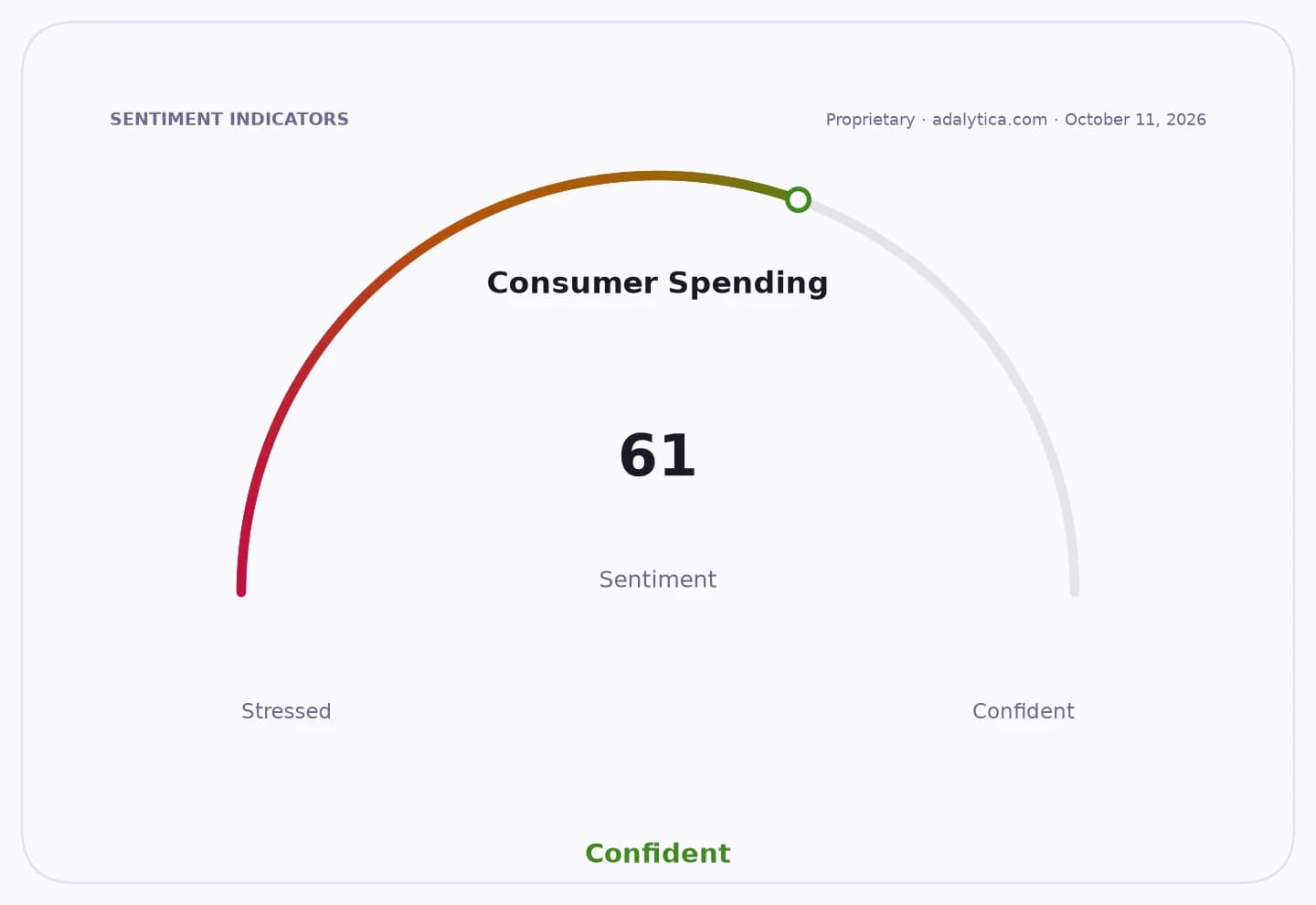
Sentiment IndicatorsⓘProprietary · adalytica.com · October 19, 2026
This is a snapshot — live sentiment, awareness and momentum for 130+ markets update continuously in the dashboard.Open AlphaPulse
For investors, the details will matter for Italian sovereign risk, bank shares and domestically focused sectors that depend on fiscal support. A larger tilt toward families could help consumption and consumer-facing companies, while healthcare spending would support public service providers and equipment suppliers. Measures for businesses could aid smaller firms and industrial names, but any larger-than-expected giveaway would also raise questions about how Rome plans to finance it.
The budget also comes as markets remain sensitive to debt sustainability in Europe, with investors watching whether Italy can deliver growth without widening its financing burden. Any measures that boost near-term activity could help sentiment toward Italian assets, but a weak package or one seen as fiscally loose could revive pressure on bonds and weigh on the banking sector, which holds large amounts of sovereign debt.
The main focus now is the final split of the 23.5 billion euros and whether the government can keep households and firms supported without alarming bond investors.
| Entity | Gains | Losses |
|---|---|---|
| Italian families | ▲Higher support and tax relief | ▼Smaller-than-expected transfers |
| Healthcare sector | ▲More public funding | ▼Underfunded services |
| Small businesses | ▲Incentives and liquidity support | ▼Higher taxes or limited aid |
| Italian bondholders | ▲Fiscal discipline | ▼Bigger deficit concerns |