Italy’s pensions are set for a larger inflation-linked increase in 2027, with preliminary estimates pointing to a 2.9% revaluation that would boost monthly payments across income brackets and slightly ease pressure on household purchasing power.
Italy pensions set for 2.9% inflation revaluation

The figure is still provisional and will be finalized in a year-end ministerial decree, but it gives retirees, the Treasury and markets an early read on the size of the next automatic adjustment in one of Italy’s largest recurring social expenditures. Because pensions are indexed to inflation, a higher revaluation rate feeds directly into public spending at a time when budget room remains constrained and the cost of living is still shaping consumer demand.
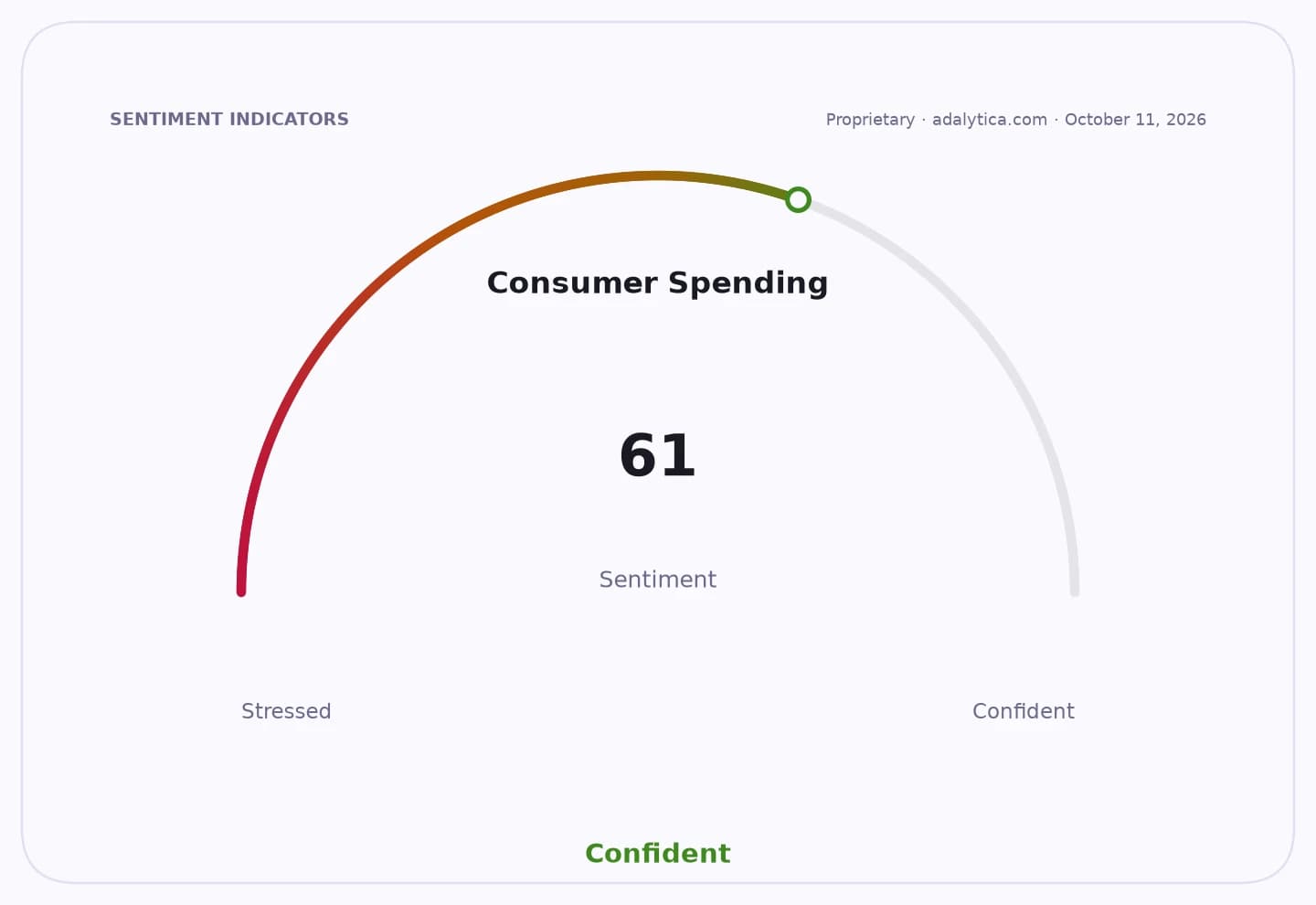
Sentiment IndicatorsⓘProprietary · adalytica.com · October 16, 2026
This is a snapshot — live sentiment, awareness and momentum for 130+ markets update continuously in the dashboard.Open AlphaPulse

For lower pensions, the increase would be applied in full, while higher checks would receive a progressively smaller share under Italy’s sliding-scale system. That structure is designed to protect smaller incomes first, but it also means the fiscal bill is not linear: each additional tenth of a point in the revaluation rate raises spending, while the distribution rules determine how much flows to retirees with more modest benefits versus those at the top of the pension ladder.
The estimate is based on inflation trends during the year and compares with 2026, when the revaluation was lower. Recent CPI readings have eased from the peaks that forced more aggressive upratings in prior years, but the projected 2.9% still implies another meaningful automatic increase in nominal benefits. That matters for consumption, because pensioners make up a large and relatively stable share of Italian household spending, and changes to their disposable income can affect demand for essentials, utilities and services.
Investors will also be watching the macro knock-on effects. A higher pension revaluation can modestly support consumption and reduce stress on lower-income households, but it also adds to Italy’s structural spending obligations at a time when bond markets remain sensitive to fiscal slippage. The country’s 10-year yield has held above 5%, underscoring how quickly investors can punish signs that social spending is drifting higher without offsetting savings or faster growth.
The policy backdrop is broader than a single year’s indexation. Rome is also preparing a separate decree to widen survivor benefits for some unregistered couples with children, a sign that pension policy remains politically active as elections approach. Together, the measures point to a government trying to balance social protection with budget discipline — a trade-off that will keep pension reform, inflation and public finances closely linked into 2027.
For markets, the key question is not just the size of the final 2027 adjustment, but whether Italy can absorb higher pension spending without eroding confidence in its fiscal path. For retirees, the immediate effect is more straightforward: a 2.9% revaluation would translate into a noticeable, if uneven, rise in checks from January, pending the final decree.
| Entity | Gains | Losses |
|---|---|---|
| Pensioners with lower benefits | ▲Full inflation protection | ▼Smaller real gain if prices stay firm |
| Higher-income retirees | ▲Nominal increase, though tapered | ▼Smaller indexation share |
| Italian households | ▲Higher disposable income | ▼Potentially weaker fiscal flexibility |
| Italian Treasury/Bondholders | ▲Near-term spending predictability | ▼Higher structural pension outlays |