France’s Agirc-Arrco will raise supplementary pensions by 1.4% from Nov. 1, a smaller increase than expected inflation and a reminder that retirement income is being squeezed even in one of Europe’s better-funded private pension systems.
France Agirc-Arrco raises pensions 1.4% from Nov. 1
The decision matters because Agirc-Arrco covers 14 million retirees in France’s private sector and acts as a key barometer of how far social partners are willing to protect purchasing power without weakening long-term solvency. The regime’s reserves exceed 90 billion euros, or about 10 months of benefit payments, giving managers room to support pensions, but not enough to ignore the rules designed to keep the system balanced over 15 years.
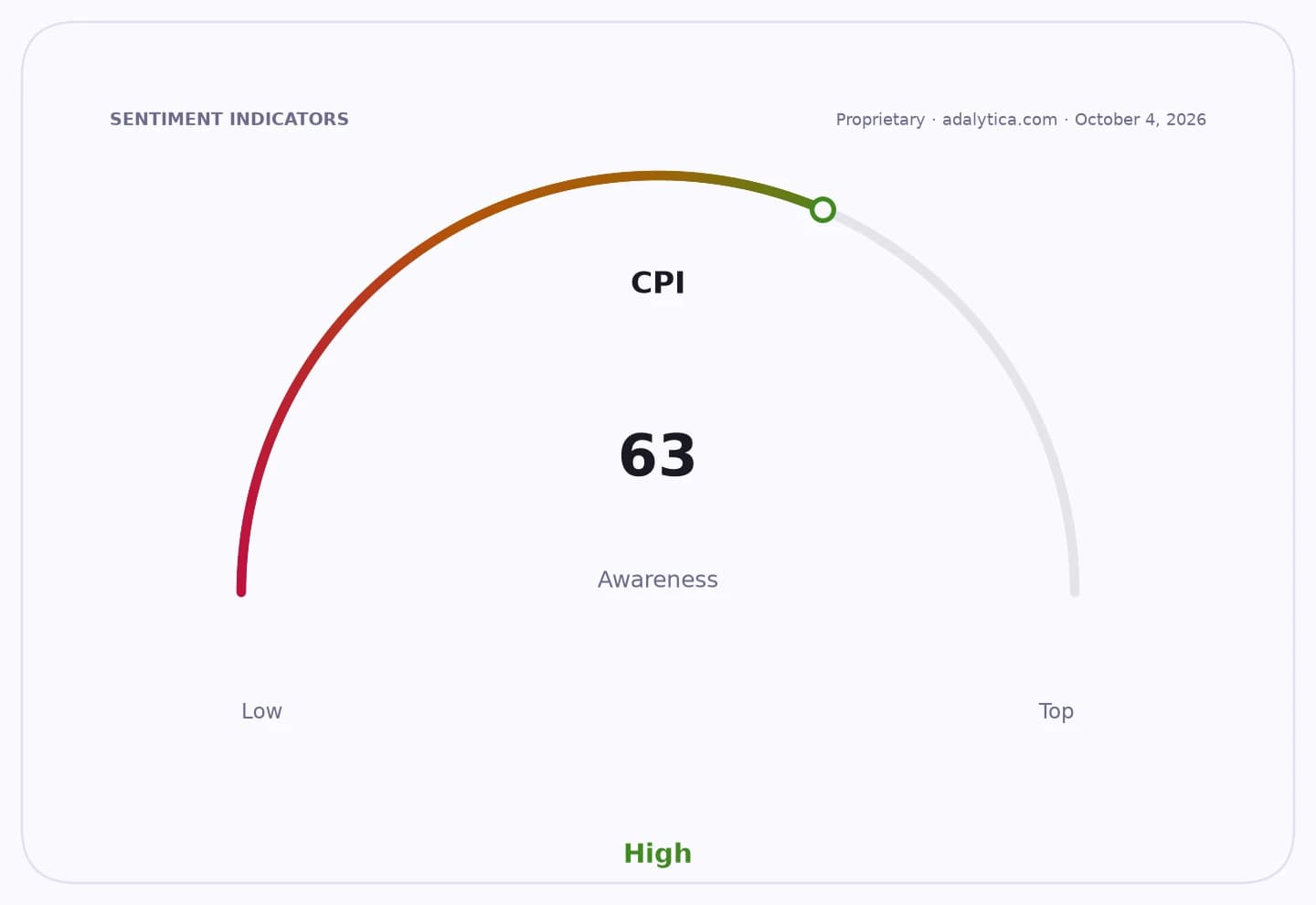
Sentiment IndicatorsⓘProprietary · adalytica.com · October 16, 2026
This is a snapshot — live sentiment, awareness and momentum for 130+ markets update continuously in the dashboard.Open AlphaPulse
The 1.4% increase sits inside the regime’s preset band of 1.2% to 1.9% and comes after a failed round of talks last year that left pensions frozen and dented confidence in the paritarist model. This year’s compromise suggests the employers’ Medef and the unions preferred to preserve governance stability rather than force a larger uplift that could have been read as politically generous but financially imprudent ahead of a tense election cycle.
The gap with inflation is what will matter most to households. Agirc-Arrco says the formula starts from expected inflation of 2% and is reduced by 0.4 percentage point, with the board able to trim or lift the rate depending on the fund’s health. That means retirees will again see real purchasing power lag price growth, even if the cut is less severe than a full freeze. For many private-sector pensioners, the supplementary plan makes up a significant share of income, around 30% for lower earners and up to 60% for cadres, so the erosion is not trivial.
Politically, the timing is sensitive. The government is already looking for savings on pensions in 2027, and any below-inflation increase from Agirc-Arrco will feed the broader debate over who bears the burden of fiscal consolidation: retirees, employers or taxpayers. The decision also underlines the limits of social bargaining in France, where pension settings increasingly intersect with budget pressures and election politics.
For investors, the immediate impact is indirect but still relevant. Lower pension growth supports the system’s solvency and reduces the risk of abrupt rule changes, which is positive for bondholders and for the credibility of France’s labour-management institutions. But it also reinforces the drag on consumer spending, especially among older households with a high propensity to consume essentials such as rent, food and utilities. That matters for retailers, utilities and domestic demand names more broadly, even if the market reaction will be muted.
The larger takeaway is that France’s pension architecture is still functioning, but under strain. A 1.4% rise avoids another governance rupture, yet it leaves retirees with less protection against inflation and keeps the pressure on policymakers as they head toward another round of retirement-rule negotiations in 2027.
| Entity | Gains | Losses |
|---|---|---|
| Agirc-Arrco regime | ▲Preserves solvency | ▼Faces ongoing political scrutiny |
| Employers and unions | ▲Avoid governance breakdown | ▼Accept weak real-terms uplift |
| Retirees | ▲Get an increase after freeze | ▼Lose purchasing power |
| Consumer-facing French companies | ▲Stabilized pension system | ▼Softer household spending |