Italy’s government has cleared the draft budget plan for Brussels, but the real market story is that Rome still has not identified how to fund a fiscal package that is being squeezed by inflation, higher interest rates and only limited deficit room.
Italy budget plan faces funding gap and levy risk
Economically, the message is that Finance Minister Giancarlo Giorgetti is preparing a tighter-than-usual budget in which every major measure competes for a narrow pool of resources. The cabinet approved the Documento programmatico di bilancio, confirming the spending path already set out in parliament, but leaving little additional flexibility beyond the temporary carve-out for energy and defence spending. That means the government has no obvious buffer for politically popular tax cuts or household support unless it can extract more money from specific sectors.
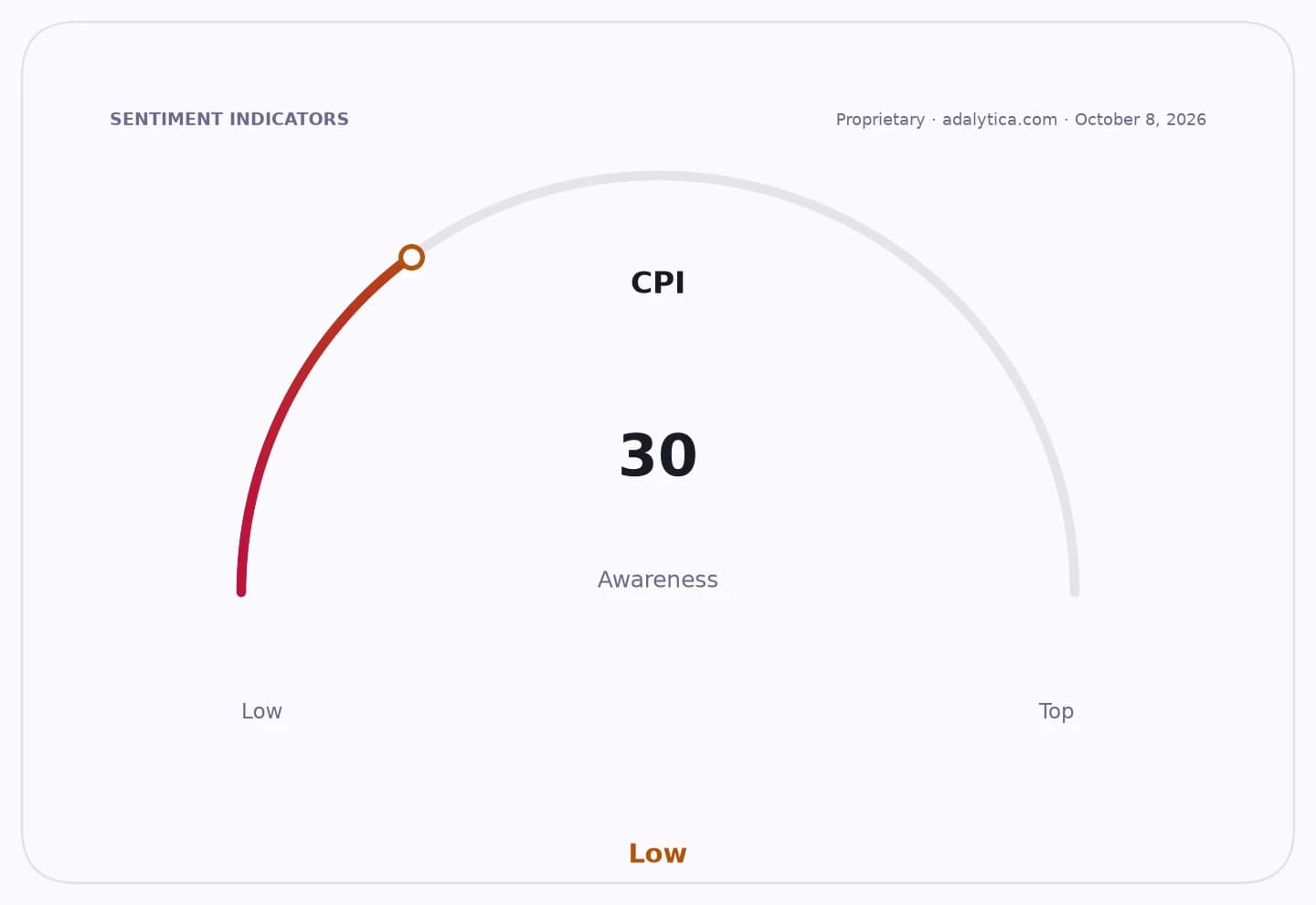
Sentiment IndicatorsⓘProprietary · adalytica.com · October 16, 2026
This is a snapshot — live sentiment, awareness and momentum for 130+ markets update continuously in the dashboard.Open AlphaPulse
The gap is material. Rome is looking for roughly 7 billion to 8 billion euros in ordinary financing, according to the report, on top of 14.4 billion euros a year in extra deficit allowed under the EU clause split between energy and defence. That leaves the cabinet trying to fund a tax-cutting budget without broad-based borrowing capacity. Giorgetti’s warning that there are “clouds on the horizon” reflects not just cautious rhetoric but the reality that higher prices are already feeding into the fiscal debate by reducing real purchasing power and making household relief more expensive.
For investors, the key implication is that the burden of financing is shifting toward domestically sensitive sectors. Banks and insurers are now back in the frame after Deputy Prime Minister Antonio Tajani signaled openness to a contribution, while energy groups and gambling concession holders are also being targeted. The government is considering about 1 billion euros over two years from gaming concessions alone, including extensions on betting, bingo and slot operations and the Gratta&Vinci tender due in 2028. Any move on bank levies or sector contributions could weigh on earnings expectations, revive regulatory risk premiums and keep Italian financials under pressure.
The budget fight also puts the proposed middle-class Irpef cut in doubt. Raising the 33% tax bracket threshold from 50,000 euros to 60,000 euros would provide a visible boost to disposable income, but it is exactly the kind of measure that becomes vulnerable when funding is scarce. If Rome prioritizes debt discipline and EU compliance, the package may end up narrower than coalition parties want, with more modest household relief and fewer growth-supportive measures.
That matters beyond politics because Italy is trying to manage inflation while preserving fiscal credibility in a high-rate environment. The latest U.S. inflation data in the context also underline how persistent price pressures can complicate policy, keeping borrowing costs elevated and narrowing fiscal room. In Europe, the same dynamic keeps attention on sovereign spreads and on how much flexibility Brussels will tolerate as member states juggle defence, energy and domestic tax relief.
The next few weeks will determine whether the government can turn this framework into a credible budget before the bill reaches the lower house around Oct. 28. If Brussels grants the requested flexibility, Giorgetti may have enough room to protect some household measures. If not, the cabinet will have to choose more starkly between tax cuts, social support and keeping the numbers aligned with EU limits — a trade-off that will shape both Italian growth and market confidence.
| Entity | Gains | Losses |
|---|---|---|
| Italian government | ▲EU budget credibility | ▼Room for tax cuts |
| Banks and insurers | ▲Limited if excluded | ▼Higher levy risk |
| Energy companies | ▲Possible pass-through gains | ▼Extra contributions |
| Italian households | ▲Some relief if Irpef cut survives | ▼Disposable income support delay |