Italy has approved a 10-year, €1 billion response for the Campi Flegrei area that combines grants for seismic upgrading, mortgage suspension through end-2027 and a centralized recovery structure, turning a local bradyseismic emergency into a long-horizon public spending and housing-stability policy.
Italy Approves €1 Billion Campi Flegrei Response
The decree matters because it shifts Rome from crisis management to prevention in one of the country’s most exposed and politically sensitive regions. Campi Flegrei, west of Naples, is home to about 85,000 people in 15,000 buildings, where renewed seismic activity has raised the economic cost of waiting: damaged homes, displaced residents, delayed investment and the risk that households and lenders pull back from an area already under strain.
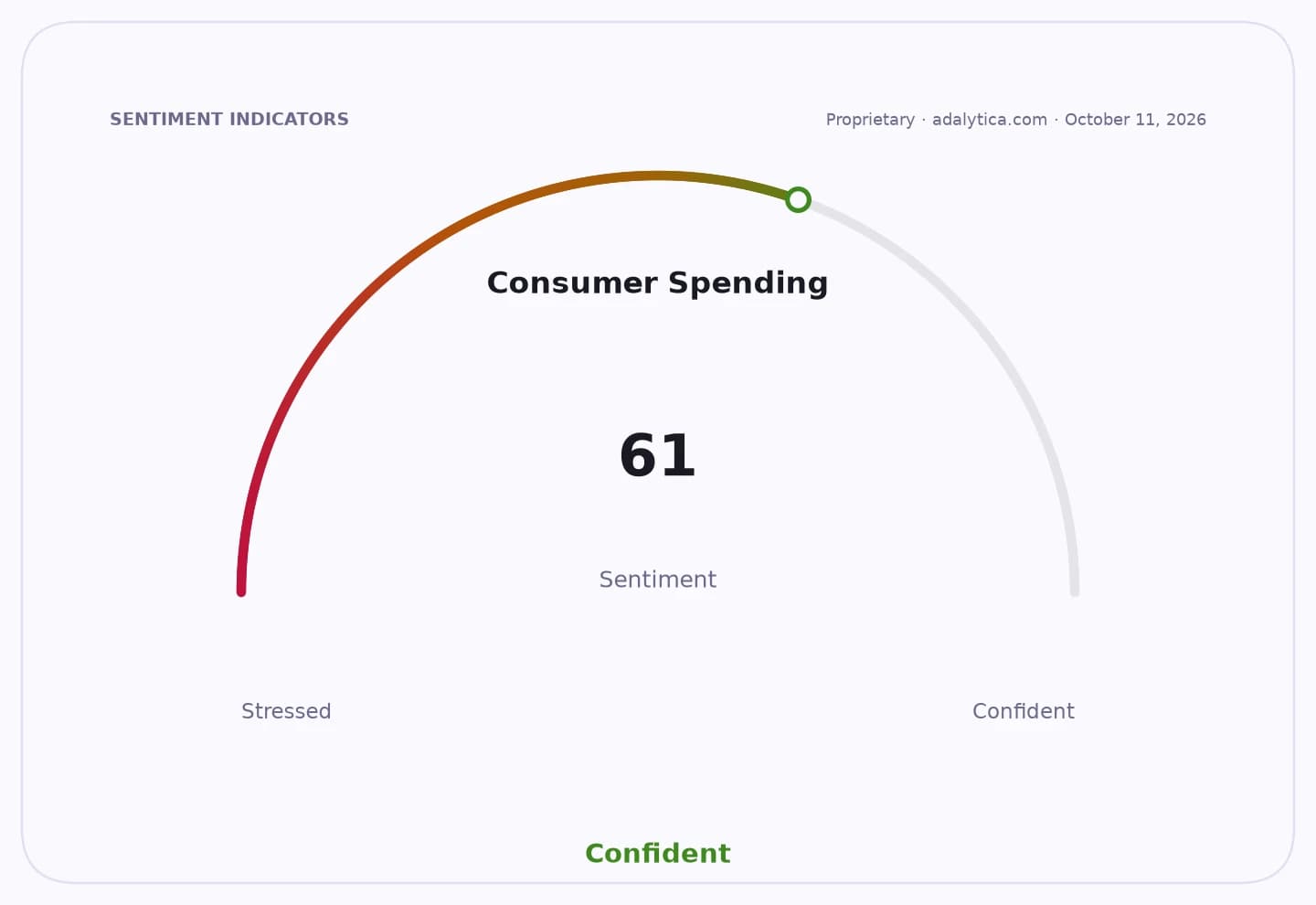
Sentiment IndicatorsⓘProprietary · adalytica.com · October 14, 2026
This is a snapshot — live sentiment, awareness and momentum for 130+ markets update continuously in the dashboard.Open AlphaPulse
Under the plan, the state will cover 70% of costs to make properties safe, rising to 100% for households with annual income below €28,000. That is a meaningful balance-sheet intervention for homeowners who would otherwise struggle to finance retrofits in an area where the hazard is structural rather than episodic. The mortgage suspension, which runs until the end of 2027, is also a direct liquidity measure for families facing both housing insecurity and uncertain property values.
For investors, the decree is less about the direct size of the spending than about what it says on sovereign willingness to absorb long-tail disaster risk. A €1 billion fund over 10 years is not large by national budget standards, but it creates a visible state backstop that can support local banks, limit forced selling and reduce the chance of a deeper housing-market freeze around Naples. It also signals that Italy intends to treat the area as an ongoing capital-allocation problem rather than a one-off disaster relief case.
The governance design reinforces that approach. The president of Campania will act as commissioner with responsibility for the program’s timing and delivery, while civil protection keeps monitoring and emergency coordination. Rome is effectively separating prevention from emergency response, trying to avoid a structure that would lapse once displaced residents return or headlines fade.
The main bullish case is that the decree improves resilience, stabilizes household finances and reduces the odds of a disorderly economic hit if seismic activity intensifies. The bear case is that implementation will be slow, funds may prove insufficient for the scale of adaptation required and a prevention program cannot remove the underlying geological risk. For markets, the key question is whether the state can turn the promise of long-term protection into faster retrofits, fewer displacements and a clearer funding path for a region that has lived for years on the edge of catastrophe.
| Entity | Gains | Losses |
|---|---|---|
| Campi Flegrei residents | ▲Mortgage relief, retrofit aid | ▼Continued exposure to seismic risk |
| Italian state | ▲Lower chance of disorderly crisis | ▼Higher fiscal commitments |
| Local banks/lenders | ▲Fewer forced defaults | ▼Delayed loan repayments |
| Construction/retrofit sector | ▲Publicly funded demand | ▼Capacity and execution pressure |