Companies in Japan are paying workers bonuses to champion artificial intelligence, turning AI adoption from a technology budget item into a labor-productivity strategy.
Japan AI Bonuses Signal Enterprise Adoption Demand

The move matters because Japan’s most stubborn economic constraint is not capital but people. A shrinking workforce and chronic labor shortages have made productivity gains central to corporate growth, wage negotiations and the country’s broader inflation outlook. By rewarding employees who spread AI tools across departments, companies are trying to accelerate adoption without waiting for wholesale restructuring.
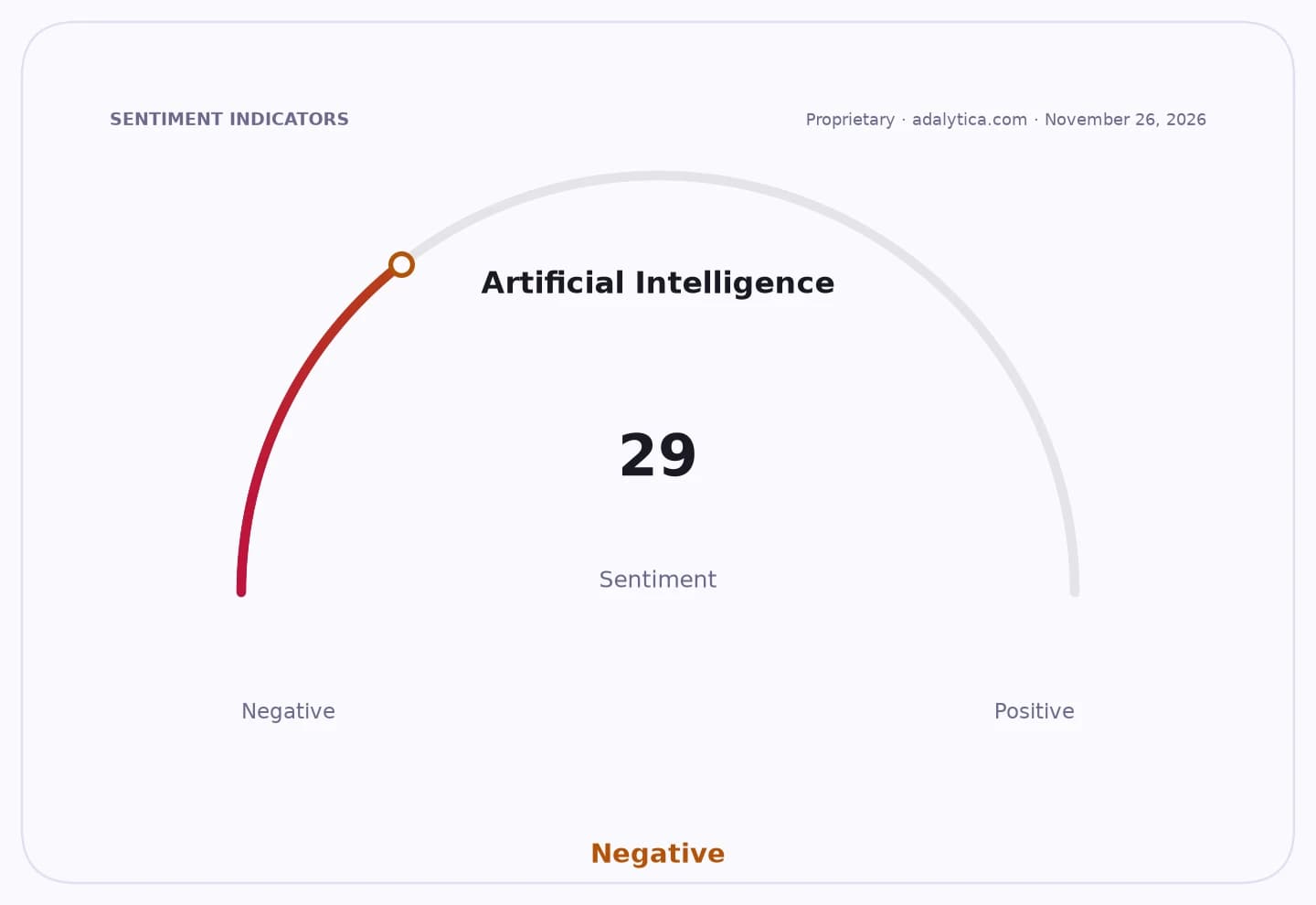
Sentiment Indicators
The incentives also show how quickly AI is moving into mainstream workplace practice. Rather than limiting the technology to engineers or back-office pilots, Japanese employers are using pay to create internal advocates who can identify use cases, train colleagues and push automation into daily operations. That makes the policy a corporate response to the same pressures shaping national AI strategy: Japan has approved a controversial AI law while local developers, including Sakana AI, seek to promote greater technological independence.
For investors, the shift is a demand signal. If Japanese companies can convert AI pilots into routine workflows, spending on cloud services, productivity software, cybersecurity and computing infrastructure should become less discretionary. Microsoft, Nvidia and Alphabet remain among the global companies most exposed to that enterprise AI buildout, even as markets have become more selective about the trade.
Recent price action reflects that tension. Nvidia closed at $210.96 on July 10, above its 50-day and 200-day moving averages, while Microsoft ended at $385.10, below both benchmarks. Alphabet closed at $357.18, below its 50-day moving average but still above its 200-day average. Those conventional technical indicators suggest investors are still rewarding parts of the AI infrastructure story while questioning how quickly software and platform spending translates into earnings.
Sentiment is similarly uneven. Adalytica.com’s AI sentiment gauge stood at a neutral 56, though awareness was in “fear” territory at 22. Nvidia earnings sentiment was weaker at 19, while Microsoft earnings sentiment was neutral at 33. That mix points to a market no longer willing to buy every AI-linked story at any price, even as corporate adoption broadens.
The Japanese bonus programs also come with risks. AI use in workplaces has raised concerns about governance, cybersecurity, data handling and employee readiness. Microsoft has warned in regulatory filings that issues in the development, deployment and use of AI may create reputational, competitive or legal harm, reflecting the broader challenge facing companies that want speed without losing control.
Japan’s experiment may become a template for other aging economies: pay employees not only for output, but for helping redesign how output is produced. The next test is whether bonus-led adoption can deliver measurable productivity gains before investor patience with AI spending wears thinner.
| Entity | Gains | Losses |
|---|---|---|
| Japanese employers | ▲Faster productivity gains | ▼Higher governance burden |
| AI-skilled workers | ▲Bonus pay and influence | ▼More performance scrutiny |
| Global AI vendors | ▲Broader enterprise demand | ▼Valuation pressure |
| AI laggards | ▲None | ▼Competitive disadvantage |