JPMorgan Chase, HSBC and StoneX have executed the first trades in a new form of digital gold in London, a step that could reshape how the world’s biggest bullion hub moves metal, settles transactions and manages collateral.
JPMorgan, HSBC and StoneX test digital gold in London

The test trades involved fractional ownership stakes in physical gold bars, according to the World Gold Council, marking one of the clearest signs yet that the London gold market is trying to digitize an asset long dominated by over-the-counter dealing and paper claims. For banks and market participants, the appeal is efficiency: faster transfer of ownership, easier financing against gold holdings and potentially lower settlement frictions in a market that underpins everything from central bank reserves to ETF backing.
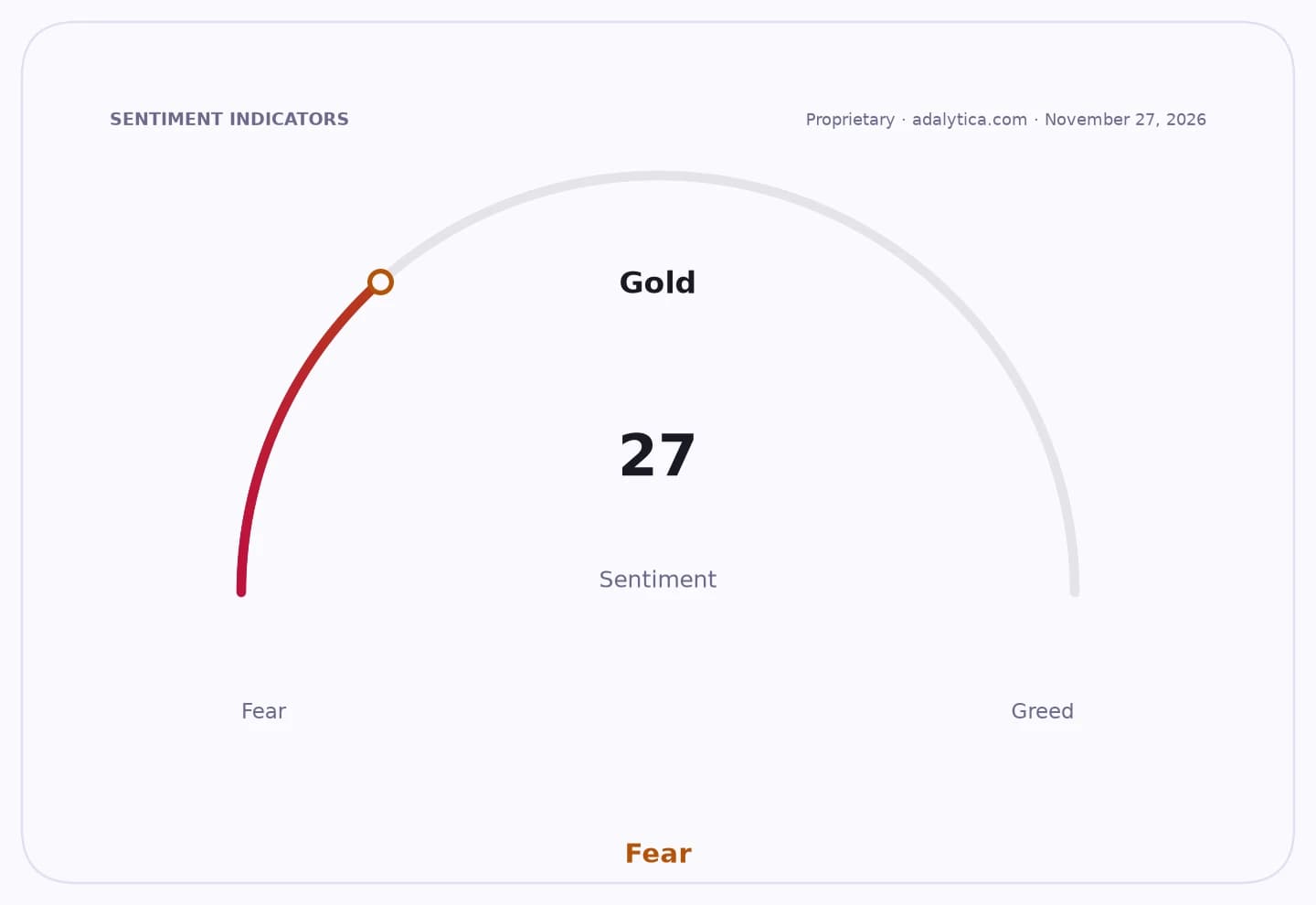
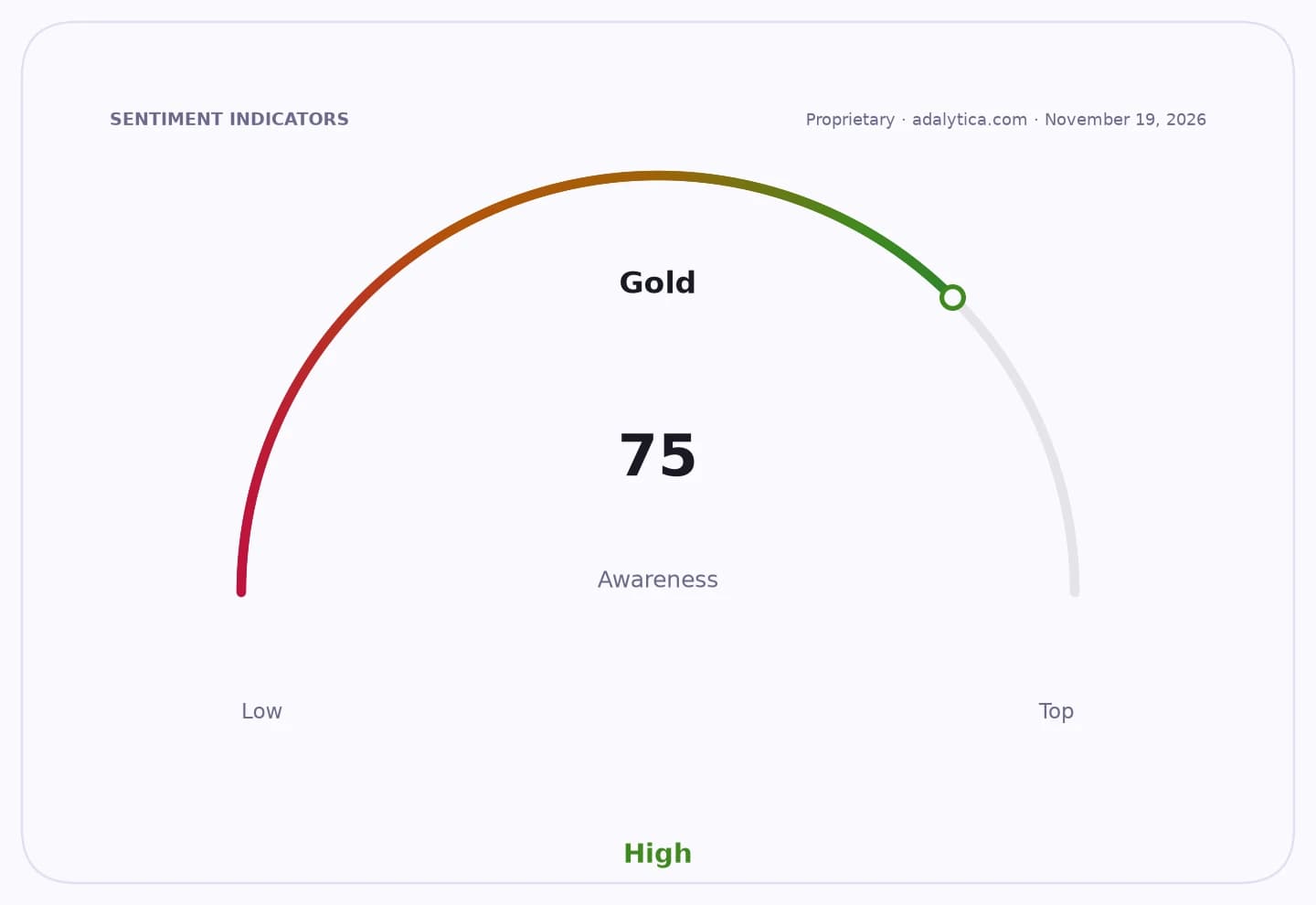
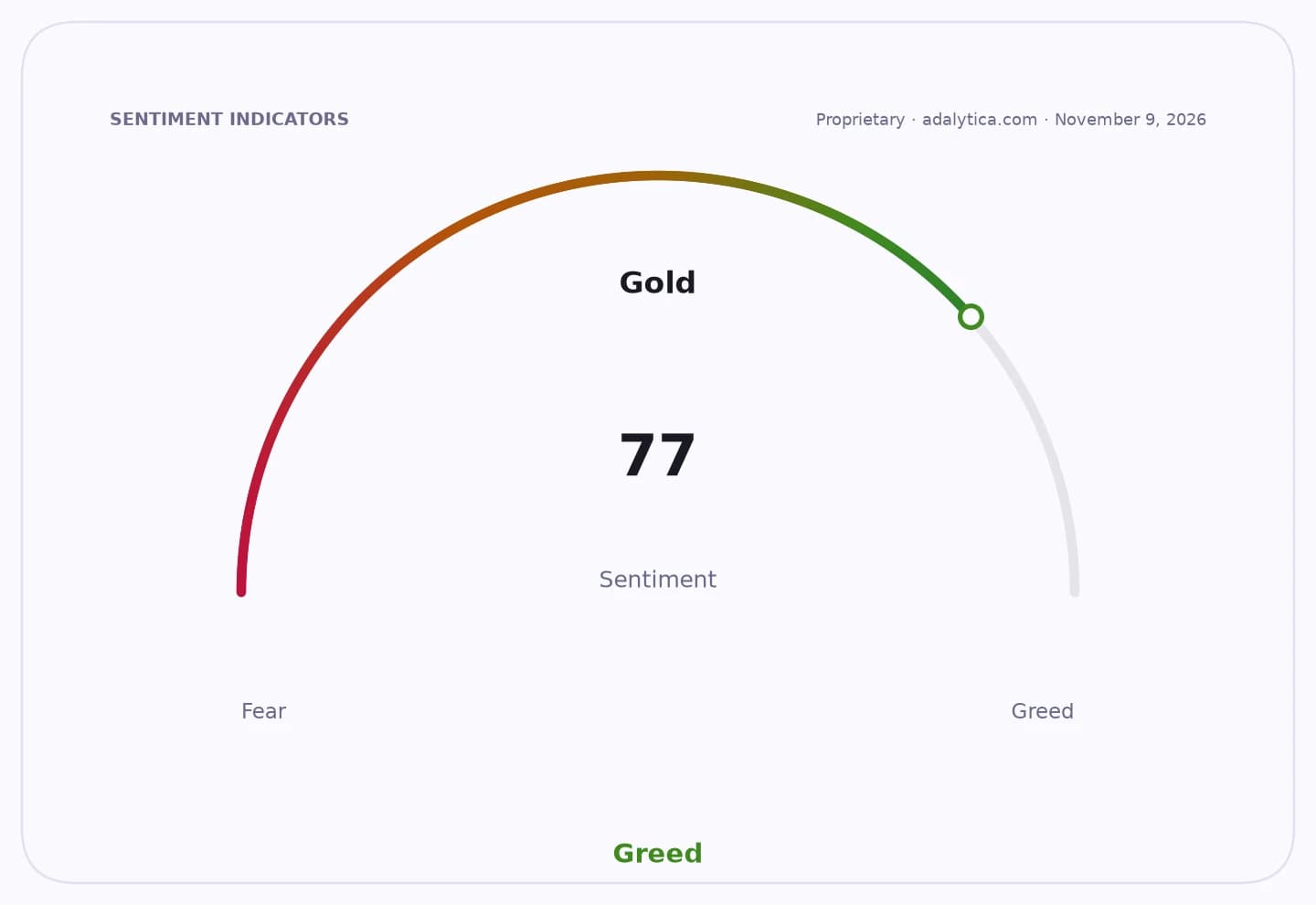
Sentiment Indicators
The development comes as gold remains highly volatile after a sharp pullback from recent highs. Comex gold futures were last around $3,640 an ounce, well below the year’s peaks but still far above the 50-day and 200-day moving averages, while the RSI suggests the market has cooled from overbought levels. The SPDR Gold Shares ETF, a major proxy for investor demand, has also swung lower, underscoring that the new trading system is arriving at a time when the precious metals market is adjusting to big price moves and shifting risk appetite.
London is critical because it is the center of global wholesale gold trading and the benchmark for pricing, clearing and vaulting. If digital ownership of bullion gains traction, it could eventually broaden participation, improve liquidity and make it easier for banks to move gold around the financial system without physically shifting bars each time a trade changes hands.
The effort also has implications for existing market infrastructure. The current system relies on allocated and unallocated gold accounts, vault operators and a web of bilateral relationships; a digital layer could streamline those processes but also challenge established intermediaries that profit from the old plumbing. For investors in gold miners and bullion-backed funds, a more efficient market could support deeper participation over time, even if the near-term price drivers remain macroeconomics, rate expectations and safe-haven demand.
Newmont, the largest listed gold miner, and gold-backed products such as GLD stand to benefit if easier trading attracts more institutional flows, while traditional market operators face pressure to adapt. The next question is whether the pilot expands beyond a handful of banks and becomes a broader market standard, a move that would depend on adoption by dealers, vaults and the London Bullion Market Association ecosystem.
| Entity | Gains | Losses |
|---|---|---|
| JPMorgan, HSBC, StoneX | ▲First-mover advantage | ▼Legacy trading frictions |
| London bullion market | ▲Faster settlement, deeper liquidity | ▼Old OTC plumbing |
| Gold investors and ETFs | ▲Easier access, broader flows | ▼None if adoption stalls |
| Traditional bullion intermediaries | ▲— | ▼Margin pressure from digitization |