Tokenized gold could grow from a niche crypto product into a market worth as much as $700 billion, the World Gold Council says, a shift that would redraw how investors access bullion and potentially channel new money into the metal without waiting for a fresh surge in traditional ETF demand.
World Gold Council Sees Tokenized Gold Growing
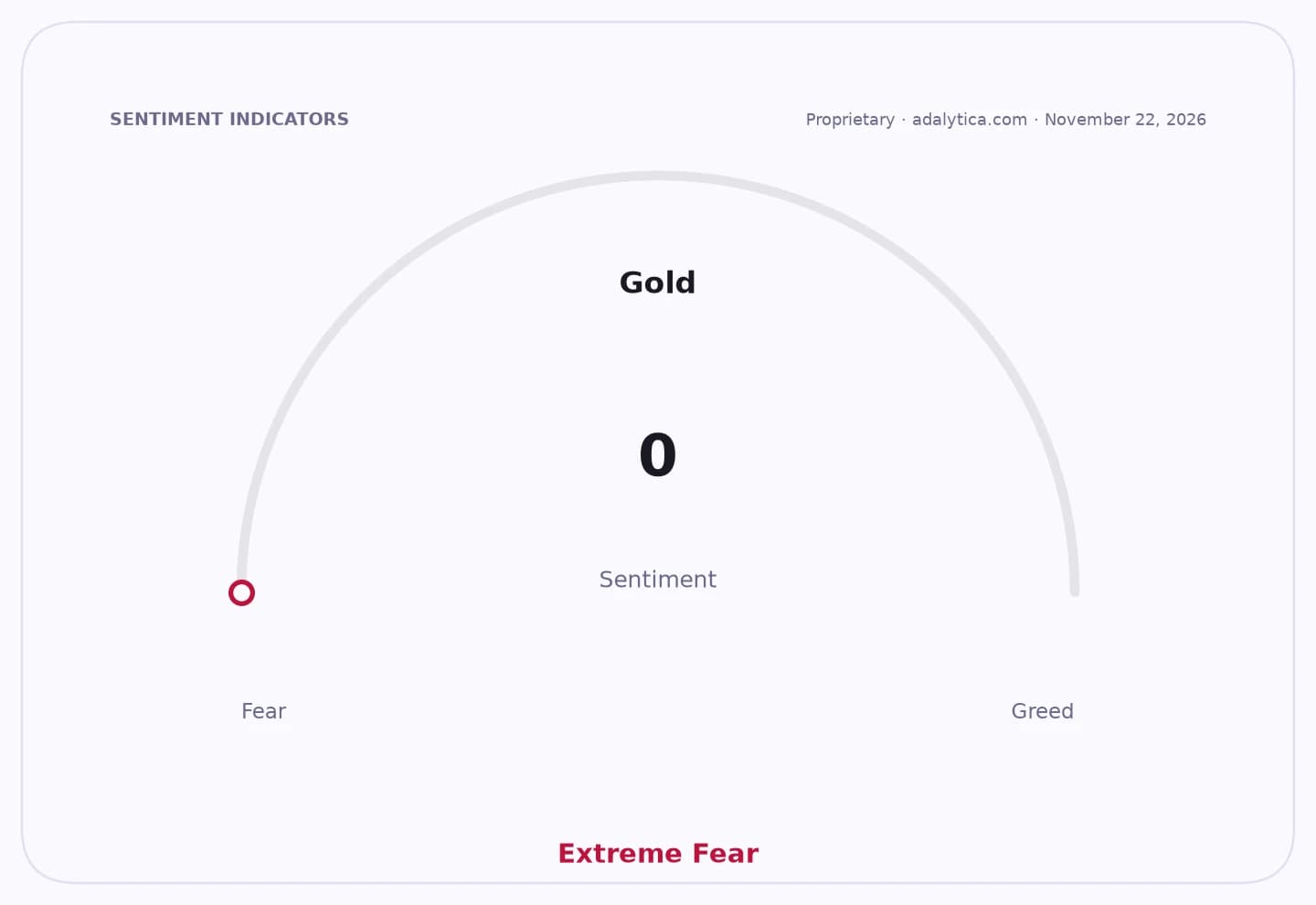
Gold
The council’s study argues that the biggest opportunity is not a simple migration from bars and gold-backed funds, but the creation of a new category of demand, especially from younger savers and investors who do not already own gold. That matters economically because even a modest conversion of latent interest into actual purchases would add incremental inflows to a market already worth about $13 trillion in physical investment gold, while expanding the ways gold can be used as collateral, traded and held within mainstream financial apps.
Sentiment Indicators
The WGC estimates tokenized gold and digital vault accounts together amount to only $45 billion to $55 billion today, a fraction of the $600 billion in gold-backed ETFs and less than 1% of the broader physical investment market. Yet token volumes have accelerated sharply, rising from $1.2 billion at the end of 2024 to $6 billion now, with Tether Gold and Paxos Gold accounting for more than 90% of the public token market. The council said more than 90 billion dollars’ worth of gold tokens traded in the first quarter of 2026 alone, more than in all of 2025.
That trading intensity is one reason tokenized gold is drawing attention from banks and crypto lenders alike. HSBC’s gold token in Hong Kong reportedly brought in new customers, underscoring the WGC’s view that distribution through familiar banking channels could matter more than the product itself. If investors want to buy through their bank apps rather than a crypto exchange, incumbents with existing relationships may capture a structural advantage over pure-play digital asset platforms.
The economics of the market depend on whether tokenized gold becomes useful beyond simple ownership. The WGC says demand will be strongest where tokens can be pledged, lent or traded easily, similar to how Paxos Gold and Tether Gold are already being used on Aave and other crypto credit venues. That utility could help explain why the tokens turn over about six times as fast as the large gold-backed ETFs, suggesting active trading rather than passive holding.
Still, the council’s base case is restrained. It sees the market reaching $160 billion to $170 billion by 2031 if friction falls, or only $70 billion to $80 billion if barriers persist. In the best case, the market could reach $270 billion to $280 billion, but that requires clearer regulation, easier redemption into physical metal, wider bank adoption and lower costs. The council assumes the gold price itself stays unchanged across those scenarios.
For investors, the opportunity is twofold. A successful tokenized-gold rollout could broaden gold’s investor base at a time when bullion products remain sensitive to real yields and dollar moves. But it could also intensify competition among gold ETFs, bullion dealers and crypto-native issuers as distribution shifts toward app-based platforms. The main risk is trust: more than 40% of respondents said a custody failure, fraud or hack would damage confidence, and redemption remains cumbersome in many jurisdictions.
The key question now is whether regulators and banks can turn experimentation into infrastructure. If Hong Kong, Britain and other financial centers create clearer rules and more flexible redemption, tokenized gold may evolve from a crypto niche into a mainstream wrapper for bullion. If not, the market may stay small even as trading volumes remain lively.
| Entity | Gains | Losses |
|---|---|---|
| HSBC and other banks | ▲New client flows | ▼Crypto-only rivals |
| Token issuers like Tether and Paxos | ▲Higher trading volume | ▼Legacy gold distributors |
| Gold investors seeking access | ▲Easier entry and collateral use | ▼Buyers facing higher trust risk |
| Gold ETFs and bullion dealers | ▲Less in the short run | ▼Potential share of new demand |