Binance’s push into tokenized U.S. stocks and ETFs is another step toward a market structure where crypto rails, not broker-dealer plumbing, become the default on-ramp for global investors.
Binance Expands Tokenized U.S. Stocks and ETFs

That matters because the world’s biggest crypto exchange is no longer just selling digital coins; it is trying to own the entire investment workflow. By adding more than 7,000 U.S. equities and funds, Binance is attacking the same friction that has long protected traditional brokers: account opening, settlement delays, banking access and trading-hour limits. If tokenized securities can be bought around the clock and settled in stablecoins, the exchange can offer a single venue for cash, crypto and traditional assets — a potentially powerful draw for traders in emerging markets who have historically been locked out of U.S. markets.
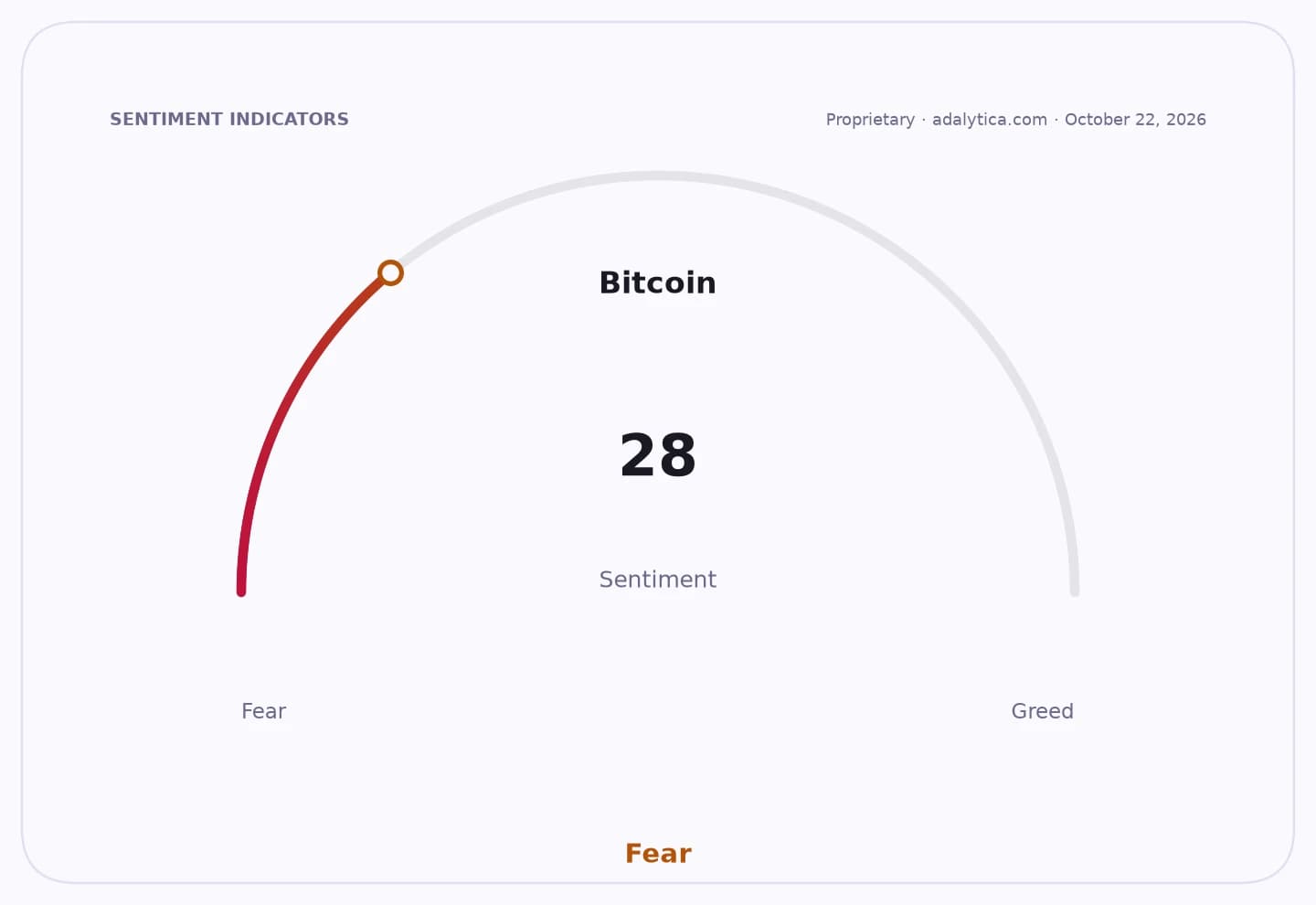
Sentiment Indicators
The economic significance is bigger than a product launch. Tokenization lowers the cost of moving between asset classes and could redirect trading activity toward platforms that can keep collateral, settlement and execution inside one ecosystem. Binance said more than 80% of direct stock trading volume in the first week came from emerging-market users, a reminder that the real prize is not replacing the U.S. equity market, but widening access to it for investors who lack efficient banking or brokerage access. That is a structural threat to the traditional model, where brokers, custodians and clearing firms capture the spread and the relationship.
For investors, the implications cut both ways. Binance’s expansion reinforces the long-term case for infrastructure tied to stablecoins, tokenization and on-chain settlement, while increasing competitive pressure on crypto exchanges and fintech platforms that rely on trading volume, wallets and cross-asset engagement. Robinhood and Coinbase already face a market where users expect one app to do everything; Binance is now raising the bar by folding tokenized stocks into a 24/7 environment. That raises the value of payment rails, custody, compliance and market-making infrastructure — the toll roads of the next financial system — while making plain-vanilla brokerage more vulnerable to disintermediation.
The move also lands at a time when crypto markets are fragile. Adalytica’s Bitcoin Fear & Greed Index shows “Extreme Fear,” while Bitcoin itself has come under heavy pressure, a reminder that the tokenization trade is not simply a bet on digital assets rising. It is a bet on where financial activity migrates next. Binance is positioning itself for the next phase: not just crypto speculation, but tokenized distribution of real-world assets.
The market underestimates how quickly that shift can compound. As tokenized collateral such as Franklin Templeton’s Benji funds and Circle’s USYC becomes more usable inside trading venues, the winner is likely to be the platform that can combine liquidity, yield, and instant settlement at scale. If Binance can keep expanding that model, the biggest beneficiaries may be stablecoin issuers, tokenization platforms and infrastructure providers — while legacy brokers, exchanges and custodians face a slower but very real erosion of relevance.
| Entity | Gains | Losses |
|---|---|---|
| Binance | ▲More users, more trading volume | ▼Higher regulatory scrutiny |
| Stablecoin issuers | ▲More settlement demand | ▼Traditional bank rails |
| Tokenization platforms | ▲Faster adoption | ▼Legacy brokerage model |
| Traditional brokers | ▲None | ▼Trading and custody flow |