A U.S. regional bank is drawing Wall Street attention because the rates backdrop is improving the economics of deposit-taking and lending, with JPMorgan turning more constructive as Treasury yields hold near 4.7% on the 10-year and credit spreads remain contained.
JPMorgan and regional banks benefit from higher yields

The key shift for investors is not just a single-stock call, but the idea that regional banks can compete more effectively with money-center giants when the yield curve and credit conditions support net interest income. That matters because regional lenders have spent much of the past few years fighting deposit competition, funding pressure and fears of deteriorating credit quality. A steadier rate environment can ease some of those constraints and give banks with disciplined balance sheets more room to grow earnings.
Sentiment IndicatorsⓘProprietary · adalytica.com · August 23, 2026
This is a snapshot — live sentiment, awareness and momentum for 130+ markets update continuously in the dashboard.Open AlphaPulse

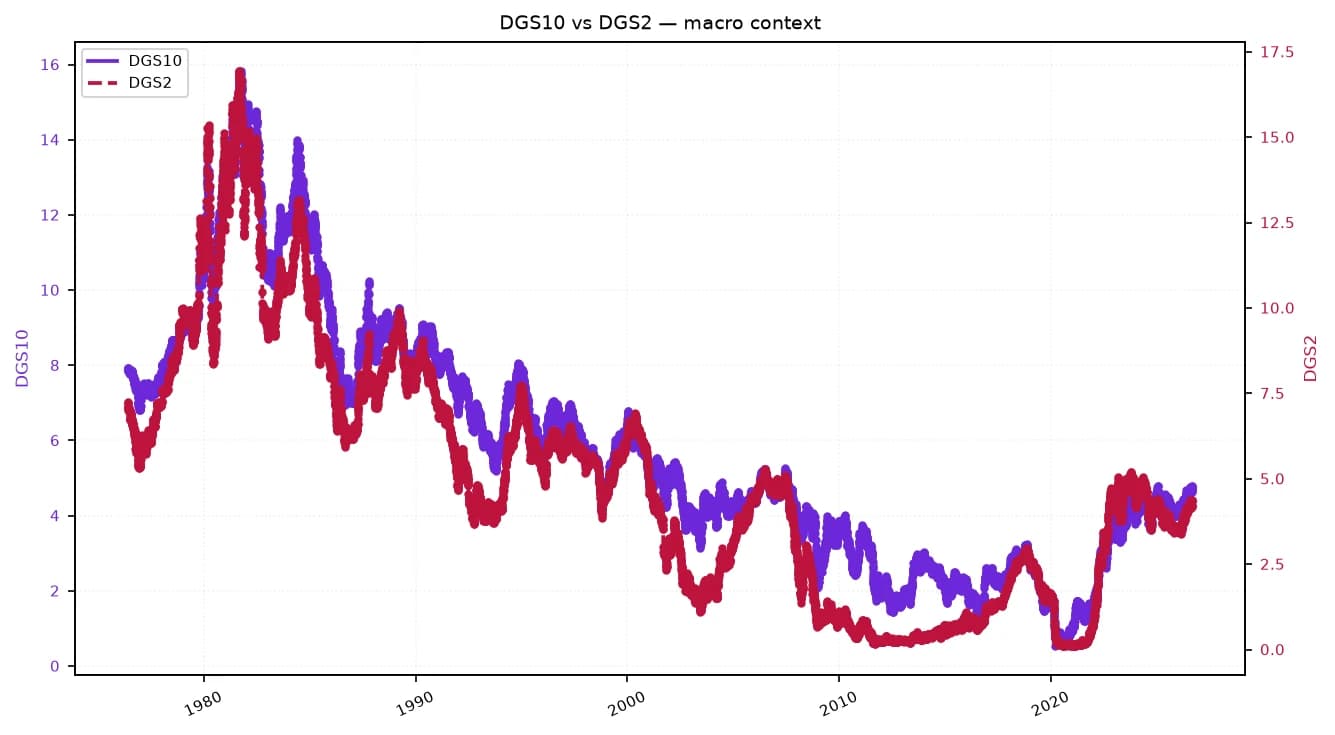
The 10-year Treasury yield was last around 4.69%, while the 2-year stood at 4.19%, leaving the curve modestly positive and providing a better setting for banks than the deeply inverted structure that squeezed lending margins in earlier periods. High-yield credit spreads at 2.75 percentage points also suggest investors are not yet pricing broad stress in corporate credit, a favorable backdrop for loan books that depend on borrower health staying intact.
That macro setup has fed directly into bank equities. JPMorgan shares have climbed to about $351.58, well above both the 50-day moving average of $343.50 and the 200-day average of $313.83, while RSI readings near 48.6 suggest the stock is no longer stretched after its recent run. The broader financials ETF, XLF, is holding near $57.48, also above its 50-day and 200-day averages, reinforcing that the sector’s rally is being supported by improving fundamentals rather than just momentum.
DGS10 vs DGS2 — macro contextadalytica.com
Explore this data interactively — full history, time series and cross-market comparisons.Open AlphaPulse

Regional banks, represented by the KRE ETF, have lagged the megabanks but are showing signs of stabilization. KRE traded around $74.86, roughly in line with its 50-day average of $75.27 and above its 200-day average of $68.58. Its RSI of 36 points to a market that has cooled from overbought levels, which can matter if investors start rotating back into banks that still trade below the premium valuations of the largest institutions.
For JPMorgan, the bullish view rests on scale and diversification. The bank is still benefiting from trading, wealth and corporate banking businesses that regional lenders cannot match. But the market is also starting to ask whether the next leg of bank outperformance can come from institutions that are smaller, more rate-sensitive and less widely owned. If loan demand firms and deposit costs stay contained, those banks can generate much faster earnings leverage than they did when rates were moving against them.
The bear case is that the rally in regional banks may be premature. Funding costs can reaccelerate if competition for deposits returns, and commercial real estate remains a watchpoint even with credit spreads calm. A flatter curve would also reduce the benefit of maturity transformation, while any slowdown in the economy could quickly hit fee income and reserve builds.
For investors, the question is whether the market is moving from a defensive bank trade into a more selective one. If yields stay elevated and credit remains orderly, the winners are likely to be large banks with multiple revenue streams and regional lenders with low-cost deposits and clean balance sheets. If the macro backdrop worsens, the same stocks can de-rate quickly.
| Entity | Gains | Losses |
|---|---|---|
| JPMorgan | ▲Fee and trading power | ▼Limited upside if rates fall |
| Regional banks | ▲Better margin backdrop | ▼Deposit competition risk |
| Bank shareholders | ▲Stronger earnings leverage | ▼Credit shock exposure |
| Borrowers | ▲Access to steady credit | ▼Higher funding costs |