U.S. Federal Reserve comments seen as dovish are easing global rate nerves and helping South Korea’s KOSPI and KOSDAQ trade stronger, as investors rotate back into risk assets on hopes that borrowing costs will fall sooner and support liquidity.
KOSPI and KOSDAQ Rise on Dovish Fed Tone
The move matters because lower U.S. rates would relieve pressure on the dollar, soften Treasury yields and ease financial conditions across Asia. That tends to favor emerging-market equities, growth stocks and leveraged sectors that have been hit by tighter policy and a stronger greenback.
Sentiment IndicatorsⓘProprietary · adalytica.com · September 4, 2026
This is a snapshot — live sentiment, awareness and momentum for 130+ markets update continuously in the dashboard.Open AlphaPulse
Fed funds expectations in the market context show the policy rate at 3.63%, with a small projected dip to 3.626% next month, while the 10-year Treasury yield sits around 4.79% and is forecast to edge up to 4.836%. Even so, the tone shift is enough to improve appetite for equities after a stretch of caution.
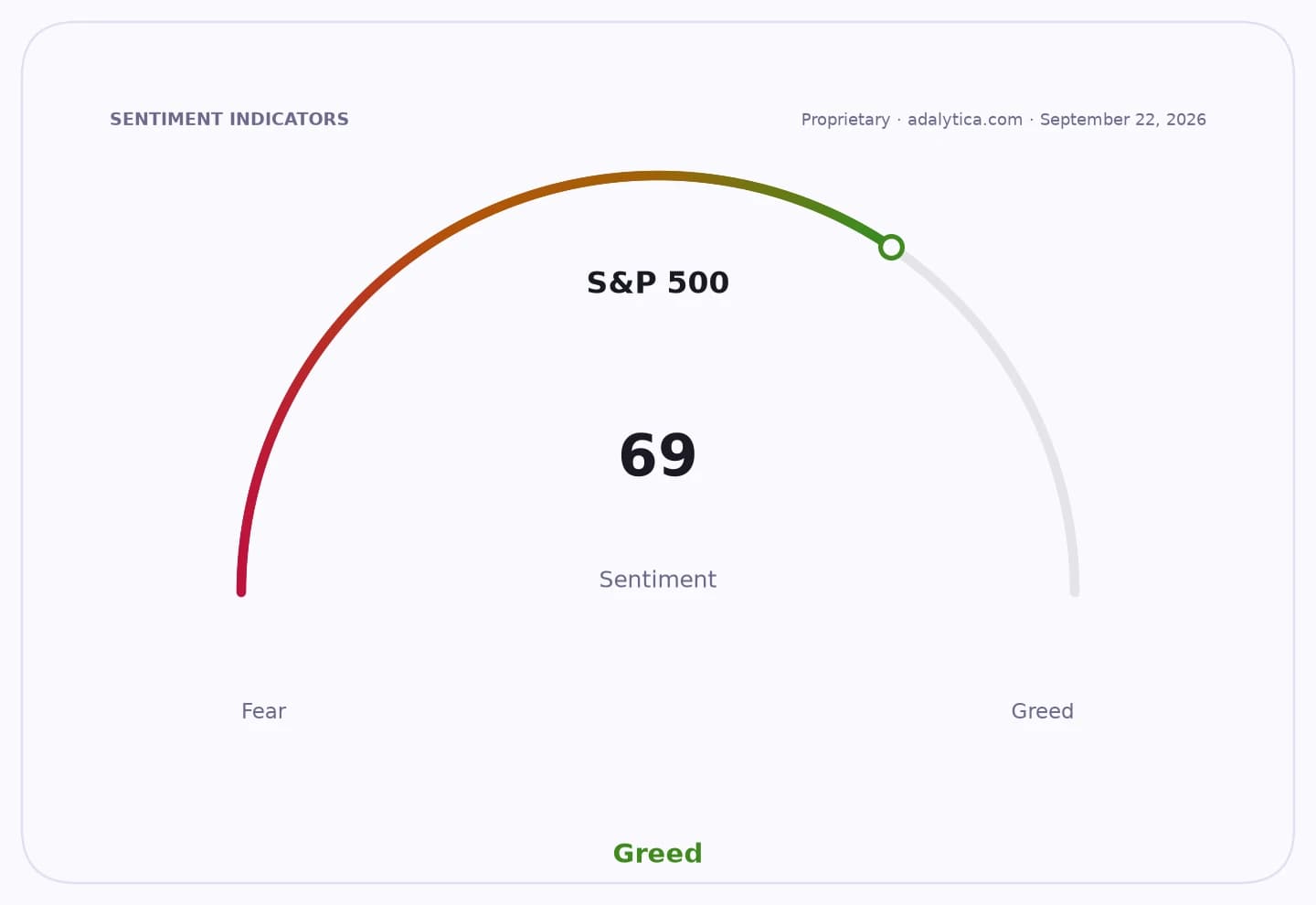
Risk sentiment data also point to the turn. Adalytica’s S&P 500 trade-signal snapshot shows “Extreme Fear” at 14, even after a one-day improvement, while the U.S. dollar signal is neutral at 52. That mix suggests investors are still defensive, but not aggressively positioned against a softer policy backdrop.
For Korean markets, the implication is straightforward: lower global yields and a steadier dollar can support foreigners’ willingness to buy local stocks, especially in technology and export-linked names that are sensitive to valuation discounts and cross-border capital flows. It also helps explain why KOSPI and KOSDAQ can rise together when policy expectations shift from restrictive to less tight.
The broader backdrop remains mixed. U.S. inflation data still show prices elevated versus pre-pandemic levels, and Treasury yields remain well above the low-rate era. But as long as Fed officials sound more open to easing, traders are likely to keep betting on a friendlier environment for equities, with the next driver coming from upcoming U.S. inflation and Fed commentary.
| Entity | Gains | Losses |
|---|---|---|
| KOSPI and KOSDAQ bulls | ▲Lower-rate optimism | ▼Cautious positioning |
| Korean growth and tech stocks | ▲Valuation support | ▼Higher discount-rate pressure |
| U.S. dollar | ▲Relative stability | ▼Sharp safe-haven bid |
| Treasury bears | ▲Softer rate-cut expectations | ▼Yields staying elevated |