Maharashtra’s cabinet has approved a package of seven decisions led by a new cash-award bravery medal for police, a move that combines law-and-order signaling with targeted welfare spending across social groups.
Maharashtra Cabinet Approves Police Medal, Welfare Hikes
The most immediate significance is political as much as administrative: the government is trying to reward visible police performance while widening benefits for students, hostel workers and communities that have been pressing for relief. For investors and economists, the package matters because it points to a state government using the cabinet to push a mix of incentive-based public service policy and social spending, even as drought concerns remain part of the policy backdrop.
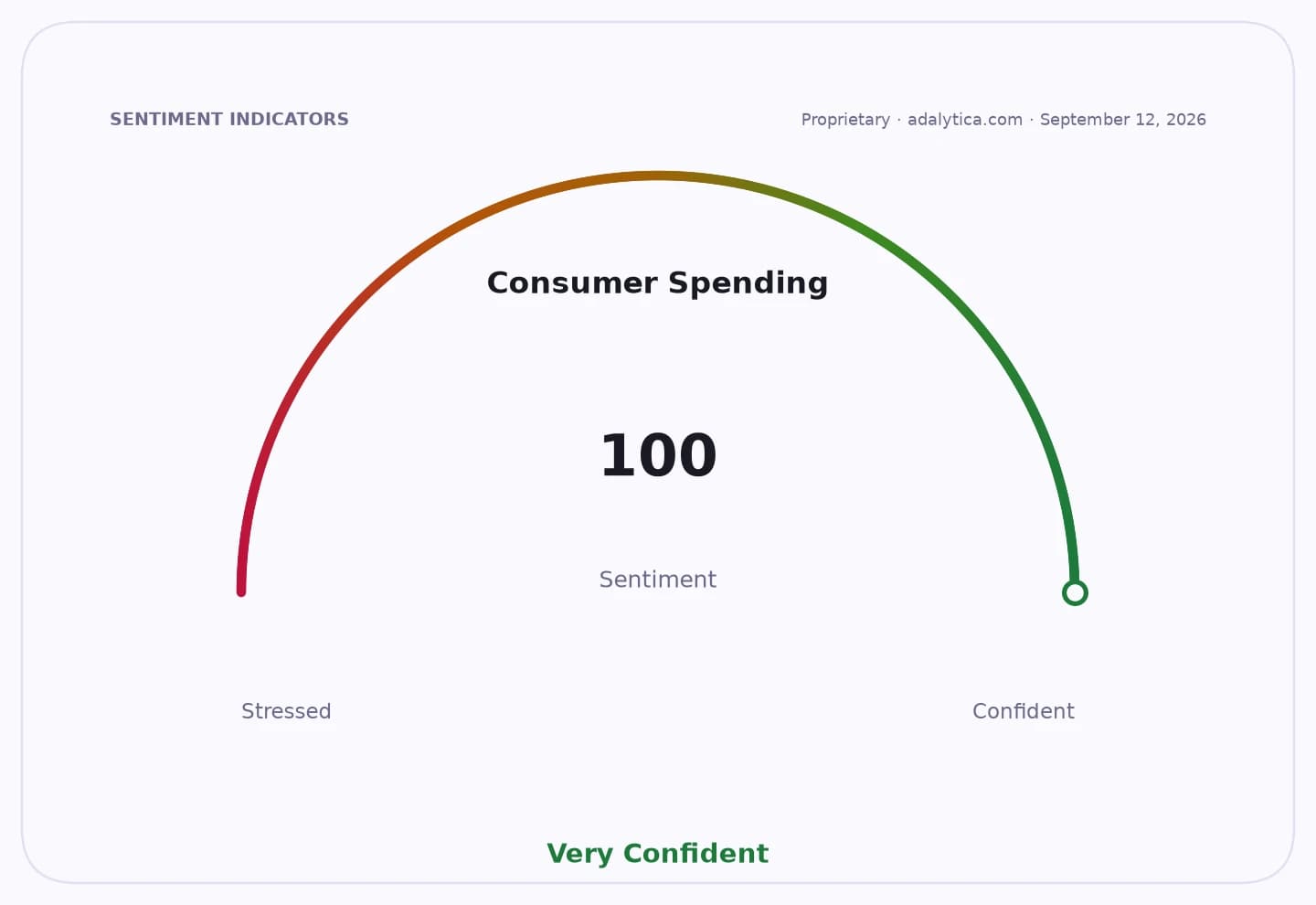
Sentiment IndicatorsⓘProprietary · adalytica.com · October 7, 2026
This is a snapshot — live sentiment, awareness and momentum for 130+ markets update continuously in the dashboard.Open AlphaPulse
The biggest announcement was the creation of the “Chief Minister Shaurya Padak” for police officers and personnel who show courage in dangerous operations. Winners will receive a cash award of ₹50,000, a medal and a citation, with selections made through a three-tier committee structure. The award will be announced annually on the eve of Maharashtra Day, starting with performance from Jan. 1, 2026.
That puts formal recognition and financial incentives around high-risk policing, which can improve morale and retention in a force that faces mounting pressure on public safety, emergency response and anti-crime operations. It also gives the government a symbolic tool to frame policing as a priority area at a time when public confidence in institutions often hinges on how visibly the state rewards frontline personnel.
The cabinet also approved a higher royalty threshold for the Vadar community’s traditional stone-breaking and excavation work, raising the annual minor mineral extraction limit from 200 brass to 500 brass. That change requires an amendment to Maharashtra’s 1968 minor mineral rules and effectively expands the volume of work eligible for the relief, giving the community more operating room in a sector closely tied to local construction and raw-material supply.
On the education side, the state cleared the CM SRISTHI scheme for research, innovation and technology hubs in higher education institutions, to be rolled out through public universities, government colleges, polytechnics and institutions including ICT Mumbai, COEP and Dr. Babasaheb Ambedkar Technological University. The policy is designed to deepen applied research capacity and could help Maharashtra compete for higher-value industrial investment if it is backed by funding, execution and private-sector partnerships.
The cabinet also approved a compensation policy for unnatural deaths in police custody, aimed at ensuring timely financial assistance to legal heirs. That is likely to attract scrutiny from rights groups and courts as much as it does administrative attention, because custody deaths carry legal and reputational risk for the state and can become politically sensitive if compensation rules are unclear or delayed.
Two welfare decisions were aimed at students and institutions. The government approved a substantial increase in honoraria for staff at grant-aided hostels run by voluntary organizations under the social justice department, covering superintendents, cooks, helpers and guards across about 2,388 hostels. It also cleared higher grants under the Bharat Ratna Dr. Babasaheb Ambedkar Swadhar Yojana for Scheduled Caste and नवबौद्ध students in Classes 11 and 12 and in post-secondary professional and non-professional courses who qualify for government hostels but do not get a seat.
For Scheduled Tribe students, the cabinet approved revisions in allowances under the Pandit Deendayal Upadhyay Swayam scheme. Together, those changes signal a broader push to support student retention and living costs, which remain a practical barrier to higher education access in poorer districts.
For investors, the direct market impact is limited, but the policy mix matters. Maharashtra is India’s second-largest state economy and a major source of industrial demand, public spending and social-policy signals. A cabinet that is simultaneously rewarding police, raising welfare outlays and promoting research infrastructure suggests a state trying to balance public order, social stability and long-term productivity.
The near-term question is execution: whether the new police medal becomes a meaningful morale tool, whether welfare hikes are funded without delay, and whether the research scheme can translate into stronger innovation capacity rather than another underused policy layer. The political message is clear; the economic payoff will depend on delivery.
| Entity | Gains | Losses |
|---|---|---|
| Maharashtra police | ▲Cash award, recognition | ▼No immediate downside |
| Grant-aided hostel staff | ▲Higher honoraria | ▼Fiscal restraint pressure |
| SC, नवबौद्ध and ST students | ▲Bigger allowances | ▼Bureaucratic delays |
| State budget | ▲Policy flexibility, political goodwill | ▼Higher recurring spending |