If your company is not training you on AI, the message from the workplace is becoming blunt: do it yourself or risk falling behind.
Microsoft AI training theme and enterprise adoption
That matters because AI is moving from a software story into a labor productivity story. The biggest winners over the next several years will not be the companies that merely buy AI tools, but the ones that build a workforce able to use them well. That is good for employers that can turn AI into faster sales, better customer service and lower costs. It is also why investors should care about Microsoft, whose AI ecosystem sits at the center of how many companies are trying to modernize work.
Sentiment IndicatorsⓘProprietary · adalytica.com · September 7, 2026
This is a snapshot — live sentiment, awareness and momentum for 130+ markets update continuously in the dashboard.Open AlphaPulse
The latest examples point to a broader shift in corporate culture. At a Thursday showcase of four AI assistants, one of the clearest themes was that AI still has limits, but it can already help workers sharpen skills when it is used as a training partner rather than a replacement. Okinawa Cellular’s use of AI in business negotiation training is a useful example: the technology is not just automating tasks, it is helping people practice and improve.
That distinction is economically important. Productivity gains tend to compound slowly, then suddenly reshape margins. If AI becomes embedded in training, coaching and day-to-day decision-making, companies can get more output from the same headcount. Over time, that can support profit growth without the same level of hiring, especially in service-heavy industries where knowledge work is the product.
Artificial Intelligence — 30-day sentimentadalytica.com
Explore this data interactively — full history, time series and cross-market comparisons.Open AlphaPulse
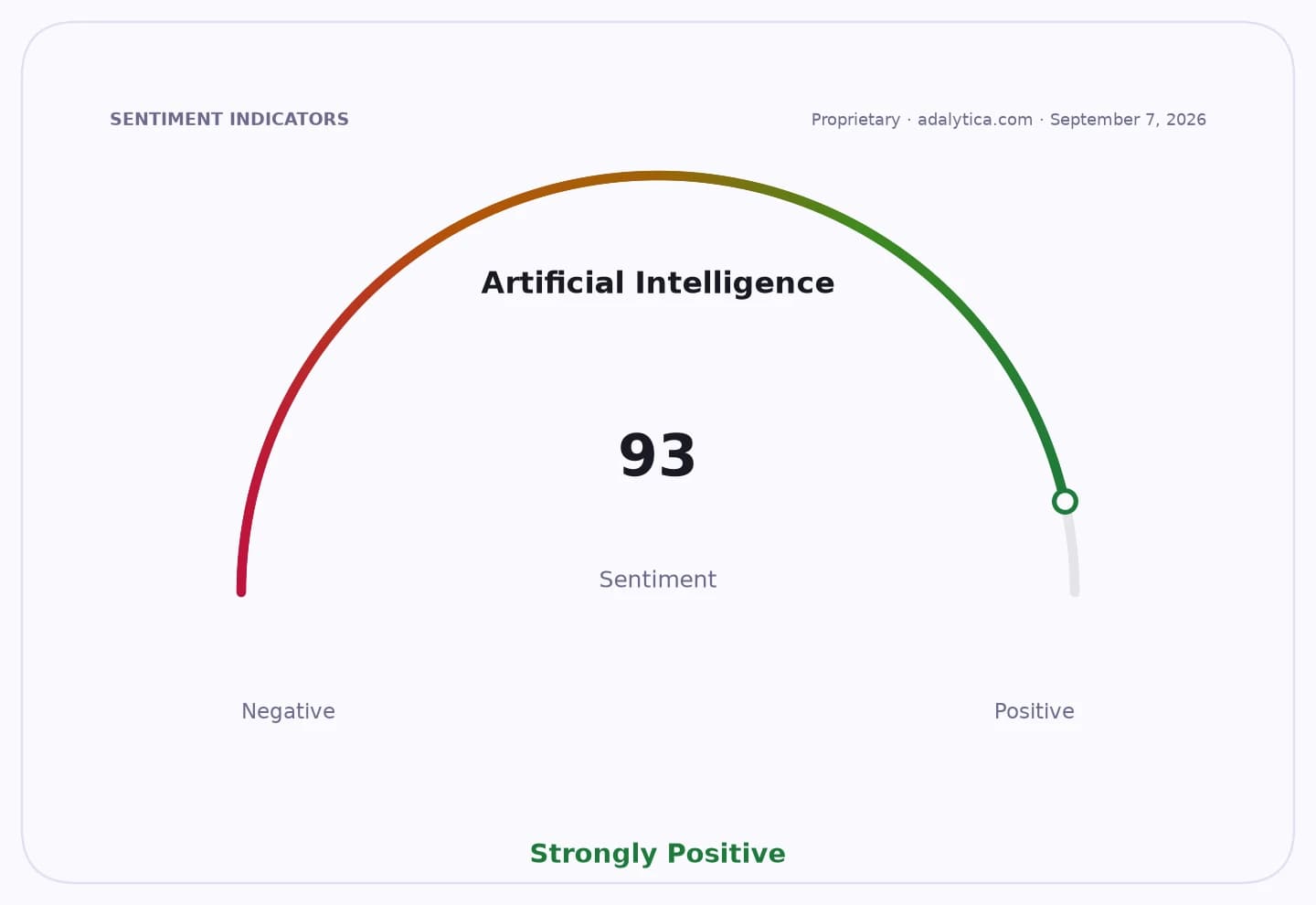
For Microsoft investors, the tension is familiar. The company is a prime beneficiary of enterprise AI adoption, but the market is also wrestling with how quickly that spending translates into durable earnings. Adalytica’s Microsoft earnings sentiment gauge currently sits at 22, or “Fear,” with awareness at just 4, reflecting how skeptical investors remain about near-term results even as the AI theme stays powerful. By contrast, Adalytica’s AI sentiment reads 93, or “Extreme Greed,” suggesting the broader enthusiasm around artificial intelligence remains intense.
That split is the story. AI enthusiasm is still strong, but investors are increasingly asking a harder question: who captures the value? The answer may depend less on flashy demos and more on whether businesses can actually retrain workers, redesign workflows and change culture. A company that spends heavily on AI without upgrading employee skills may end up with expensive software and little productivity lift. A company that uses AI to raise human performance could see lasting competitive advantages.
For long-term investors, that makes the AI training theme bigger than a short-term trade. It supports demand for enterprise software, cloud platforms, copilots and workplace tools, while also favoring businesses that can prove measurable efficiency gains. It also argues for patience. The real payoff from AI may come over years, not quarters, as firms learn how to use the technology effectively.
The practical takeaway for investors is simple: watch which companies are turning AI into workforce capability, not just marketing. Those are the businesses most likely to build moats, protect margins and compound value over time.
| Entity | Gains | Losses |
|---|---|---|
| Microsoft | ▲More enterprise AI demand | ▼Near-term earnings skepticism |
| AI software vendors | ▲Stickier workplace adoption | ▼One-off demo hype |
| Workers who reskill | ▲Higher productivity and value | ▼Employees who ignore AI |
| Companies that delay training | ▲None | ▼Productivity gap and margin pressure |