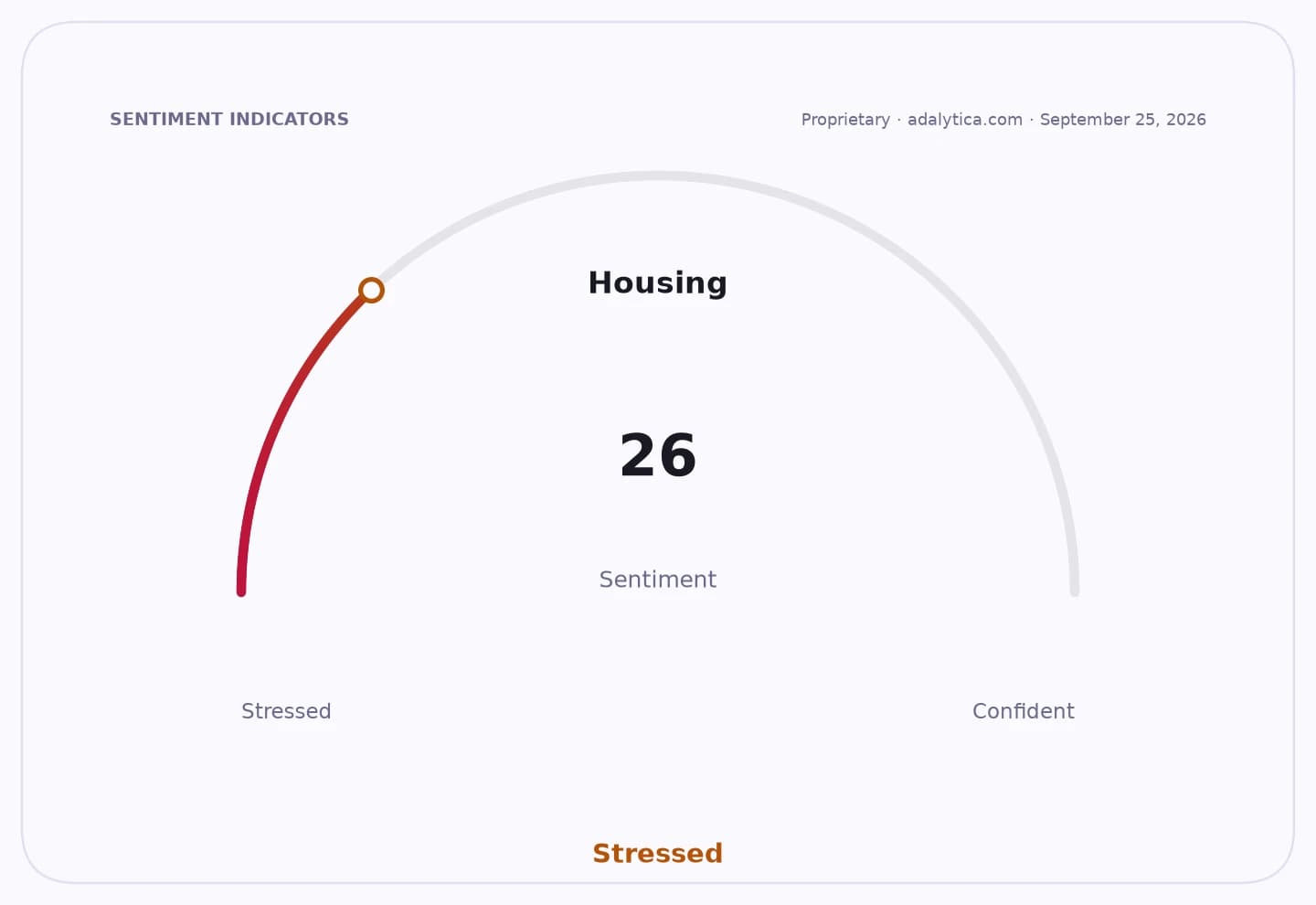
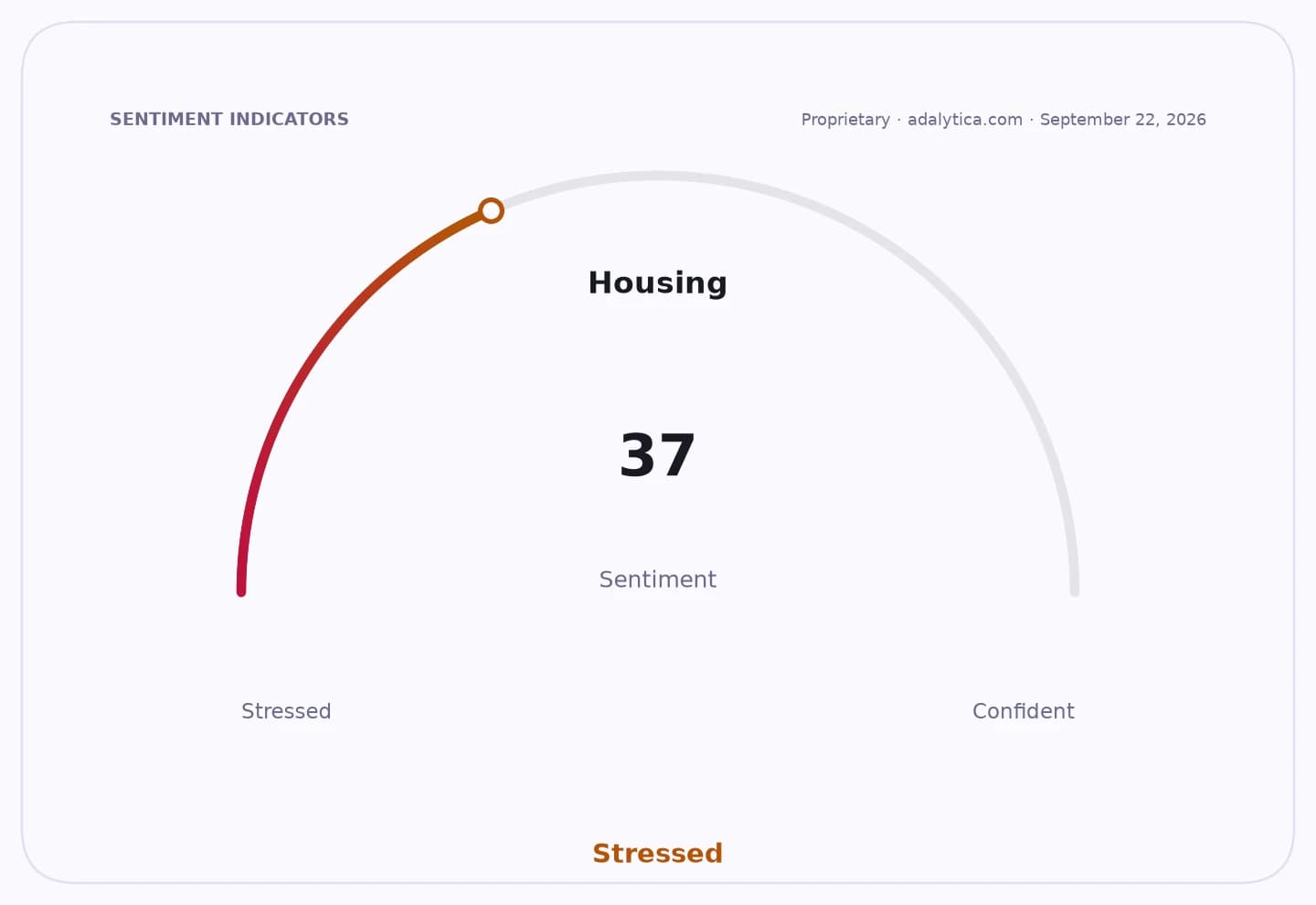
Montreal-area home sales dropped 13.1% in August, a sign the market is moving further into balance as rising supply cools the pace of transactions without yet breaking price momentum.
Montreal Home Sales Fell 13.1% in August

The Quebec Professional Association of Real Estate Brokers said 2,853 residential properties changed hands in the Montreal census metropolitan area last month, down from 3,282 a year earlier. The decline matters because it shows buyers are becoming more selective even as conditions loosen, with more homes on the market and less urgency to bid aggressively.
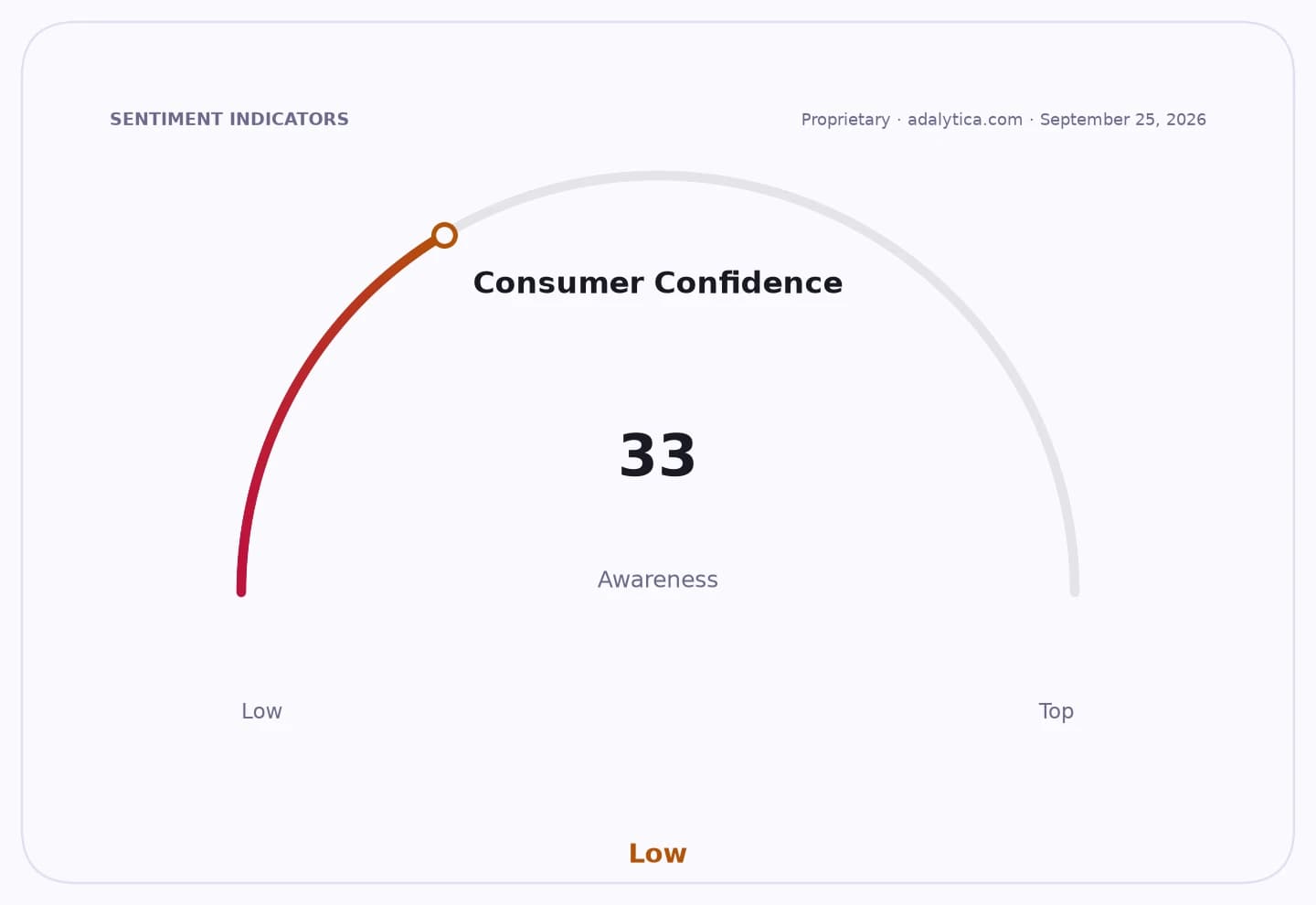
Sentiment IndicatorsⓘProprietary · adalytica.com · September 5, 2026
This is a snapshot — live sentiment, awareness and momentum for 130+ markets update continuously in the dashboard.Open AlphaPulse

New listings rose 7.4% from a year earlier to 5,874, while total inventory climbed 17.8% to 20,128 units. That combination gives buyers more choice and reduces the seller advantage that defined much of the post-pandemic housing boom. Camille Laberge, the board’s senior economist, described the market as still working through an “adjustment period” as activity slows and supply grows.
For the broader economy, the shift points to a softer housing backdrop in one of Canada’s largest urban markets. Fewer sales typically mean less turnover-related spending on renovations, moving services and related consumer purchases, while improving inventory can eventually help affordability if demand continues to cool. The data also fit a wider pattern of rebalancing rather than outright weakness: prices were still higher than a year earlier across all major property types.

The median condo price rose 3.6% to $437,250, while the median single-family home climbed 2.8% to $650,000 and the median plex increased 1.7% to $856,000. That suggests supply is rebuilding faster than demand is weakening, at least for now, leaving prices supported even as transaction volumes fall. From an investor’s perspective, that matters because it points to a market that is not in distress but is becoming less momentum-driven, with more emphasis on fundamentals such as affordability, local income growth and borrowing costs.
Mortgage rates remain an important swing factor. If financing costs ease further, some of the lost sales volume could return, but a sustained inventory build would likely cap price gains and force sellers to adjust expectations. If rates stay sticky, Montreal could settle into a slower, more balanced market in which buyers gain negotiating power without triggering a broad price decline.
The key question for the rest of the year is whether softer sales eventually translate into flatter prices. For now, Montreal looks less overheated than it did two years ago, but not yet cheap enough to produce a sharp demand rebound.
| Entity | Gains | Losses |
|---|---|---|
| Buyers | ▲More listings, better choice | ▼Less urgency may not cut prices quickly |
| Sellers | ▲Still-strong year-on-year prices | ▼Slower sales and longer marketing times |
| Homebuyers overall | ▲Improved market balance | ▼Affordability remains stretched |
| Brokers/agents | ▲Steadier inventory flow | ▼Lower transaction volumes |