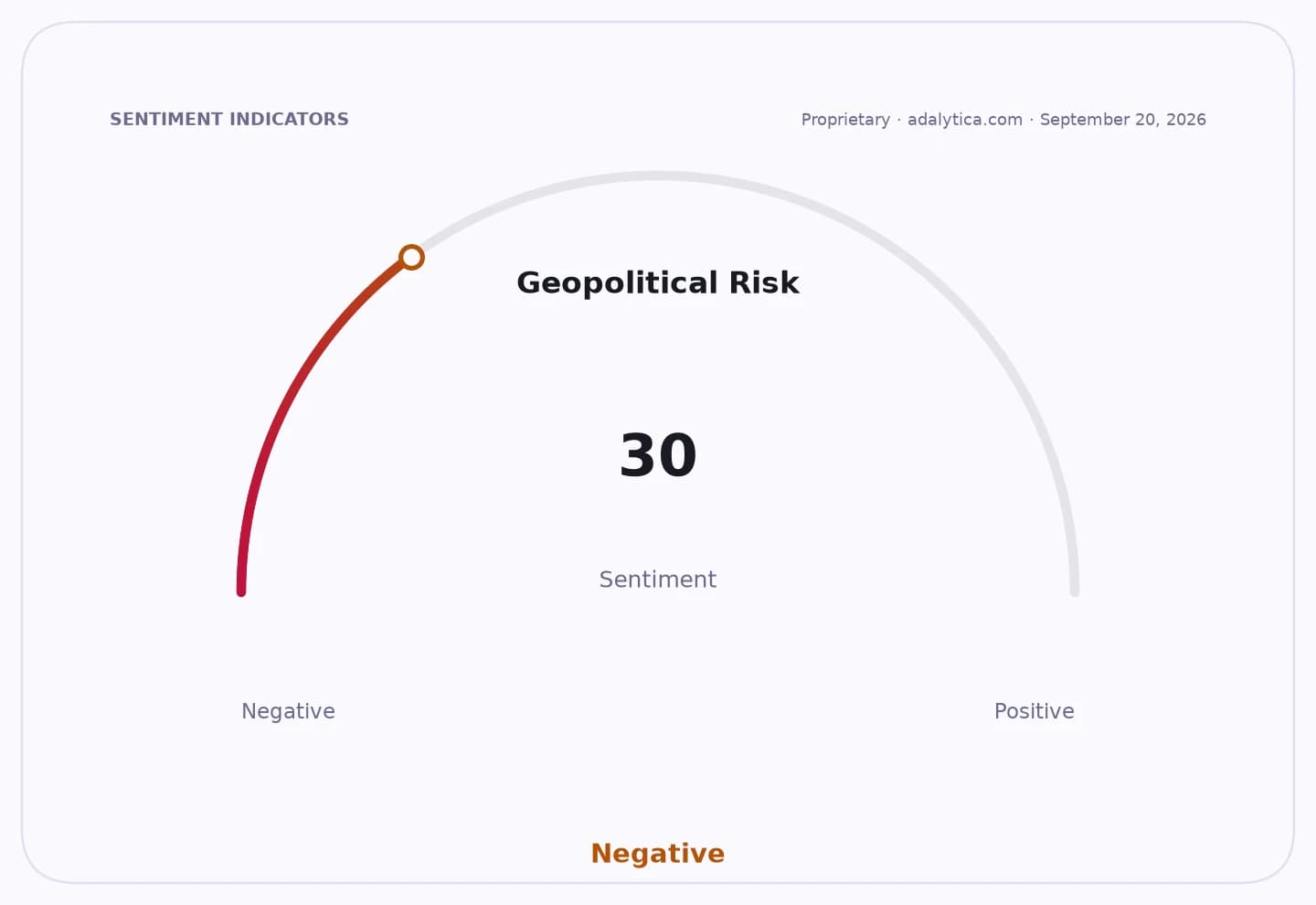
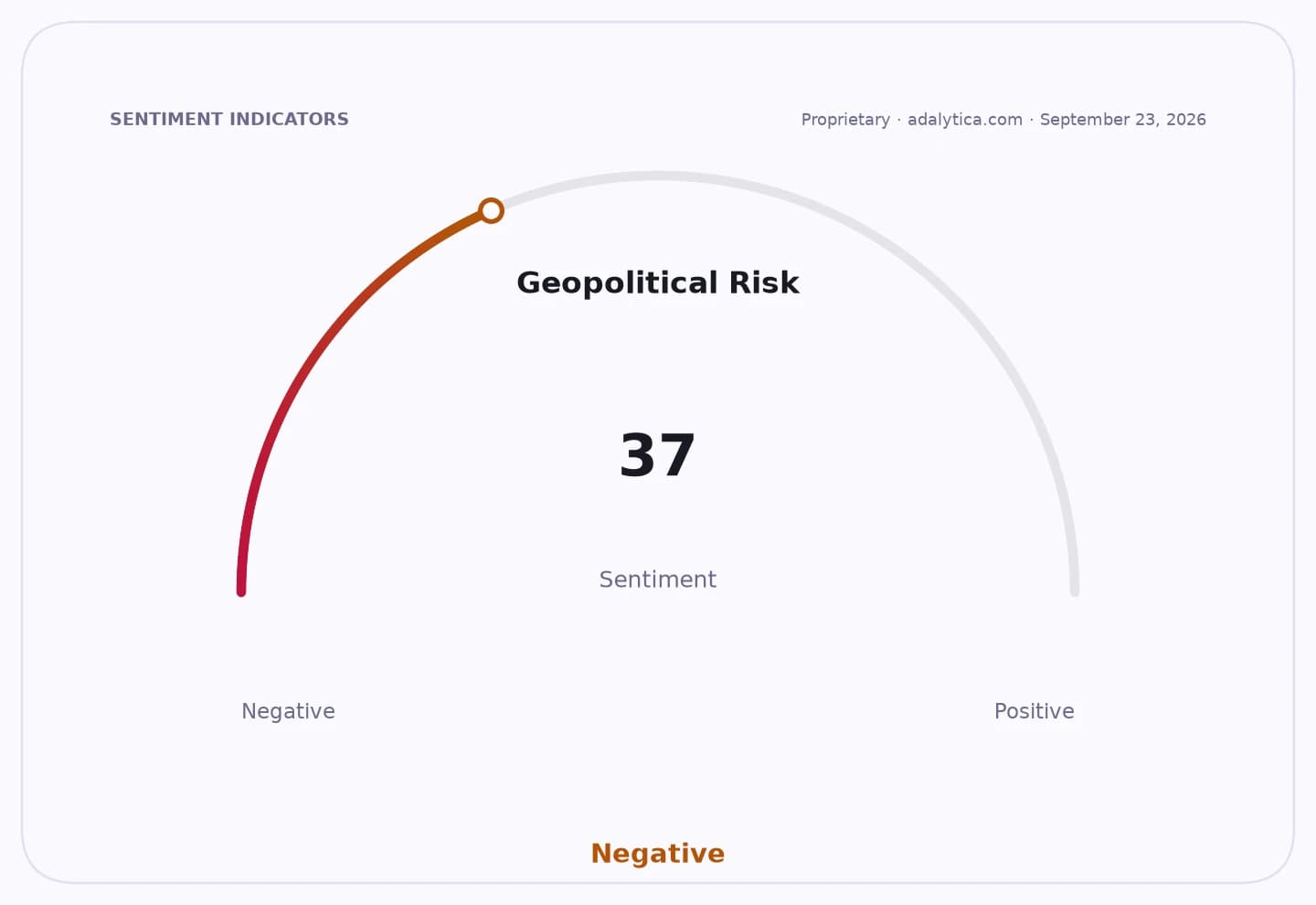
Nestlé is continuing to operate normally in Russia even after the Kremlin placed its local holdings under temporary administration, a move that raises the risk of a future forced sale but does not yet amount to outright nationalization.
Nestlé Russian Business Under Temporary Administration
The world’s biggest packaged-food company said its Russian business will keep meeting obligations to customers, partners and employees, and stressed that the transfer of shares to L.E.V. Management does not represent a change in ownership. Nestlé remains the formal owner of the stakes for now, but has lost control over them.
Sentiment IndicatorsⓘProprietary · adalytica.com · September 26, 2026
This is a snapshot — live sentiment, awareness and momentum for 130+ markets update continuously in the dashboard.Open AlphaPulse
The decision matters because Russia has already used temporary administration as a first step before handing foreign assets to local buyers, as happened with Danone and Carlsberg. That makes the latest move a reminder that multinational groups with remaining exposure to Russia can still face abrupt political intervention even when they have not fully exited the market.
Nestlé operates six production sites in Russia, giving the country continued operational relevance despite the war and the deep strain it has placed on Western consumer groups. The company said it is confident cooperation with the new administrator could support development and efficiency, a pragmatic stance that suggests it wants to preserve cash generation and avoid a disorderly loss of assets.
For investors, the issue is less about near-term sales disruption than about asset control, exit valuation and the possibility of eventual impairment if Moscow pushes the case further. Consumer staples have generally been treated as defensive holdings, but Russia remains a tail risk that can create sudden write-downs, reputational pressure and legal uncertainty.
Nestlé shares have been trading above both the 50-day and 200-day moving averages in recent sessions, but the stock’s technical picture has weakened from earlier highs, with RSI readings retreating from overbought levels. That leaves the market focused on whether the Russia situation stays contained or becomes another chapter in the broader corporate unwind from the country.
The next catalyst is whether Russian authorities keep the temporary structure in place or move toward a sale or transfer, which would determine whether Nestlé can retain influence over the business or will eventually have to absorb a permanent loss.
| Entity | Gains | Losses |
|---|---|---|
| Nestlé | ▲Keeps operations running | ▼Loses control of stakes |
| Russian administrator L.E.V. Management | ▲Gains oversight | ▼Faces execution risk |
| Russian state | ▲Gains leverage over assets | ▼Risks investor distrust |
| Nestlé shareholders | ▲Avoid immediate shutdown | ▼Face expropriation risk |