Newmont beat Wall Street’s third-quarter profit estimates as record-high gold prices more than offset lower output, underscoring how the rally in bullion is still overpowering operational weakness for the industry’s largest producer.
Newmont beats Q3 estimates on record gold prices

The company earned $2.20 a share on an adjusted basis for the quarter ended Sept. 30, ahead of the $2.05 average analyst estimate compiled by LSEG. The outperformance came even as quarterly gold production fell to 1.30 million ounces from 1.42 million ounces a year earlier, showing the earnings leverage miners get when prices rise faster than volumes decline.
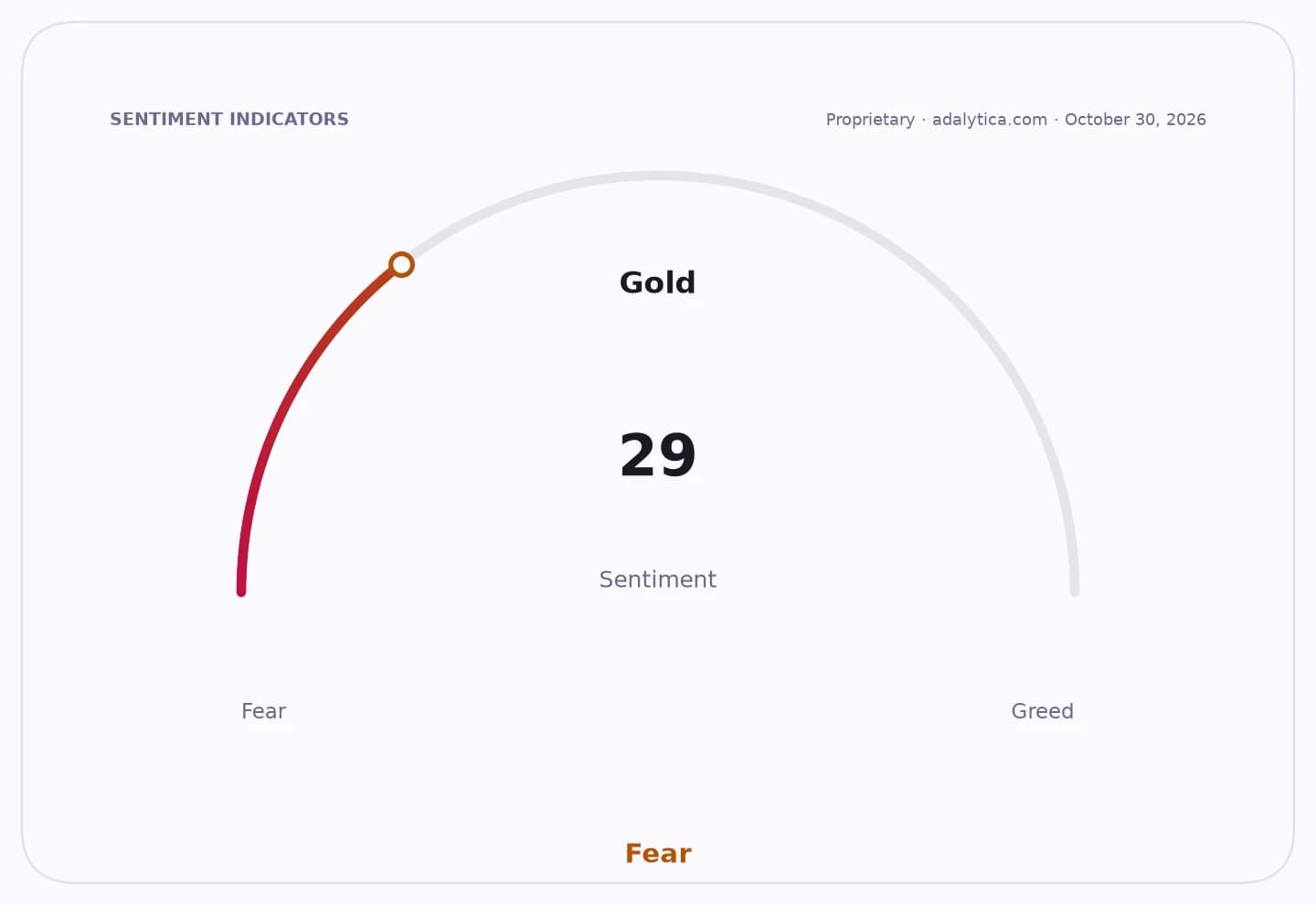
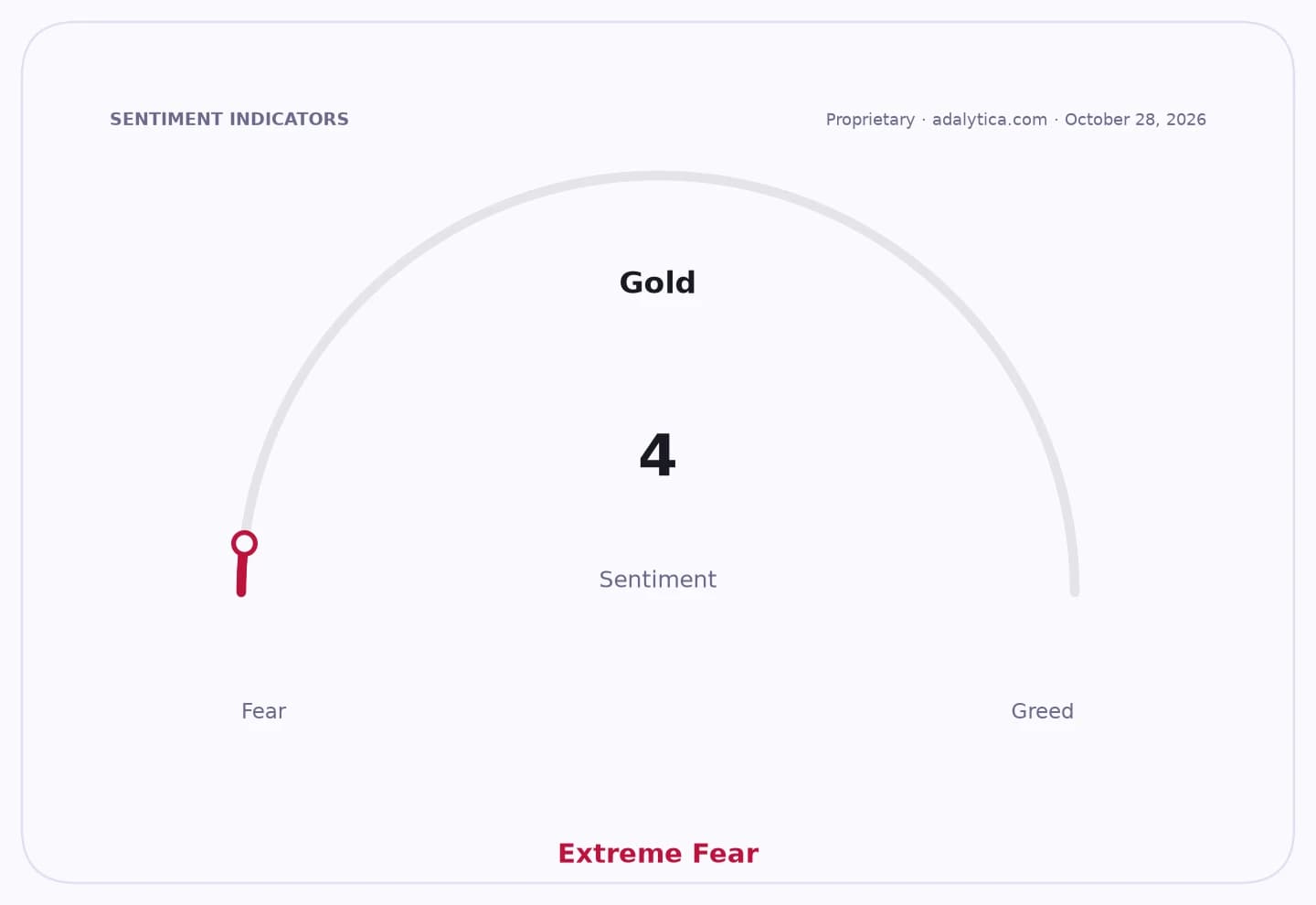
Sentiment Indicators
Gold averaged $4,204.59 an ounce in the quarter, up about 17.6% from a year earlier, and Newmont’s realized price came in even higher at about $4,317 an ounce versus $3,539 a year ago. That pricing tailwind matters economically because gold producers’ margins are highly sensitive to realized prices: when bullion is this elevated, every incremental ounce can translate into outsized cash flow, giving miners room to reduce debt, fund dividends and reinvest in projects after years of cost pressure.
For investors, the quarter reinforces the appeal of large-cap gold miners as a direct beneficiary of a strong gold market. Newmont’s results suggest the stock remains more exposed to bullion than to near-term production softness, at least while prices stay near these levels. The company’s ability to beat estimates with lower output also helps validate the sector’s valuation case, particularly for investors seeking inflation hedges or a defensive trade against macro uncertainty.
The backdrop remains supportive. Gold has stayed high despite a stronger dollar and inflation concerns tied to higher oil prices during the US war on Iran. That combination has kept safe-haven demand firm even as some traders have questioned how much further bullion can run after an extended rally.
The split between prices and production will remain the key tension for Newmont and its peers. Bullish investors will focus on the scale of pricing power and the prospect of stronger free cash flow if gold stays above $4,000 an ounce. The bearish case is that output declines, higher costs or any retreat in bullion could quickly compress margins and expose how dependent earnings have become on the metal’s price.
For now, Newmont’s quarter shows the gold market is still doing the heavy lifting for miners.
| Entity | Gains | Losses |
|---|---|---|
| Newmont | ▲Higher realized prices | ▼Lower production volumes |
| Gold miners | ▲Wider margins | ▼Operational shortfalls |
| Bullion bulls | ▲Earnings leverage | ▼Higher-entry-price risk |
| Gold buyers | ▲Safe-haven exposure | ▼Rising acquisition costs |