Newmont is heading into 2026 with a higher cost base and a slower Canadian growth path, a combination that matters because it will test how much of the gold price rally can still flow through to earnings and free cash flow.
Newmont raises 2026 cost outlook, delays Red Chris
Gold
The world’s largest gold miner said it now expects full-year 2026 all-in sustaining costs to come in at about $1,520 an ounce, up from prior guidance, while targeting commercial production at the Red Chris copper-gold project in 2033 rather than earlier. The move underscores a familiar trade-off in the gold sector: miners can benefit from strong bullion prices, but those gains are increasingly being absorbed by capital spending, inflation in mine inputs and a delayed ramp-up of new supply.
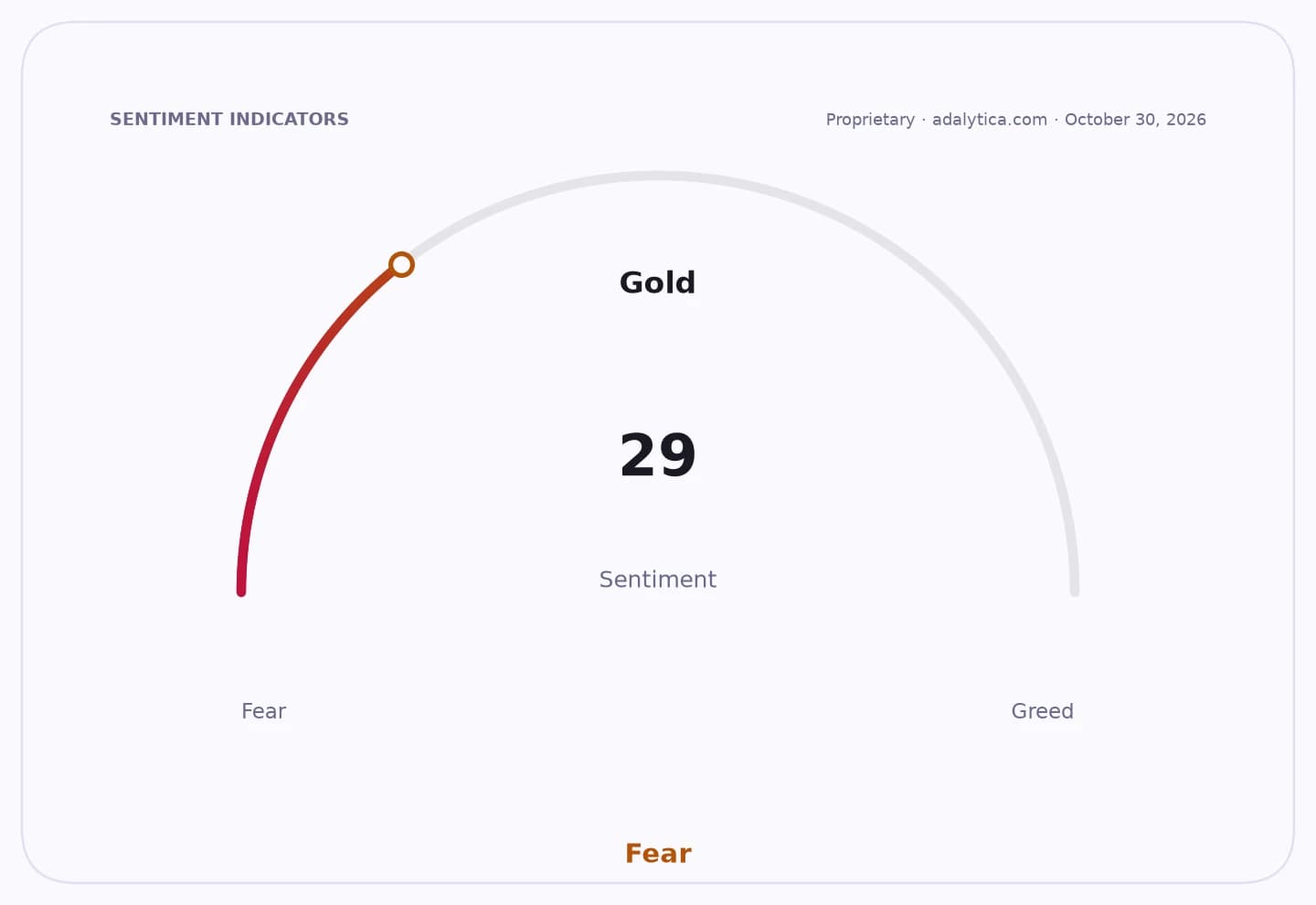
Sentiment Indicators
That matters economically because all-in sustaining costs are the industry’s key measure of what it takes to keep ounces flowing. Newmont’s revised outlook implies less operating leverage from gold prices than investors may have been assuming, especially after a year in which the metal surged and then turned volatile. West Texas Intermediate crude has also bounced back above $100 a barrel in recent weeks after a sharp pullback, a reminder that energy-driven mining and transport costs can quickly reassert pressure on margins. If fuel and power costs stay sticky, Newmont’s cost curve could remain under strain even if bullion stabilizes.
The timing also matters for portfolio construction. Investors in gold miners have been rewarded for exposure to the metal, but they are increasingly discriminating between producers with low-cost, near-term output and those still waiting on multiyear projects. Newmont’s shares have fallen back from August highs and recently traded below both the 50-day and 200-day moving averages, while momentum indicators such as RSI have cooled, showing the market has already started to price in some of the cost and execution risk. Rival miners are not immune either, but lower-cost operators with cleaner growth profiles look better positioned if gold trades sideways rather than surges again.
Red Chris is important because it is one of Newmont’s longer-dated options for replacing reserve depletion and extending production in a politically stable jurisdiction. But pushing commercial production to 2033 stretches the investment case further into the future, raising the hurdle for capital efficiency and for returns on a project that may face continued permitting, infrastructure and scheduling risk. For shareholders, the delay reduces the near-term contribution from a key asset that was supposed to help diversify Newmont away from higher-cost mature operations.
The bull case is that higher cost guidance may prove manageable if gold holds near elevated levels and if Newmont’s operating discipline improves after a volatile 2026. The bear case is that the company is moving into a period where costs, not output growth, set the tone — and where delayed project delivery leaves less room to offset any further inflation or operational misses.
What investors will watch next is whether Newmont can contain sustaining capital, defend margins against a firmer cost backdrop and show that Red Chris still justifies the waiting. If gold remains strong, the stock can still work; if bullion softens, the higher AISC outlook leaves less protection than before.
| Entity | Gains | Losses |
|---|---|---|
| Newmont | ▲Higher gold-price leverage if bullion stays firm | ▼Margin pressure from rising AISC |
| Red Chris project | ▲Longer runway to development | ▼Delayed cash flow contribution |
| Gold miners with lower costs | ▲Relative valuation support | ▼None material |
| Gold buyers/consumers | ▲Potentially lower price pressure if costs cap upside | ▼Higher mining costs passed through |