Nigeria’s push for industrial revival will remain stuck in first gear unless the government gets inflation under control and updates labor rules to match today’s economy, according to a Tai Solarin Federal University of Education don who said wage pressure, dispute resolution and productivity are all being distorted by persistent price shocks.
Nigeria inflation and labor law industrial revival
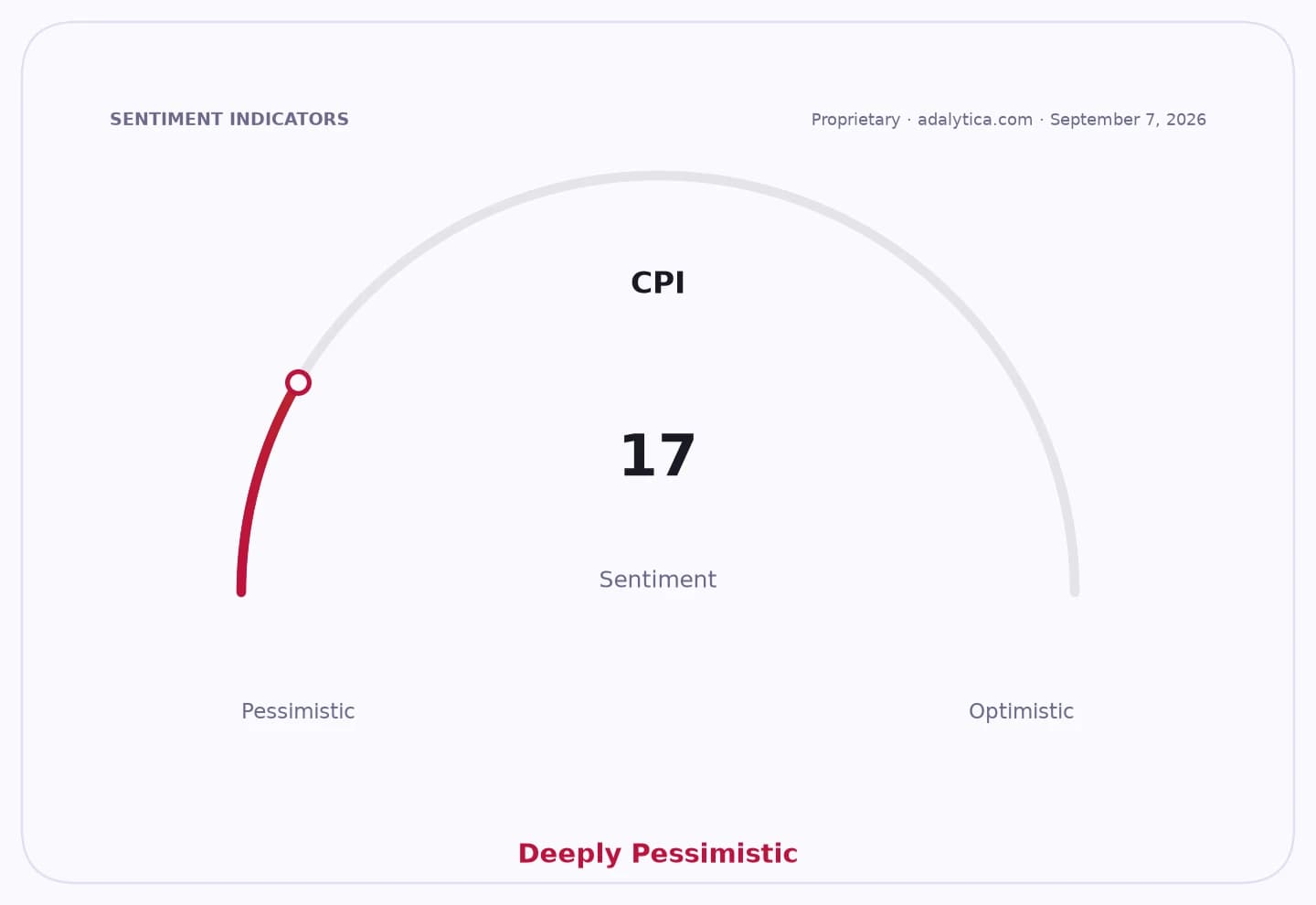
That is the economically important part of the story: inflation is not just eroding household purchasing power, it is also weakening workplace harmony, raising the odds of labor disputes and making it harder for employers to plan wages, costs and investment. When price instability becomes a feature of the operating environment, collective bargaining turns more combative, productivity suffers and the investment case for manufacturing and other labor-intensive industries deteriorates.
Sentiment IndicatorsⓘProprietary · adalytica.com · September 7, 2026
This is a snapshot — live sentiment, awareness and momentum for 130+ markets update continuously in the dashboard.Open AlphaPulse
Prof. Adebayo Olatunde Akinsanya said Nigeria’s industrial relations system cannot function properly without a stable macro backdrop, urging government, employers and workers to rely more on negotiation, social dialogue and collective bargaining. He also called for a review of industrial laws to reflect inflation, changing knowledge requirements and what he described as growing global consciousness among employers and employees.
The message matters beyond the lecture hall. In an economy like Nigeria’s, where inflation can quickly feed into wage demands, transport costs and input prices, industrial peace becomes a macro issue, not just a workplace issue. If lawmakers and policymakers take the warning seriously, the payoff could be better labor stability, higher productivity and a more credible environment for capital spending in manufacturing and services.
For investors, the real takeaway is that inflation control is now a precondition for any durable industrial upgrade. Companies with pricing power, local supply chains and exposure to essential goods should outperform in a high-inflation environment, while labor-heavy businesses with thin margins remain vulnerable to wage pressure and policy drift. Any move by Abuja to strengthen anti-inflation policy and modernize labor legislation would likely support the broader case for long-term industrial investment.
The market, in other words, is being asked to look past the immediate noise and focus on the structural fix. If Nigeria can pair tighter inflation management with updated industrial laws, the result could be a more investable domestic economy and a better runway for manufacturers, employers and workers alike. For now, the thesis is simple: inflation control is the first trade, and industrial modernization is the second.
| Entity | Gains | Losses |
|---|---|---|
| Nigerian manufacturers | ▲lower dispute risk | ▼cost pressure |
| Workers | ▲stronger wage bargaining framework | ▼real income erosion |
| Federal Government | ▲better policy credibility | ▼pressure to act faster |
| Labor-intensive firms | ▲clearer industrial rules | ▼margin squeeze |