Nigerian banks are loading up on government securities at a pace that underscores both the appeal of high sovereign yields and the strain on credit to the private sector, with Fitch saying exposure to government debt has climbed to about 40% of total assets.
Nigerian banks increase holdings of government debt

The shift matters because it ties bank balance sheets more closely to the Nigerian state just as the economy remains vulnerable to policy slippage, currency pressure and political noise ahead of the 2027 election cycle. For lenders, sovereign paper offers better returns and lower perceived risk than many corporate loans. For the economy, it can mean less funding for businesses and households, especially smaller companies that already face expensive credit and tight access to financing.
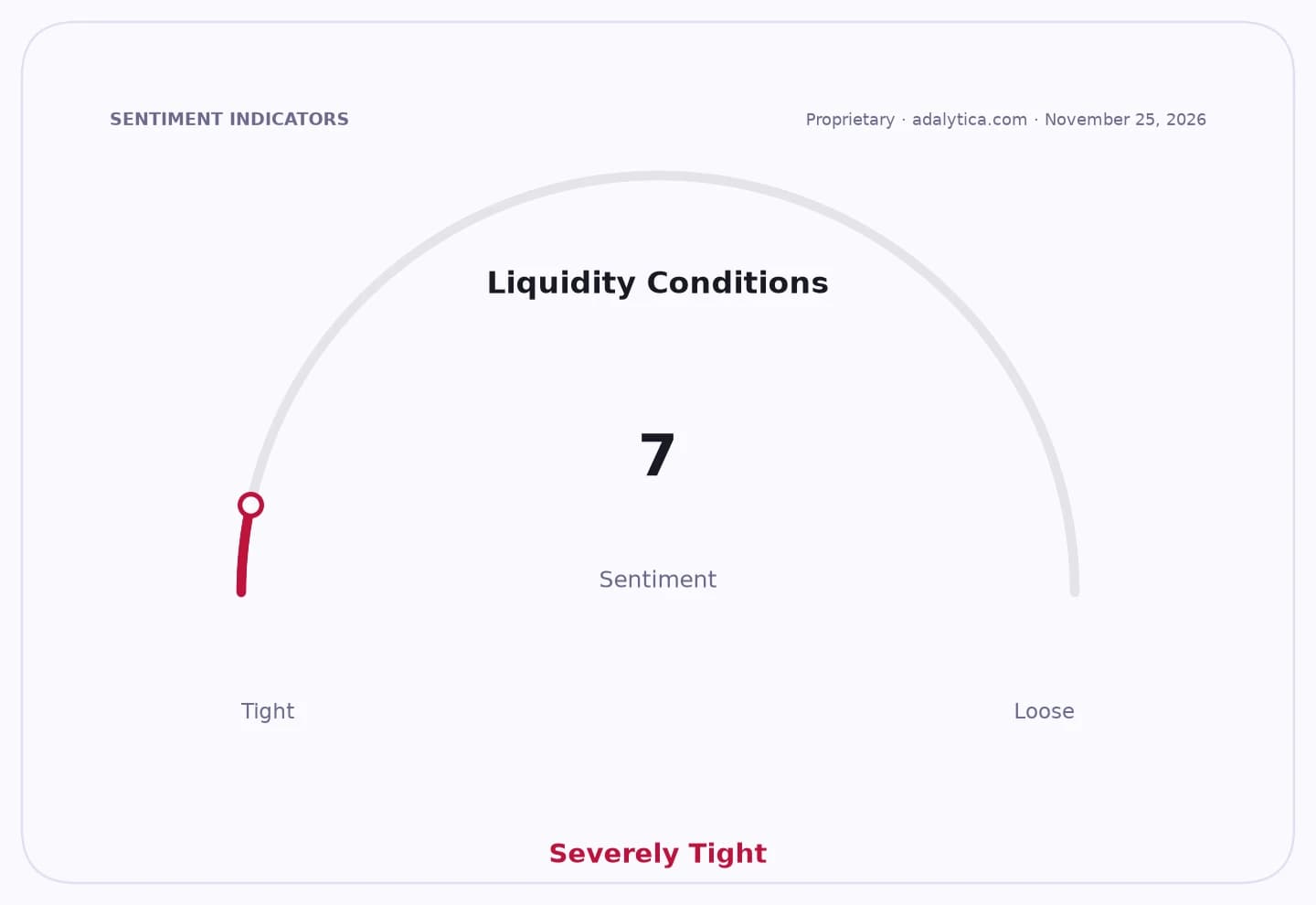
Sentiment Indicators

Fitch said sovereign exposure rose from 35% at the end of 2025 to 40% by the first half of 2026, with sovereign fixed-income securities making up about 22% of bank assets and cash at the Central Bank of Nigeria another 17%. That allocation reflects a classic emerging-market trade-off: when government borrowing instruments pay enough, banks often prefer them to extending riskier private credit. The result is a cleaner short-term earnings profile for lenders, but weaker transmission of capital into productive investment.
That concentration also deepens a feedback loop between public finances and financial stability. If the sovereign remains attractive and stable, banks can benefit from carry income and relatively low credit losses. But Fitch warned the trend could reverse if Nigeria faces major social unrest or election-related uncertainty, which could quickly hit confidence and the value of government holdings. The warning is especially relevant because the banking system’s asset mix is becoming more exposed to a single counterparty: the state itself.
The broader macro backdrop helps explain why the shift has persisted. Fitch noted a recovery in capital inflows, but said the improvement has been driven mainly by foreign portfolio investment rather than foreign direct investment, leaving Nigeria exposed to sudden reversals in sentiment. Formalisation in the foreign-exchange market and remittances have helped supply dollars, but policy credibility remains central to keeping investors engaged. That dependence on hot money makes the banking system more sensitive to any disruption in funding conditions or a renewed loss of confidence in the naira.
For investors, the implications are twofold. Bank earnings may remain supported by attractive yields on sovereign paper, but the sector’s risk profile is becoming more correlated with the government’s fiscal and political trajectory. At the same time, the crowding-out of private lending could slow broader economic activity, which ultimately feeds back into bank asset quality. The bull case is that sovereign exposure keeps generating strong income with manageable credit risk; the bear case is that banks end up highly exposed just as macro volatility and political tensions rise.
The key question now is whether Nigeria can sustain enough policy credibility and macro stability to keep the sovereign-banking link productive rather than destabilising. If not, banks may remain profitable on paper while the economy pays the price through weaker private credit formation and a more fragile financial system.
| Entity | Gains | Losses |
|---|---|---|
| Nigerian banks | ▲Higher yields, lower credit risk | ▼Less diversified assets |
| Nigerian government | ▲Easier domestic funding | ▼Greater systemic dependence |
| Businesses and households | ▲Limited near-term benefit | ▼Reduced credit availability |
| Investors in bank stocks | ▲Stronger carry income | ▼Higher sovereign-linked risk |