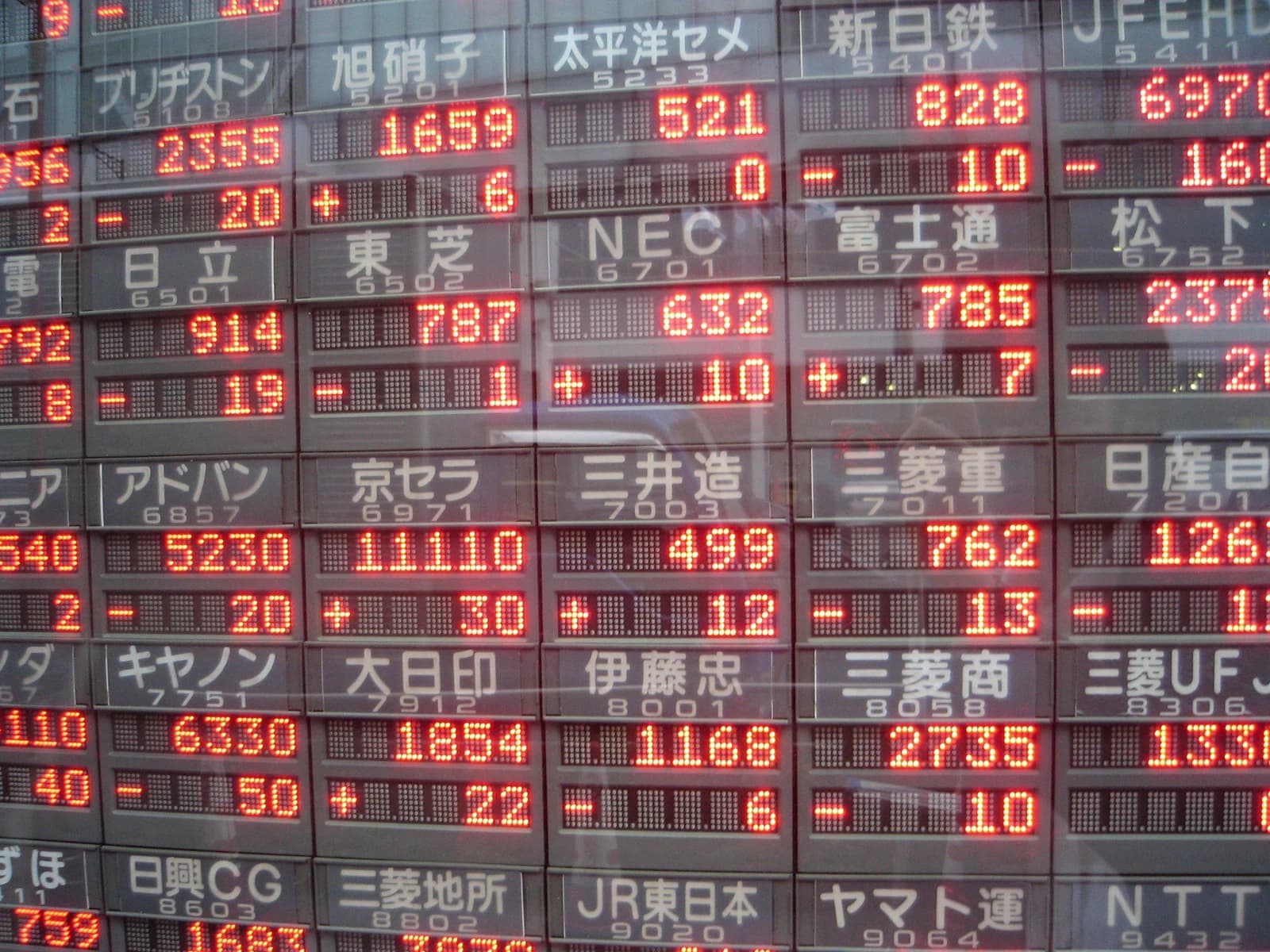
The Nikkei 225 fell 0.5% even as most Japanese stocks advanced, underscoring how abruptly investor anxiety over AI spending can overpower a broad market bid.
Nikkei Falls as Advantest and Tokyo Electron Drop
The main drag came from semiconductor equipment makers Advantest and Tokyo Electron, which dropped 10.3% and 8.6%, respectively, after concerns grew that a pullback in US data-centre spending could slow the next leg of AI infrastructure investment. The retreat matters well beyond Japan: it raises questions about the durability of one of the market’s most powerful growth narratives and about whether valuations in the chip complex have run ahead of near-term earnings visibility.
Sentiment Indicators
The contrast with the wider market was striking. The Topix rose 1.3% and had been up as much as 2.4% earlier in the session, helped by lower crude prices that ease import costs for energy-dependent Japan. Market breadth was also solid, with 168 of the Nikkei’s 225 constituents gaining versus 56 decliners, suggesting the selloff was concentrated rather than systemic.
That concentration is what makes the move important for investors. Japanese equities have benefited in recent months from a global re-rating of technology and semiconductor supply chains, with chipmakers and equipment stocks carrying outsized index influence. A sharp decline in those names can therefore pull the benchmark lower even when domestically oriented sectors and cyclical beneficiaries are rising.
The move also fits a broader global rotation. Reuters reported that investors were shifting away from technology into other sectors amid worries that Democratic gains in the US midterm elections could complicate the pace of AI-related capital spending. If hyperscaler and data-centre budgets are delayed or trimmed, the knock-on effect would run through equipment suppliers, advanced manufacturing and the whole semiconductor capital-expenditure chain.
Some stocks did benefit from the rebalancing. Toyota rose 5.3% ahead of earnings, while Sony and Nintendo gained 6.6% and 4.6% before results later in the day, showing how earnings season can still support idiosyncratic winners even when the market questions a broader thematic trade.
Shipping shares were the main sectoral laggards outside technology, reflecting bets that freight rates could fall if easing tensions in the Middle East improves transit conditions. That in turn helped keep the market’s broader tone constructive, even as the AI trade was repriced more aggressively.
For investors, the immediate question is whether the selloff is a healthy consolidation in an extended trade or the start of a more lasting reset in semiconductor valuations. The answer likely depends on upcoming earnings guidance from chipmakers, evidence on cloud and data-centre capex, and whether weakness in AI hardware spreads from a Japan-specific market reaction into a broader global de-risking.
| Entity | Gains | Losses |
|---|---|---|
| Topix / broader Japan market | ▲Lower oil costs, broad sector gains | ▼Overshadowed by chip losses |
| Advantest, Tokyo Electron | ▲— | ▼AI-capex slowdown fears |
| Toyota, Sony, Nintendo | ▲Earnings anticipation, rotation into non-tech | ▼None from the AI selloff |
| Semiconductor investors | ▲Potential buying opportunities if capex holds | ▼Valuation reset risk |