A tightening shortage of NVIDIA GPUs is pushing buyers toward subleasing and other secondary-market workarounds, underscoring how scarce AI compute has become and how that scarcity is reshaping capital allocation across the cloud and semiconductor supply chain.
NVIDIA Shares at $199.37 as GPU Shortage Persists
The market implication is straightforward: when access to accelerators becomes harder to secure than capital, the economics of AI deployment start to shift from pure buildout toward optimization, reuse and aggregation of fragmented resources. That favours operators with existing installed capacity and flexible networking or cloud infrastructure, while it pressures newer entrants, smaller model developers and enterprises that cannot lock in long-dated supply.
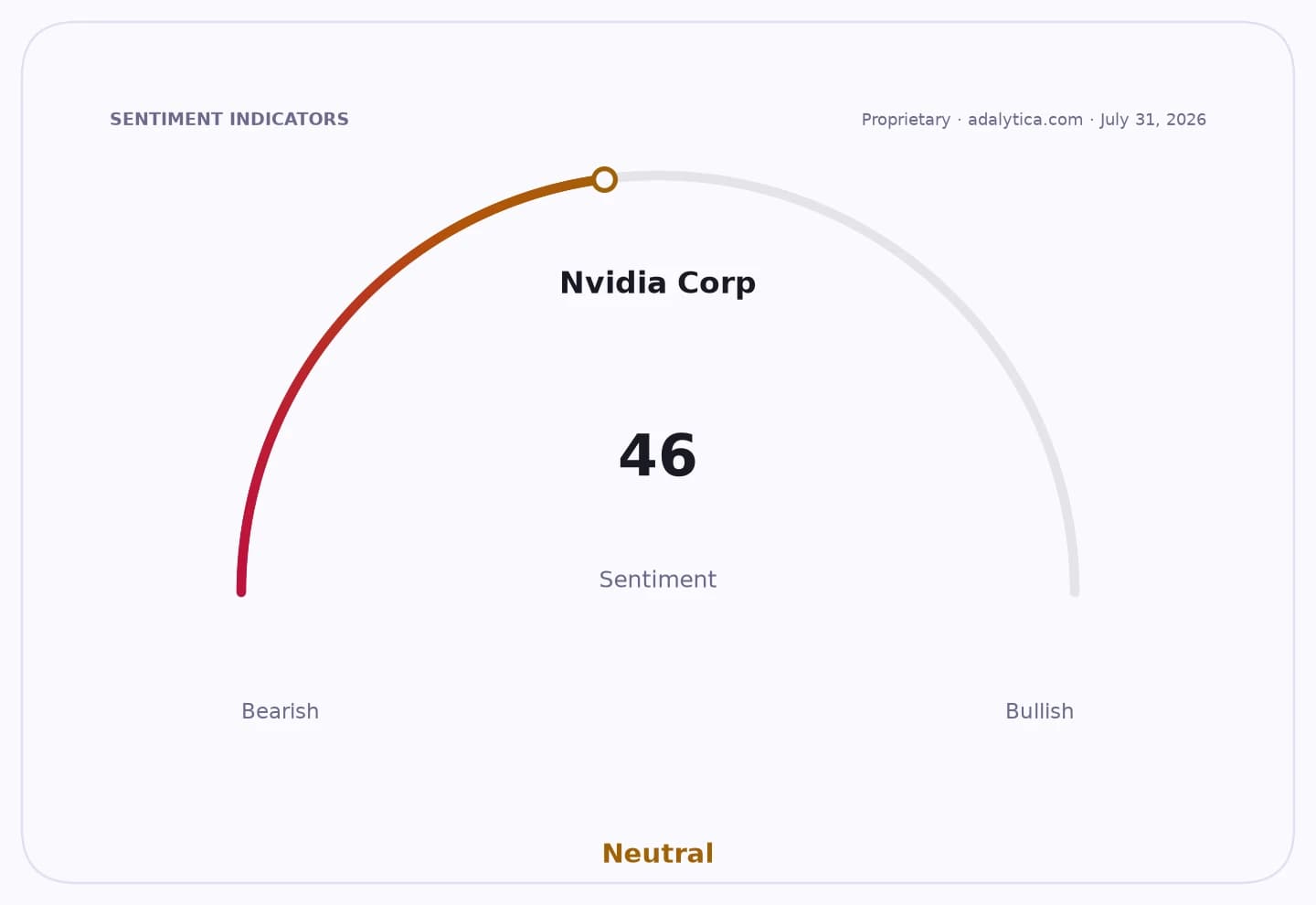
Sentiment IndicatorsⓘProprietary · adalytica.com · July 31, 2026
This is a snapshot — live sentiment, awareness and momentum for 130+ markets update continuously in the dashboard.Open AlphaPulse
The shortage is not just a near-term bottleneck. Samsung has warned the global AI-chip crunch could persist until 2028, even as its own chip profits benefit from demand tied to AI. That aligns with a broader industry picture in which major customers and suppliers are signing multi-year agreements and expanding production, but demand is still running ahead of supply. In practice, that means GPU availability remains a strategic asset, not a commodity purchase, and the secondary market is becoming a necessary mechanism for reallocating scarce compute.
For NVIDIA, the shortage is double-edged. On one hand, constrained supply supports pricing power and reinforces the company’s central role in the AI stack. On the other, persistent scarcity can slow the pace at which customers convert AI enthusiasm into deployed workloads, especially if they are forced to stitch together capacity through subleases rather than buying directly. That can delay revenue recognition for the broader ecosystem and complicate planning for cloud providers that need predictable utilization to justify heavy infrastructure spending.
Investors are already pricing in the tension between demand strength and supply limitations. NVIDIA shares closed at $199.37 on July 31, above both the 50-day moving average and the 200-day moving average, but the stock’s momentum indicators have cooled from earlier peaks, suggesting the market is still weighing how much of the AI trade can be converted into sustained earnings growth if compute remains tight. Microsoft, a major buyer of AI infrastructure, has also flagged supply constraints on critical hardware in its annual filing, reinforcing the view that this is an industry-wide constraint rather than a single-vendor issue.
The next catalyst is whether capacity expansion by chipmakers, foundries and cloud operators can outpace demand growth. If it cannot, the shortage will keep supporting NVIDIA’s pricing and bargaining power, while pushing customers deeper into leasing, pooling and other resource-aggregation strategies. If it can, the market may eventually shift from scarcity premiums to deployment efficiency, but that looks like a 2027-to-2028 story rather than a 2026 one.
| Entity | Gains | Losses |
|---|---|---|
| NVIDIA | ▲pricing power | ▼near-term deployment pace |
| GPU owners / sublessors | ▲rental income | ▼inventory tightness |
| AI buyers with capital | ▲access via secondary market | ▼higher compute costs |
| Smaller AI entrants | ▲occasional pooled capacity | ▼direct supply access |