Nvidia’s run to a fresh high is colliding with a tougher reality for the AI hardware trade: memory makers and chip buyers are moving toward longer contracts as the industry tries to lock in supply before shortages and pricing swings get worse.
Nvidia at $223.96 as memory contracts tighten
That matters because the AI boom is no longer just a story about soaring demand for accelerators. It is increasingly a story about who can secure high-bandwidth memory, DRAM and other components at predictable prices, and who gets squeezed if supply stays tight. For investors, the shift can support revenue visibility and pricing power for suppliers, but it also raises the risk that buyers face higher input costs and weaker margins.
Sentiment IndicatorsⓘProprietary · adalytica.com · August 10, 2026
This is a snapshot — live sentiment, awareness and momentum for 130+ markets update continuously in the dashboard.Open AlphaPulse

Nvidia closed at $223.96 on Aug. 7, its highest level in the data set, with volume of 105.5 million shares. The stock has reclaimed its 50-day moving average of $206.05 and sits above its 200-day moving average of $193.80, while RSI readings around 65.6 and a positive MACD show momentum remains firm even after the latest rally.
Micron has been even more exposed to the memory squeeze. The stock briefly surged above $1,200 in late June before pulling back, and it finished at $877.57 on Aug. 7, still far above both its 50-day moving average of $970.87 and 200-day moving average of $534.86. The move underscores how violently memory pricing expectations can reset when AI demand, capacity constraints and contract timing change at once.
Micron’s own filing points to the core issue: data-center AI demand is growing faster than the industry can expand supply, forcing allocation decisions that can affect customers and end markets. The company also said it has entered, and expects to continue entering, strategic customer agreements that provide contracted supply assurance and greater pricing visibility.
That is the “magic card” investors are watching. Long-term contracts can give suppliers steadier cash flow and customers access to scarce product, but they do not eliminate the bargaining fight. They often shift risk rather than remove it, locking in volumes while leaving price and timing as the next battleground in what amounts to a memory chicken game.
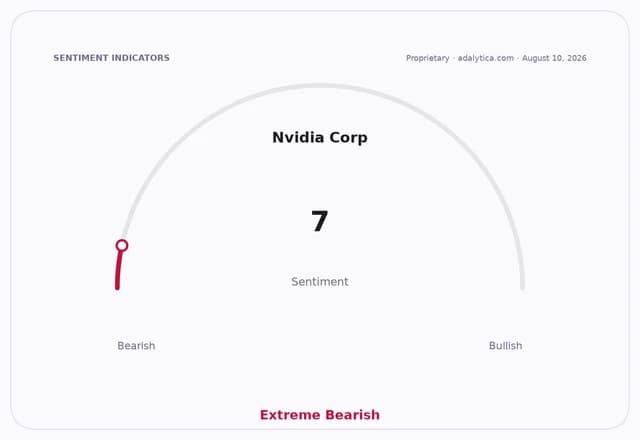
The market backdrop remains supportive for the suppliers with leverage. Adalytica’s Nvidia earnings sentiment gauge shows “Extreme Fear” at 7, even as awareness stays at 100, suggesting the stock is drawing intense attention but remains vulnerable to sharp swings. Micron’s technical picture also shows the stock well above long-term averages, though recent volatility signals investors are still recalibrating how much of the AI memory boom is already priced in.
For Nvidia, tighter memory contracts could help secure the supply chain needed to keep AI systems shipping. For Micron and peers such as SK Hynix, the same trend can extend pricing power and bolster margin visibility. The next test is whether customer agreements become a durable industry framework or just a temporary fix as demand keeps outrunning supply.
| Entity | Gains | Losses |
|---|---|---|
| Micron | ▲Contracted pricing visibility | ▼Spot-market upside if demand cools |
| Nvidia | ▲Better supply assurance | ▼Higher component costs |
| Memory buyers | ▲Locked-in allocations | ▼Less pricing flexibility |
| Short sellers | ▲Volatility opportunities | ▼Momentum in AI chip names |