Nvidia shares climbed to $230.36 on Friday, sending a fresh warning shot to AMD and Intel investors that the AI chip trade is still being led by the market’s dominant supplier.
Nvidia Rises as AMD and Intel Lag in AI Chips

The move matters because Nvidia remains the clearest real-time gauge of data-center spending, and its rebound suggests investors are still willing to pay up for the company most exposed to hyperscaler AI capex. That, in turn, raises the bar for challengers AMD and Intel, whose shares often trade on whether they can meaningfully close the gap in accelerators, infrastructure chips and AI-related margins.
Sentiment IndicatorsⓘProprietary · adalytica.com · September 7, 2026
This is a snapshot — live sentiment, awareness and momentum for 130+ markets update continuously in the dashboard.Open AlphaPulse
Nvidia’s stock rose 1.7% on the day and has gained more than 29% from its Aug. 7 close of $223.96, even after a volatile stretch that briefly pushed it below its 50-day moving average in June and July. The latest close leaves the stock above both its 50-day moving average of $210.57 and its 200-day moving average of $196.53, while RSI readings around 53 point to strength without a stretched overbought signal.
AMD also advanced, rising 4.7% to $477.57, but it remains well below its 50-day moving average of $499.27 after a sharp summer pullback from above $580. Intel climbed 4.5% to $95.80, yet it is still far under its 50-day moving average of $100.61 and has given back much of the explosive run that briefly pushed it above $129 in May.
The setup underscores how Nvidia’s leadership continues to shape sentiment across the entire semiconductor complex. Investors are still pricing the AI buildout as a winner-take-most market, with Nvidia capturing the premium multiple and suppliers such as AMD and Intel needing proof that product cycles and customer adoption can translate into sustained share gains.
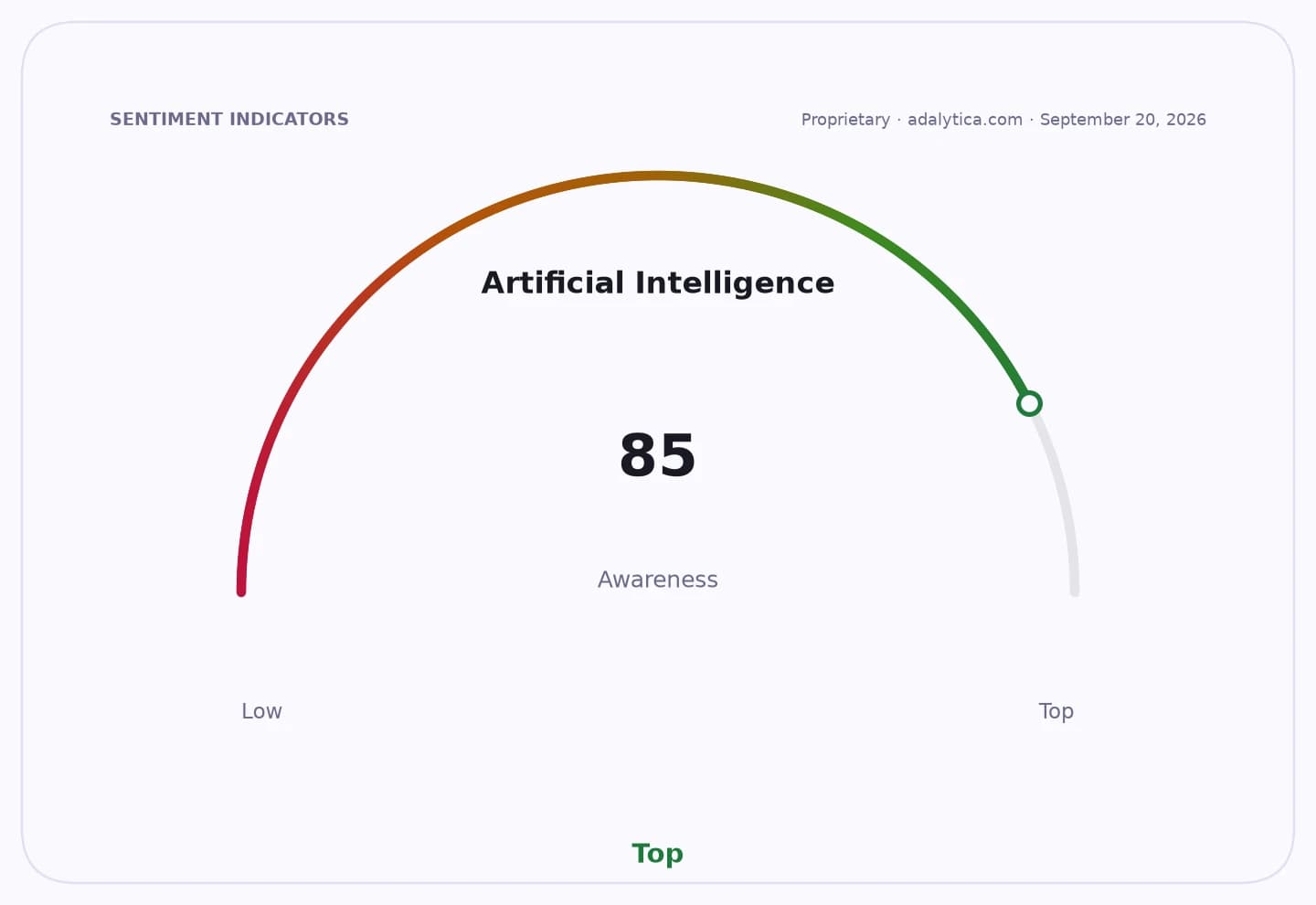
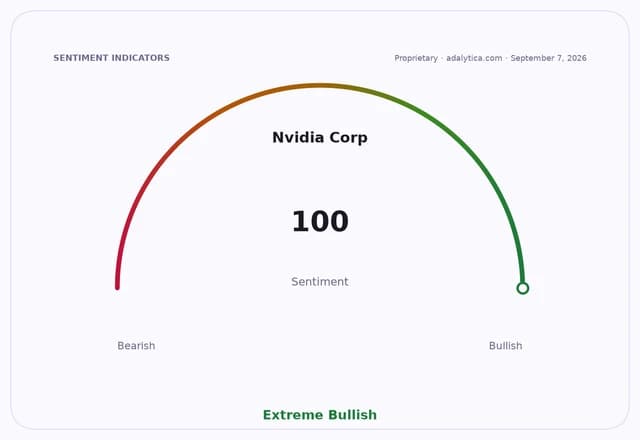
That dynamic is reinforced by the broader AI trade, which remains strong even as the S&P 500 flashes extreme fear in Adalytica’s trade-signal snapshot. Nvidia’s own sentiment score is at 100, or “Extreme Greed,” while AI sentiment sits at 93, suggesting the market is still concentrated in the most crowded part of the growth trade.
For investors, the message is simple: Nvidia’s strength keeps AI spending expectations elevated, but it also leaves AMD and Intel under pressure to deliver concrete evidence of competitive traction in the next round of product and customer updates. The next catalyst is likely to come from fresh earnings commentary, customer spending signals or any shift in the hyperscaler AI capex outlook.
| Entity | Gains | Losses |
|---|---|---|
| Nvidia | ▲AI-leadership premium | ▼None from near-term momentum |
| AMD | ▲Sector sympathy | ▼Still must prove share gains |
| Intel | ▲Rebound in trading sentiment | ▼Remains below key moving averages |
| AI hardware buyers | ▲More supply/options | ▼Higher pricing pressure |