Nvidia has unveiled a new Rubin HPC accelerator with more than 50,000 CUDA cores, a stark reminder that the company’s next growth phase is being built around ever-larger, more specialized chips for scientific computing and AI infrastructure.
Nvidia Rubin HPC Targets Scientific Computing
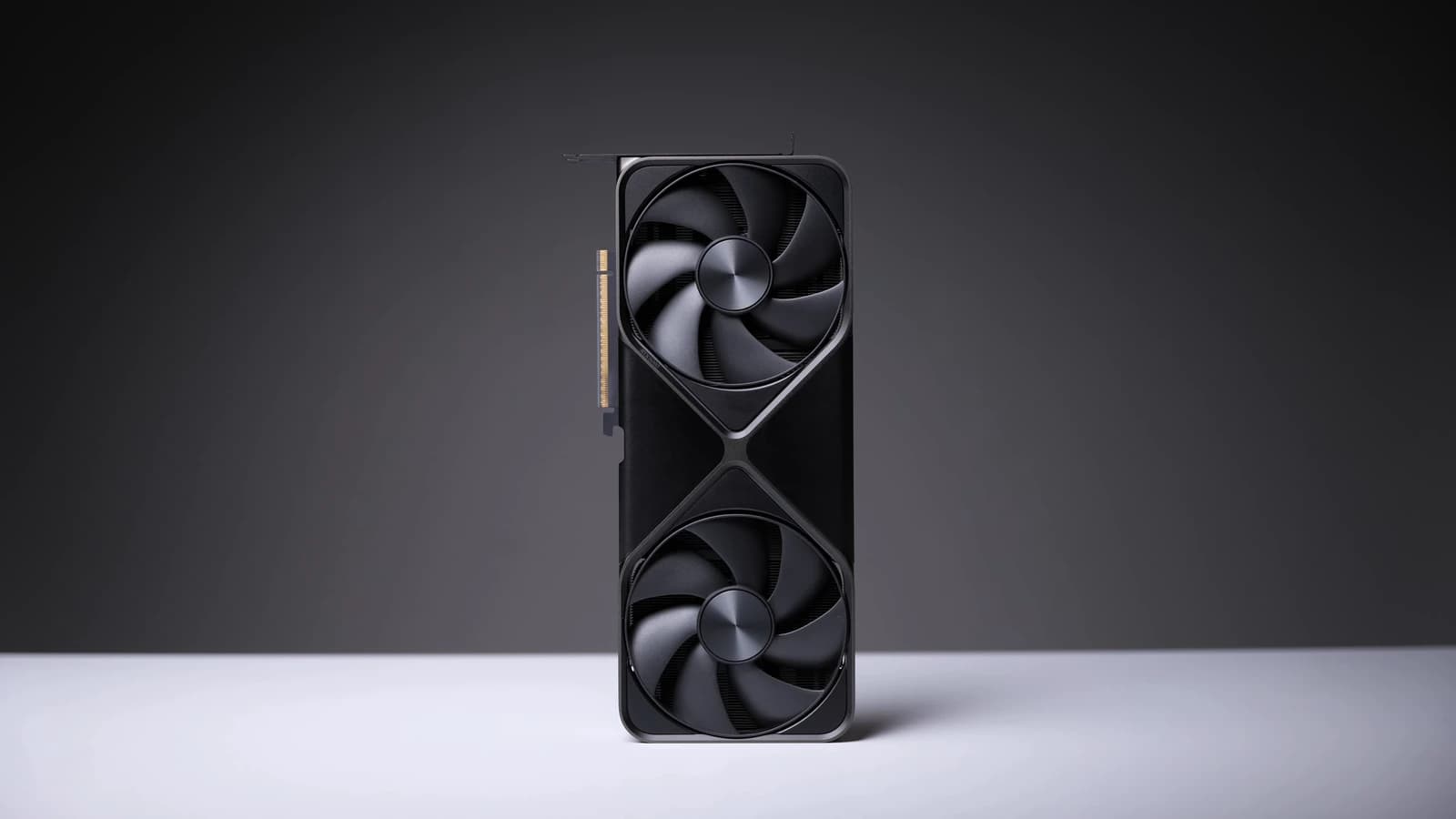
The chip matters less for its consumer appeal — users will not see it in gaming PCs — than for what it says about Nvidia’s roadmap and pricing power in high-performance computing. Rubin HPC, which Nvidia says will arrive in deployed systems in 2028, has almost three times the CUDA core count of the GeForce RTX 5090’s 21,760 cores and is designed for simulation-heavy workloads in materials science, molecule discovery, industrial design and climate modelling.
Sentiment Indicators
Artificial Intelligence
For investors, the announcement extends Nvidia’s lead in the AI hardware arms race while also highlighting how far out the monetization curve has become for some of its most advanced products. A 2028 availability date means the market is being asked to underwrite demand years in advance, even as the company continues to depend on near-term Blackwell and data-center shipments to support current earnings growth. That long lead time can be read two ways: as evidence Nvidia’s pipeline remains deep, or as a sign that the company is already planning the next cycle before the present one has fully matured.
The strategic importance lies in Nvidia’s effort to make its GPUs the default platform not just for training large language models, but for scientific discovery itself. The company says Rubin HPC combines faster data movement between computing components with seventh-generation NVLink to keep processors from sitting idle, a common bottleneck in data-intensive workloads. It also adds sparse data acceleration and support through CUDA-X software libraries, both meant to speed up calculations in applications such as sparse matrices, stencil operations, sorting and reduction tasks.
Nvidia Corp
That positioning is important economically because it targets sectors where compute time translates directly into research throughput and commercial advantage. Pharmaceutical companies, engineering firms, materials scientists and climate researchers all benefit if simulations run faster and at larger scale. In theory, that can compress development timelines, improve productivity and lift the return on capital spent on research clusters. In practice, the gains will depend on software readiness, system integration and independent benchmarking — none of which Nvidia has yet fully proven for Rubin HPC.
The launch also reinforces the supply-chain and capital-expenditure intensity of the AI buildout. Nvidia’s biggest customers, from cloud operators to national labs, have been racing to expand AI clusters, and the market has increasingly priced in the idea that demand for accelerators will remain elevated well beyond the current wave of model training. The broader semiconductor complex has reflected that optimism: the VanEck Semiconductor ETF has remained tied to the fortunes of AI infrastructure names, while Nvidia shares have been volatile as investors weigh explosive demand against valuation and execution risk.
Still, the bear case is straightforward. A product that will not ship until 2028 cannot help near-term revenue, and the performance claims remain unverified by outside testing. If competitors narrow the gap in AI compute, or if buyers delay large cluster upgrades after the current spending cycle, today’s enthusiasm could prove too forward-looking. The bull case is that Nvidia is already designing the next bottleneck out of the system, preserving its technological lead and keeping customers locked into its software and networking stack.
| Entity | Gains | Losses |
|---|---|---|
| Nvidia | ▲Longer technology lead | ▼Near-term revenue impact delayed |
| AI/cloud customers | ▲Faster future simulations | ▼Wait until 2028 for access |
| Semiconductor rivals | ▲Benchmark to chase | ▼Pressure on competitiveness |
| Researchers/enterprises | ▲Potential productivity gains | ▼Unproven performance claims |