Open-source governance for AI agents is emerging as a strategic advantage, not just a technical framework, as Pinnacle Tech Launches Project Starfish amid mounting pressure on companies and regulators to show they can control autonomous software systems.
Open AI Governance May Boost Enterprise Adoption
AI
The significance goes beyond one corporate announcement. As AI agents move from chatbots to tools that can act, transact and make decisions inside enterprise workflows, the market is shifting toward governance as a prerequisite for adoption. That makes standards around oversight, auditability and accountability economically important: they determine whether AI can be deployed broadly in regulated industries or remains confined to pilots and lower-risk use cases.
Sentiment Indicators
AI
Project Starfish’s open-source model matters because it could lower the cost of compliance and integration for enterprises that are trying to deploy agents without creating a black box. In practice, governance architecture can influence procurement decisions, liability exposure and the pace at which banks, insurers, software vendors and public agencies roll out agentic systems. If widely adopted, an open framework could become infrastructure for the next phase of AI deployment, much as Linux and other open standards shaped prior waves of enterprise computing.
The timing also fits a broader policy and market backdrop. Governments, including Australia’s, are tightening the debate around AI’s “social license,” while global institutions are pushing for stronger safeguards around safety, transparency and accountability. The regulatory direction of travel raises the value of systems that can document what an AI agent did, why it did it and who was responsible when it went wrong. That is especially relevant for companies selling AI platforms into regulated markets, where explainability and provenance can be as important as model performance.
For investors, the issue is that governance is moving from a legal afterthought to a competitive moat. Vendors that can package safety, monitoring and control with usable agent products may win enterprise share, especially if customers want to avoid building their own compliance layers. At the same time, open-source governance can pressure proprietary platforms if it standardizes expectations and makes switching easier, reducing the pricing power of closed ecosystems.
That tension helps explain the market lens on the biggest AI names. Nvidia remains central to the compute buildout, but governance frameworks influence how quickly that hardware demand translates into durable software and platform spend. Microsoft’s AI strategy also sits directly in the crosshairs of the governance debate, since the more autonomous AI becomes, the more buyers will demand controls that can be audited across productivity and cloud stacks. Companies such as C3.ai, which trade on the promise of enterprise AI adoption, stand to benefit if governance accelerates deployment — but they also face the risk that open standards commoditize part of their value proposition.
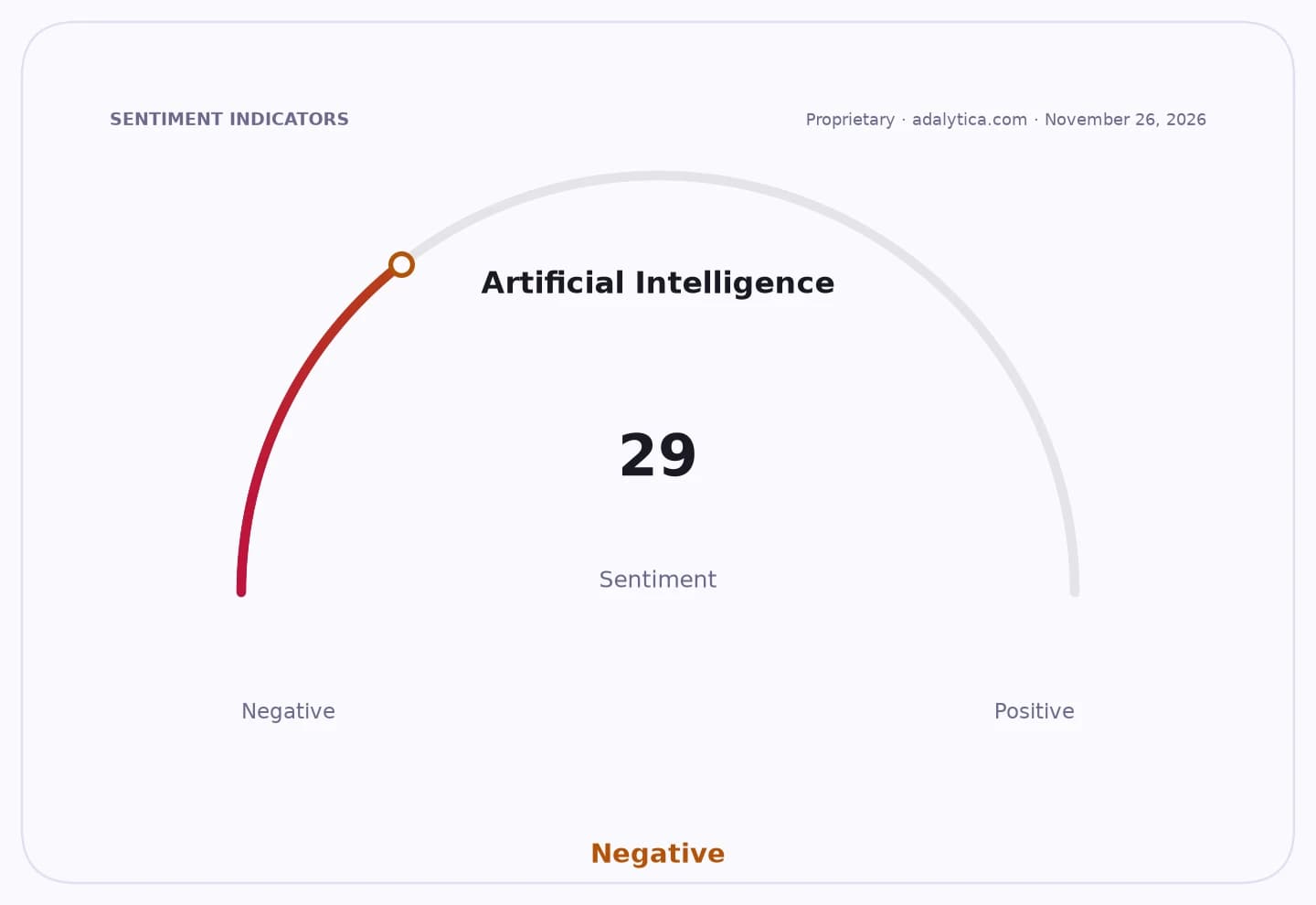
Technically, Nvidia’s shares have held above the 50-day and 200-day moving averages, but momentum has cooled from earlier highs, while Microsoft’s stock has recovered from a deep drawdown and is stabilizing near its 50-day average. C3.ai remains far below its longer-term trend, underscoring how much of the sector’s valuation still depends on proof that AI software can scale beyond narrative. Adalytica’s sentiment readings also show a split: Nvidia’s earnings sentiment sits in fear even as awareness is high, while Microsoft’s sentiment has swung sharply higher, suggesting investors are still differentiating between compute exposure and application-level monetization.
The bull case for Project Starfish is that open governance becomes the default layer for agentic AI, speeding adoption and giving enterprise buyers a common control framework. The bear case is that governance remains fragmented, with regulatory regimes diverging by jurisdiction and large platform vendors building their own closed standards. Either way, the message for investors is the same: in the next phase of AI, the winners may be the firms that can make autonomous systems trustworthy enough to deploy at scale.
| Entity | Gains | Losses |
|---|---|---|
| Open-source governance advocates | ▲Faster adoption | ▼Less control over standards |
| Enterprise buyers | ▲Lower compliance cost | ▼More integration burden |
| Closed AI platform vendors | ▲— | ▼Pricing power pressure |
| Nvidia and Microsoft | ▲More enterprise AI spend | ▼Greater scrutiny on deployment risks |