Palantir CEO Alex Karp says the old enterprise software sales model is finished, underscoring how AI is changing how companies buy, deploy and pay for software — and why the market is rewarding vendors that can prove value fast.
Palantir CEO Karp says old software sales model is over

Karp’s comments land at a moment when investors are increasingly separating AI-native platforms from legacy software names. Palantir’s own filings say many customers still expect software to be bought like labor, with custom work and costly sales efforts baked in, but Karp is arguing that model no longer fits a market where buyers want faster deployments and clearer returns.
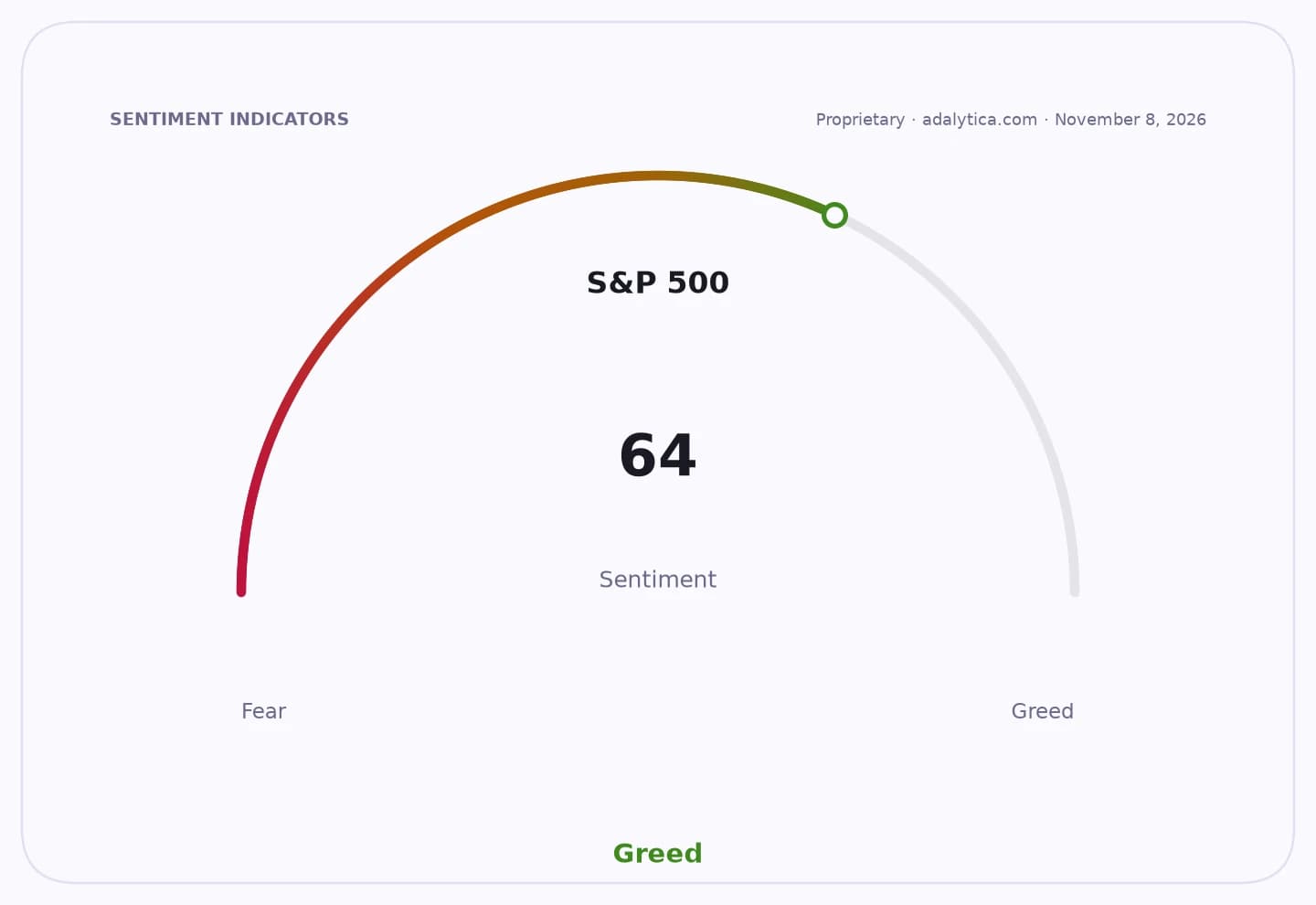
Sentiment Indicators

The message matters for margins and growth across the sector. If the traditional sales-heavy model breaks down, software vendors may need to spend less on lengthy consultative selling and more on product delivery, implementation speed and automation. That could favor firms with sticky data platforms and punish rivals whose revenue still depends on large, human-intensive sales organizations.
Palantir shares have been volatile even after a huge run, with the stock closing at $154.99 on Nov. 5 after hitting $201.72 on Oct. 21. The latest decline came on heavy volume of 49.8 million shares, while the 14-day RSI at 28.1 and a bearish MACD reading suggest the stock had already moved into technically oversold territory before Karp’s latest framing of the industry.
The broader software trade has also been choppy, with Microsoft closing at $535.93 and Salesforce at $222.41 on Nov. 5 after both saw recent swings. For investors, Karp’s thesis reinforces a simple split: companies that can replace old-school selling with AI-driven product adoption may keep winning, while those still tied to the classic software sales machine could face slower growth and pressure on operating leverage.
| Entity | Gains | Losses |
|---|---|---|
| Palantir | ▲AI-native sales pitch | ▼Legacy software rivals |
| Enterprise buyers | ▲Faster deployment cycle | ▼Long consulting-heavy deals |
| Software vendors with automation | ▲Lower selling friction | ▼Human-intensive sales teams |
| Salesforce, Microsoft and peers | ▲Product-led demand if adopted | ▼Old enterprise sales model |