PicPay’s credit book has almost doubled to R$32 billion in a year, and that matters because the Brazilian fintech is proving it can grow beyond payments into a full-scale lender without losing sight of capital discipline.
PicPay Credit Book Reaches R$32 Billion
That kind of expansion is economically important in a country where consumer credit remains one of the main engines of financial inclusion and spending. PicPay is not just handing out more loans; it is tilting the mix toward secured and partially secured products, which usually carry lower risk and give lenders more room to scale sustainably. For long-term investors, that is the difference between a growth story that burns cash and one that can compound.
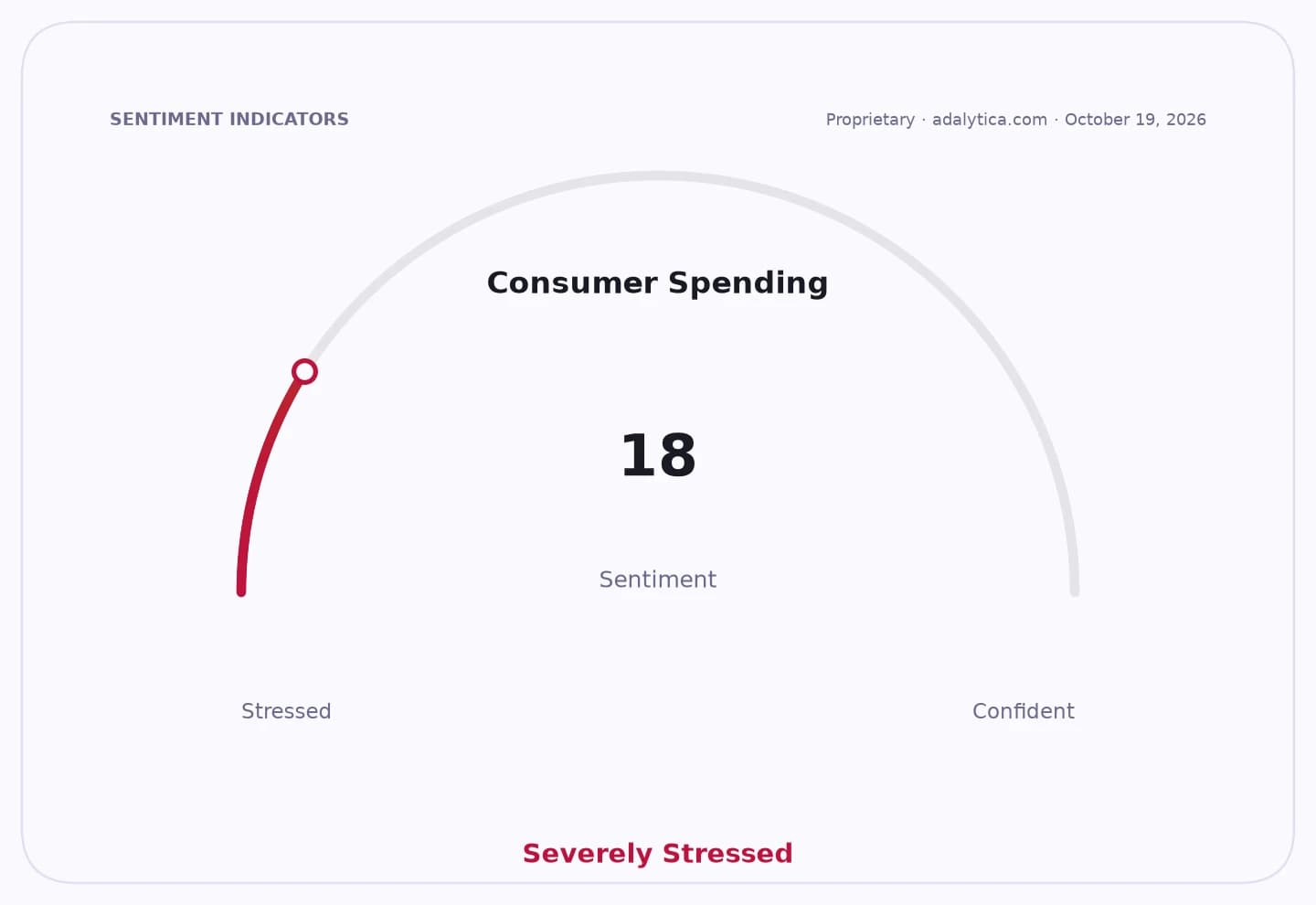
Sentiment IndicatorsⓘProprietary · adalytica.com · October 19, 2026
This is a snapshot — live sentiment, awareness and momentum for 130+ markets update continuously in the dashboard.Open AlphaPulse
The standout driver is private-sector payroll loans, a product that jumped from R$1.3 billion to R$7.2 billion in 12 months. PicPay said it now has 6.4% of the outstanding market and 11% of new originations in that segment, putting it among the country’s top originators. That is a meaningful foothold in a lending niche that can deepen customer relationships and lower acquisition costs over time.
There is a real cross-sell angle here. PicPay said borrowers who take the private payroll loan buy 30% more additional products and generate revenue per active customer about seven times higher than the average user. That is exactly the sort of economics investors want from a digital financial platform: a product that brings in sticky customers, broadens the relationship and improves lifetime value.
The company’s balance sheet looks more resilient than a fast-growing credit story might suggest. PicPay said 55% of the total portfolio is collateralized or partially collateralized, and 86% of growth came from those lower-risk loans or from more mature customers. It has also been funded by nearly $450 million raised in its IPO, cash that management says remains on the company’s books to support expansion.
The one number investors will watch closely is delinquency. Loans more than 90 days past due rose to 9.8%, but PicPay argues that reflects the natural aging of a young credit book rather than a deterioration in underwriting. The company also said its loss-absorption metric is running around 50%, comfortably inside its 40% to 60% target range.
For investors, the story is less about one quarter’s growth than about whether PicPay can keep turning its app into a profitable lending and distribution platform. If it can keep scaling secured credit, maintain underwriting discipline and deepen product usage, this could become a durable Brazilian financial franchise worth watching for years, not months.
| Entity | Gains | Losses |
|---|---|---|
| PicPay | ▲Faster loan growth, deeper customer ties | ▼Higher credit-cycle scrutiny |
| Borrowers with payroll loans | ▲Easier access to credit | ▼More debt obligations |
| Digital lenders in Brazil | ▲Validation of online origination | ▼More competition for borrowers |
| Conservative investors | ▲Better risk controls than pure unsecured growth | ▼Still exposed to rising delinquency |