Household loan arrears in Morocco have climbed to a record 44.7 billion dirhams, a warning sign that stretched consumers are starting to buckle under higher living costs and could force lenders to brace for more credit losses.
Morocco household loan arrears hit record 44.7 billion
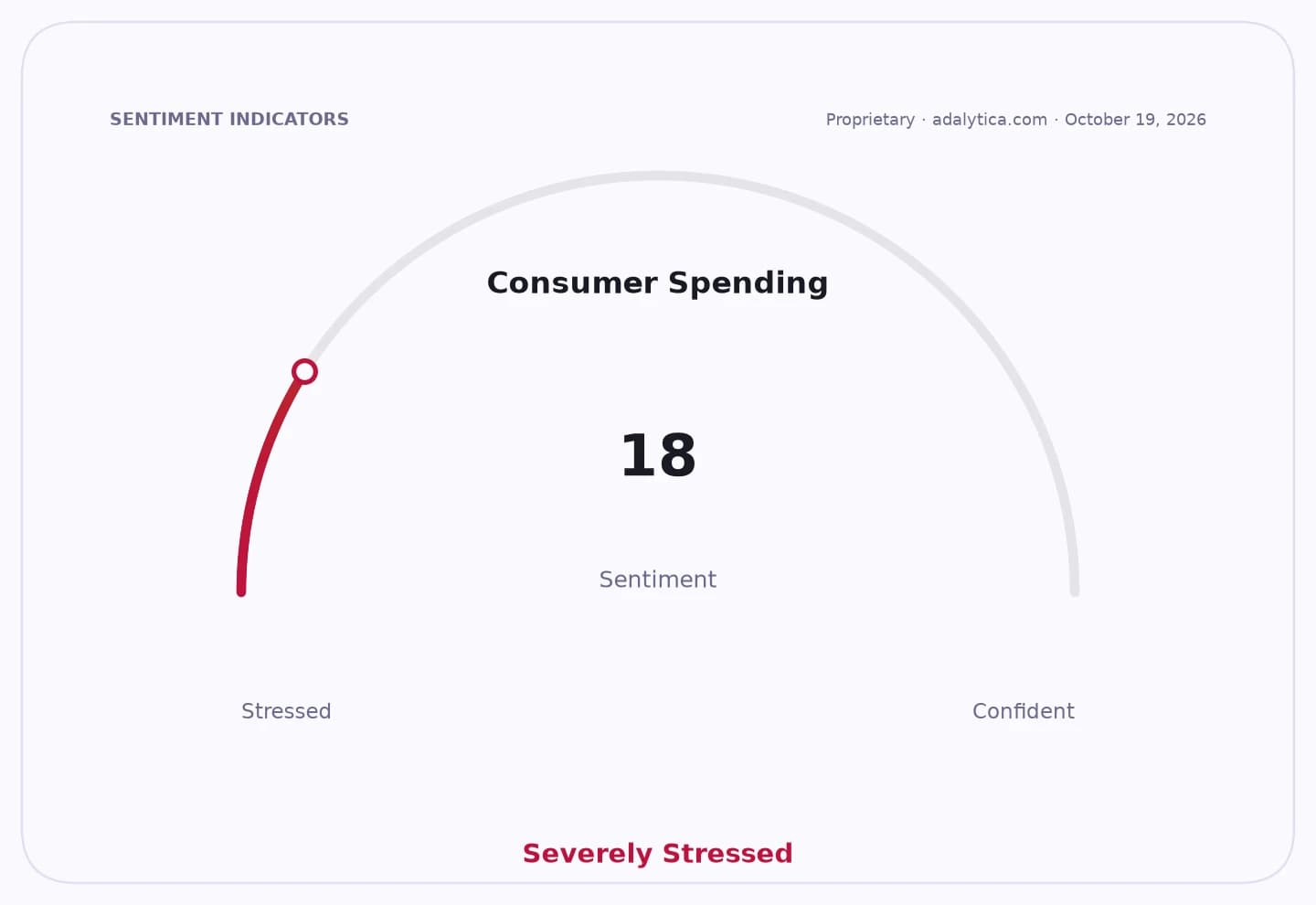
That matters because households are now carrying the bulk of the stress in the banking system: they account for nearly 42% of all bad and disputed loans, even though their overall share of credit is lower than that. The household delinquency rate has reached 11%, compared with 8.2% for the banking sector as a whole, showing that consumer balance sheets are deteriorating faster than those of companies.
Sentiment IndicatorsⓘProprietary · adalytica.com · October 19, 2026
This is a snapshot — live sentiment, awareness and momentum for 130+ markets update continuously in the dashboard.Open AlphaPulse
The pace of deterioration is not a one-off. Bad household loans rose 6.7% from a year earlier and 1.9% in August alone, faster than the growth in non-financial private company arrears. Overall bank bad loans stood at 106.5 billion dirhams, up 3.7% year on year, but the household segment is clearly the main pressure point.
The backdrop is plain: purchasing power remains under strain even as inflation has cooled. Food and transport costs continue to weigh on budgets, while uneven employment conditions leave lower-income and irregular earners more exposed. Total lending to households rose only 3.4% to 404.4 billion dirhams, suggesting banks are not seeing the kind of broad-based consumer credit expansion that would offset rising delinquencies.
The mix of borrowing is also worsening. Consumer loans climbed 5.1% to 63.5 billion dirhams, outpacing housing loans, which rose just 2.3% to 259.1 billion dirhams. That matters because consumer lending carries a higher average rate, 6.81% versus 4.53% for mortgages, making it more vulnerable when budgets come under pressure. The average rate on all household loans was 5.59%.
For investors, the message is straightforward: Morocco’s consumer credit cycle is moving into a more fragile phase, and that raises the risk of higher provisioning, slower loan growth and weaker earnings quality at lenders with meaningful retail exposure. The market tends to focus on balance-sheet growth, but the more important trade-off now is between yield and credit risk. In that environment, banks with stronger underwriting, better collections and lower consumer concentration should outperform.
I believe the market underestimates how quickly household distress can spill into bank profitability once arrears move from a warning trend to a sustained cycle. The next few months will show whether this is a temporary squeeze or the start of a broader consumer credit reset in Morocco. For now, the smarter position is to favor lenders with cleaner books and avoid assuming consumer loan growth is inherently profitable.
| Entity | Gains | Losses |
|---|---|---|
| Conservative banks | ▲Better credit discipline | ▼Slower loan growth |
| Retail borrowers | ▲Debt relief if lending tightens | ▼Higher borrowing strain |
| Consumer-lending banks | ▲Higher yields on loans | ▼Rising provisions |
| Moroccan banking sector | ▲Cautious underwriting focus | ▼Weaker asset quality |