Poland’s denunciation of Russia’s vote as “illegal elections” adds another layer of geopolitical risk to an already fragile Eastern European investment backdrop, even as the zloty trades near a six-month high around 3.85 per dollar.
Polish zloty near six-month high as Russia tensions rise
For markets, the significance is less the rhetoric itself than the signal that Warsaw is doubling down on a hard line toward Moscow while the war in Ukraine keeps pressure on regional currencies, energy costs and risk premia. Poland sits on the front line of the conflict’s economic spillovers, and any escalation in political messaging reinforces the view that sanctions, defense spending and security concerns will remain a structural feature of the region rather than a temporary shock.
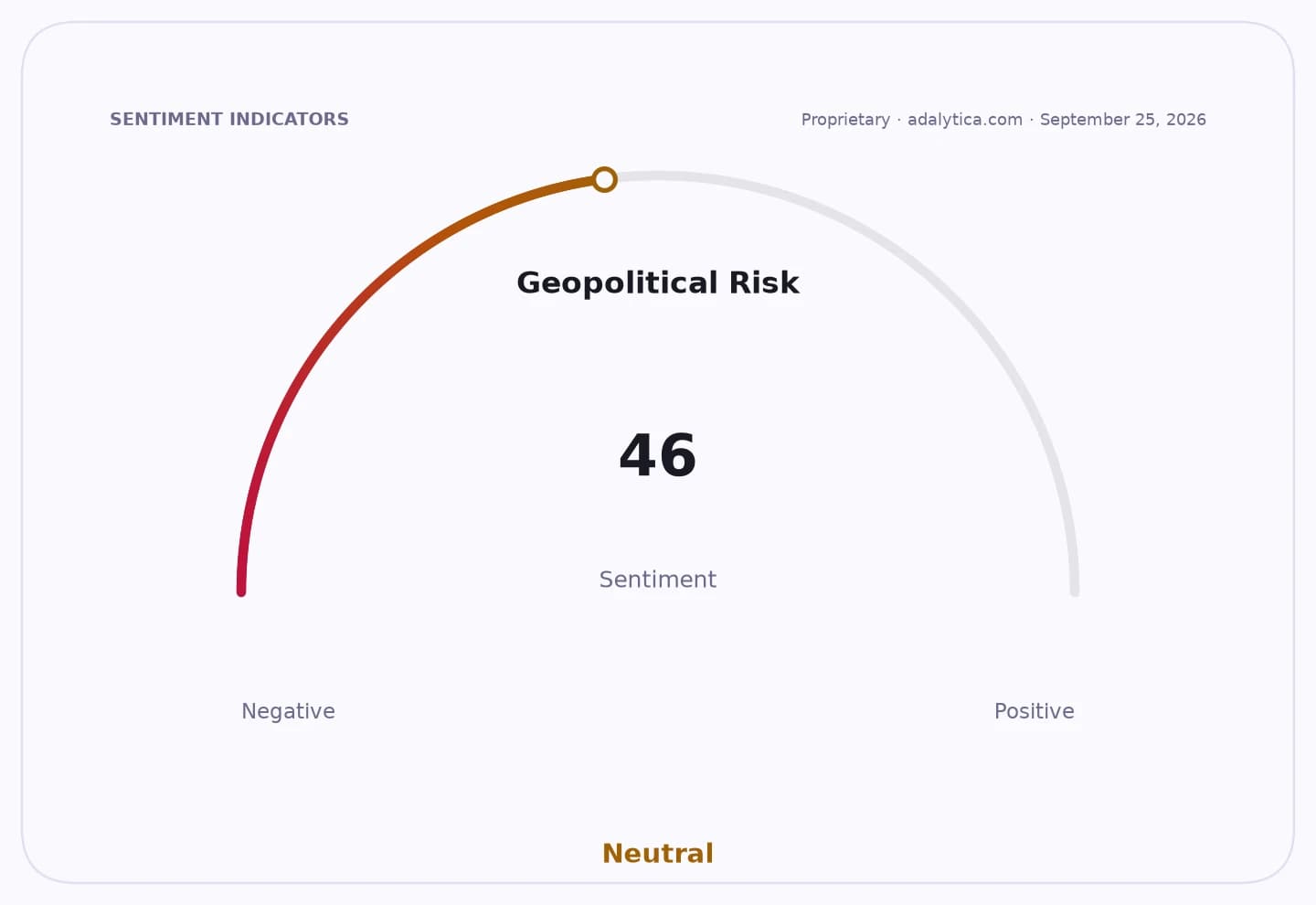
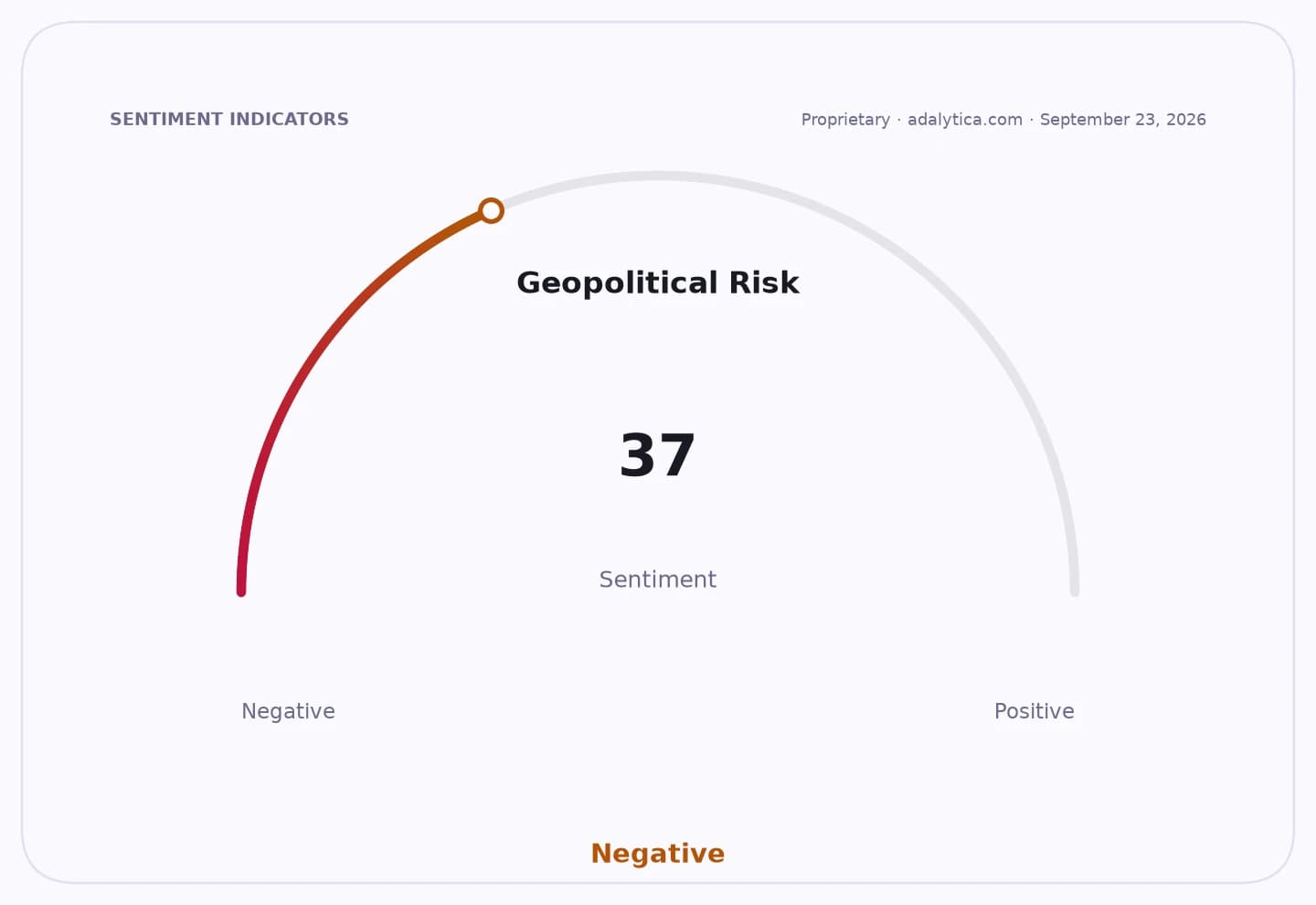
Sentiment IndicatorsⓘProprietary · adalytica.com · September 24, 2026
This is a snapshot — live sentiment, awareness and momentum for 130+ markets update continuously in the dashboard.Open AlphaPulse
The zloty’s recent move suggests investors are not yet pricing in a disorderly deterioration. The currency has strengthened from 3.49 per dollar in late January to 3.85 on Sept. 24, while conventional technical indicators show it trading above both its 50-day and 200-day moving averages. RSI readings around 85.5 point to an overbought market, which could leave the currency vulnerable to a pullback if geopolitical headlines intensify or global risk appetite fades.
Adalytica’s Polish zloty trade signals remain neutral, with sentiment at 38 and awareness at 70, underscoring a market that is attentive but not overtly bearish. That matches a broader pattern in Central European assets: investors are willing to hold exposure when macro data and carry are supportive, but geopolitical shocks can quickly overwhelm fundamentals.
The economic channel is straightforward. A more confrontational Polish stance toward Moscow keeps alive the risk of higher defense outlays, prolonged energy uncertainty and slower cross-border normalization across the region. For exporters, a firmer zloty can squeeze competitiveness; for importers, it eases foreign-currency costs. For government bond markets, the key question is whether heightened security tensions translate into a more persistent risk premium on Polish debt and neighboring sovereigns.
The bull case is that Poland’s economy remains relatively resilient and the market has already absorbed much of the war premium, leaving room for the zloty to stay supported if growth and external balances hold. The bear case is that political escalation, even if largely symbolic, can coincide with a global de-risking episode and trigger a sharper correction in currencies and regional risk assets.
For investors, the immediate takeaway is that Poland’s geopolitical posture remains inseparable from its market profile. Any signs of worsening confrontation with Russia, or of spillover from the war in Ukraine, would likely show up first in FX and rates before feeding through to equities and corporate funding costs.
| Entity | Gains | Losses |
|---|---|---|
| Poland | ▲Security posture | ▼Diplomatic flexibility |
| Russia | ▲Domestic political theater | ▼International legitimacy |
| Polish exporters | ▲Weaker FX risk | ▼Stronger zloty margins |
| Polish bondholders | ▲Stability if tensions ease | ▼Higher risk premium |