Portugal’s mortgage market is heating up again, but the real story is not just the jump in lending — it is the way households are changing how they borrow. New home-loan contracts surged to 2.951 billion euros in March, the highest monthly level this year, as families rushed to lock in mixed-rate mortgages that offer early payment stability after years of painful interest-rate volatility.
Portugal Mortgage Lending Rises as Mixed-Rate Loans Dominate
That shift matters because it tells you where Portuguese households are placing their bets: not on lower rates forever, but on reducing near-term risk while keeping some flexibility if borrowing costs fall further. In March, mixed-rate loans accounted for 81.24% of new contracts, while variable-rate mortgages slipped to 16.82% and fixed-rate loans fell to just 1.93%. That is a major behavioral change in a market still shaped by the memory of the ECB tightening cycle, and it suggests borrowers are still conservative even as rates ease.
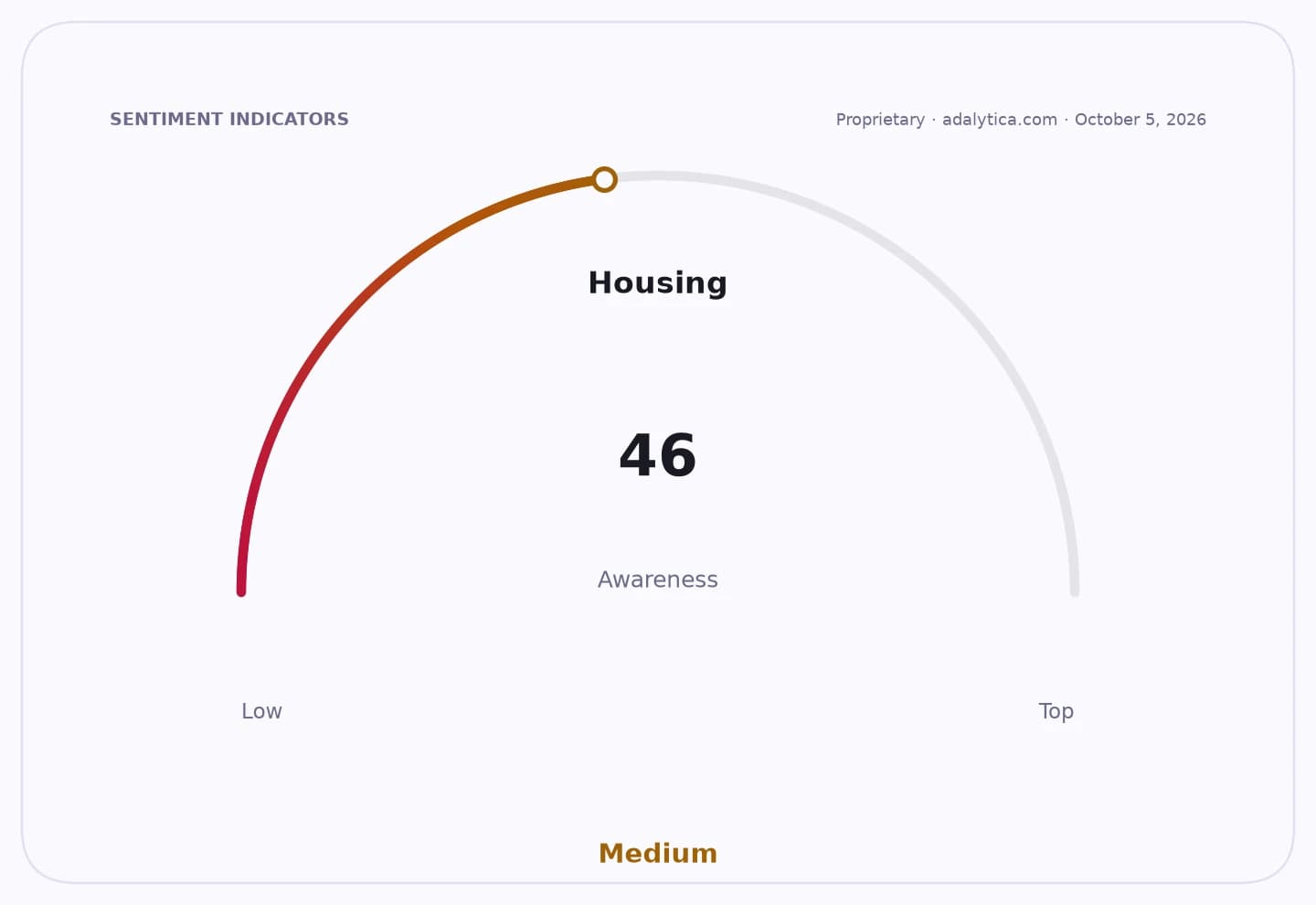
Sentiment IndicatorsⓘProprietary · adalytica.com · October 2, 2026
This is a snapshot — live sentiment, awareness and momentum for 130+ markets update continuously in the dashboard.Open AlphaPulse
The economics are straightforward. New lending without refinancing climbed to 2.232 billion euros, up almost 34% from February and one of the strongest readings since 2023. At the same time, the average rate on new mortgages fell to 2.81% as Euribor and the ECB’s policy rate moved lower, giving buyers a window to act before housing affordability deteriorates again. For banks, that means healthier origination volumes, but it also means competition for quality borrowers is staying intense.
Housing prices remain the other half of the story. Bank valuations rose to an average 2,151 euros per square meter, up 16% from a year earlier, with apartments reaching 2,511 euros and houses 1,542 euros. That combination — rising prices and lower borrowing costs — is helping demand recover, even as consumer confidence remains negative. Families are clearly still cautious, but they are not stepping away from the market.
For investors, the takeaway is that Portugal’s housing market is not cooling into weakness; it is resetting into a more defensive form of demand. The mix of lower rates, stronger loan production and persistent house-price inflation supports lenders with mortgage exposure and housing-linked businesses, while reinforcing the case for owners of prime residential assets and construction-related names. The market underestimates how powerful this “risk-managed borrowing” cycle can be when households choose certainty over yield chasing.
The next catalyst will be whether the ECB continues easing fast enough to keep mortgage demand alive without reigniting a fresh wave of price inflation. If it does, Portugal’s housing market could stay an attractive, underappreciated pocket of stability in an otherwise uncertain European consumer backdrop. For now, the cleanest thesis is simple: follow the capital into the lenders and housing beneficiaries that gain when families choose control over leverage.
| Entity | Gains | Losses |
|---|---|---|
| Portuguese banks | ▲Higher mortgage origination | ▼Margin pressure from competition |
| Homebuyers with mixed-rate loans | ▲Near-term payment stability | ▼Less upside if rates fall fast |
| Existing homeowners / sellers | ▲Stronger demand and valuations | ▼Affordability stays stretched |
| Fixed-rate borrowers / lenders | ▲Protection from rate shocks | ▼Smaller share of new contracts |