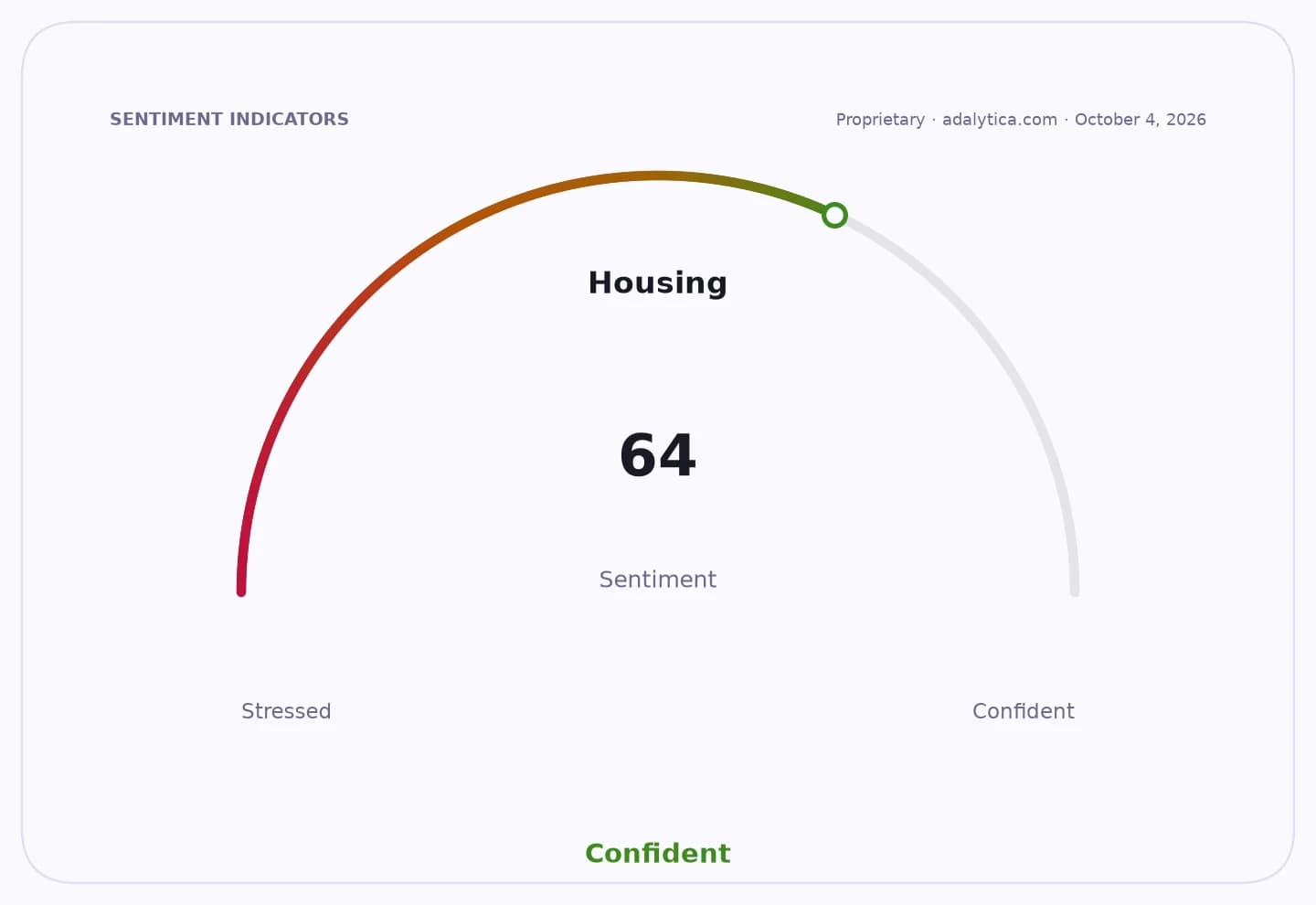
The average five-year fixed mortgage rate in Britain has risen to 6% for the first time in three years, a move that will deepen affordability pressure for homebuyers and for borrowers rolling off cheaper loans.
UK Five-Year Fixed Mortgage Rate Reaches 6%
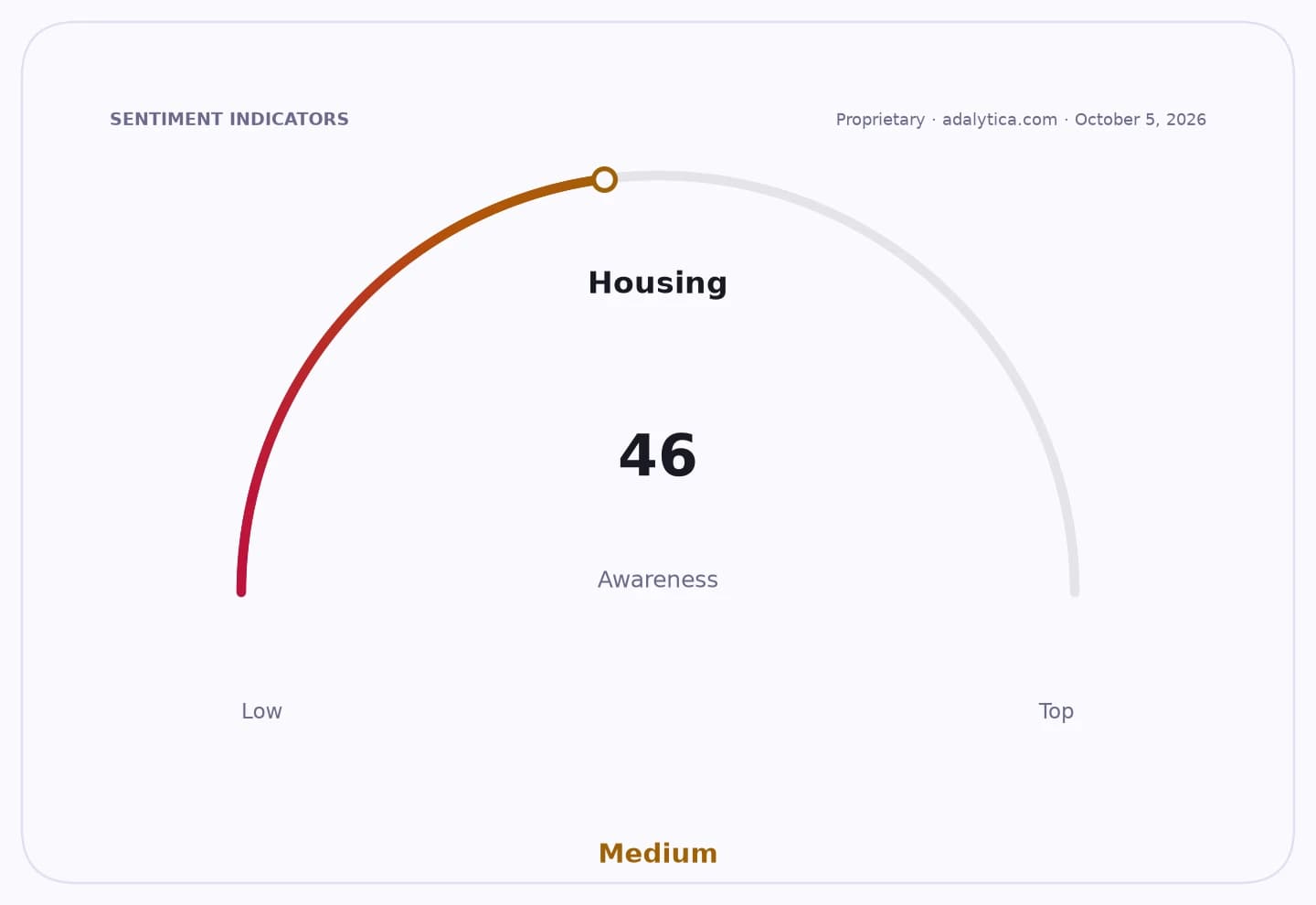
Moneyfacts said the typical five-year fixed homeowner rate reached 6.00% on Monday, up from 5.98% on Friday and the highest since late September 2023. The average two-year fixed deal was also close behind at 5.98%, underscoring how quickly lenders have repriced mortgages as wholesale funding costs rise.
Sentiment IndicatorsⓘProprietary · adalytica.com · October 5, 2026
This is a snapshot — live sentiment, awareness and momentum for 130+ markets update continuously in the dashboard.Open AlphaPulse
The bigger market signal is the collapse in cheap lending. Moneyfactscompare.co.uk said the number of fixed-rate deals below 5% has fallen to just nine from 1,494 at the start of September, excluding Northern Ireland-only products. Including those, the count has dropped to 107 from 1,691. That is not just a rates story; it is a direct hit to housing affordability and to transaction volumes in a market already struggling for momentum.
Rachel Springall, finance expert at Moneyfactscompare.co.uk, said renewed swap-rate volatility was putting “immediate pressure” on lender margins and that higher gilt yields were making further mortgage repricing “inevitable”. In other words, the market that lenders use to hedge and price mortgages has moved against borrowers, and banks are passing that through with little delay.
For households, the impact is mechanical and immediate. A rise of even a few tenths of a percentage point can force buyers to lower budgets, while existing homeowners coming off fixed deals may see monthly repayments jump sharply. That tends to suppress demand, delay moves and weaken the chain of transactions that supports estate agents, brokers and related services.
The housing market implications are clear. Ian Harris of Propertymark said buyers were “sensitive” to mortgage rates and that the disappearance of sub-5% deals would add further pressure to affordability. Sarah Tucker of HomeOwners Alliance said borrowers nearing the end of their deals should review options now rather than wait for relief that may not come quickly.
Investors should read the move through both the housing cycle and lender earnings. Mortgage originators and brokers can benefit from refinancing activity, but only if volumes hold up; persistent rate pressure often means fewer purchases and more rate-shopping rather than healthy market turnover. Homebuilders, estate agents and consumer lenders are more exposed to the demand hit, while mortgage-heavy financial firms may face a tougher mix of slower origination growth and tighter pricing competition.
The macro backdrop remains restrictive. UK mortgage pricing is being driven not by base-rate moves alone but by swap-market costs and higher government bond yields, which can keep borrowing costs elevated even if monetary policy stabilises. That makes the 6% five-year rate less a temporary wobble than a reminder that housing finance is still being set by bond-market conditions.
Unless wholesale rates ease materially, borrowers due to refinance in the coming months are likely to confront a market with fewer cheap options and tighter affordability tests. For the housing market, that points to another period of subdued demand, higher caution among buyers and a slower path back to stability.
| Entity | Gains | Losses |
|---|---|---|
| Lenders | ▲wider pricing margins | ▼loan demand |
| Existing borrowers | ▲— | ▼higher monthly repayments |
| Homebuyers | ▲— | ▼affordability |
| Estate agents / brokers | ▲refinancing activity | ▼transaction volumes |