Mortgage borrowing costs have climbed back above 4% in Germany, adding another layer of strain to an already fragile housing market and making affordability the dominant barrier for buyers.
Germany Mortgage Rates Climb Above 4%
Ten-year home loans are now running at about 4.1% to 4.2%, according to Interhyp and Dr. Klein, up roughly 0.7 percentage points from a year ago. That increase may look modest on paper, but on a €300,000 mortgage it can mean about €250 more a month, enough to force many households to rethink both the property they want and the amount they can borrow.
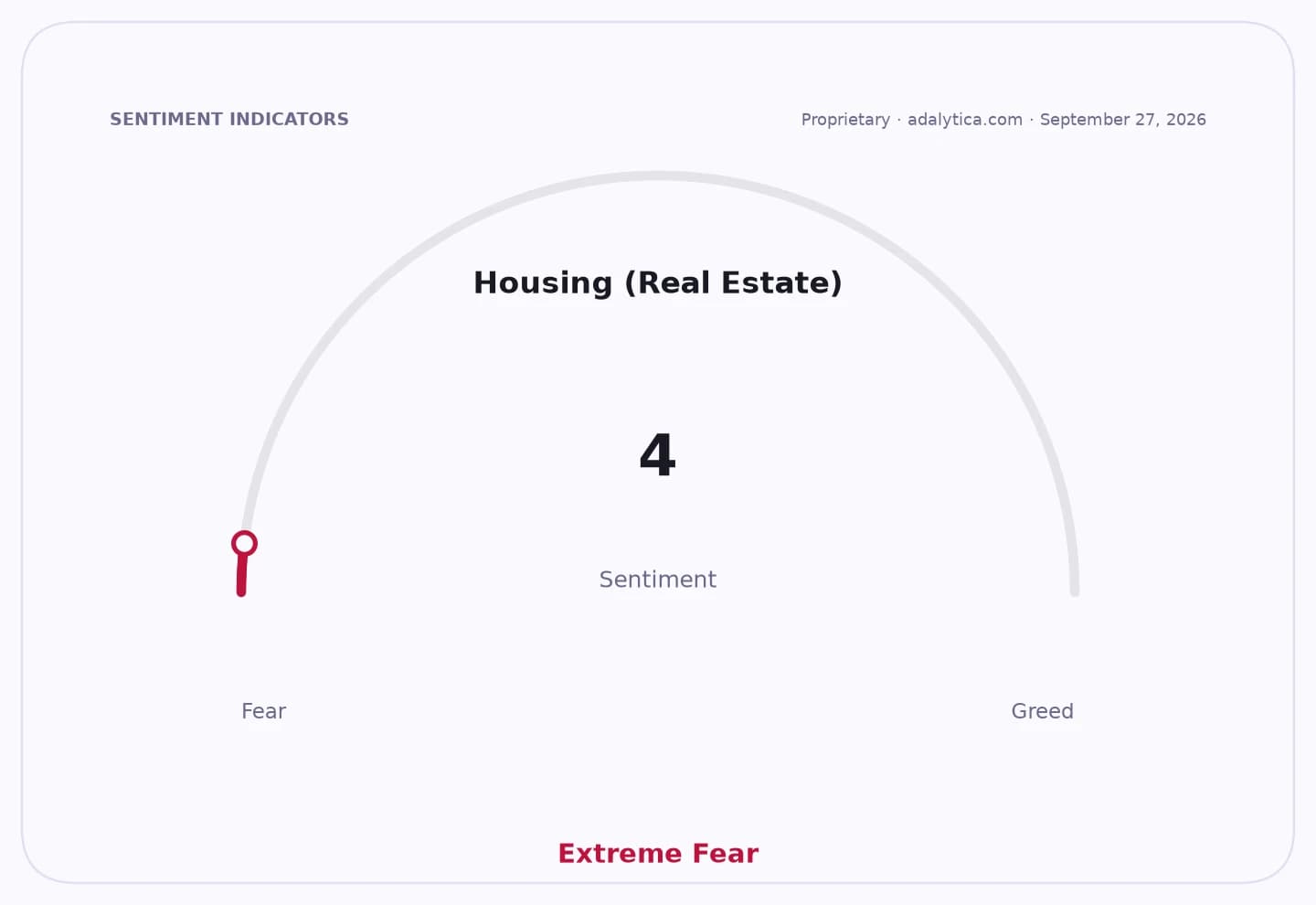
Sentiment IndicatorsⓘProprietary · adalytica.com · September 27, 2026
This is a snapshot — live sentiment, awareness and momentum for 130+ markets update continuously in the dashboard.Open AlphaPulse
The move matters because it reflects a broader rise in long-term funding costs across capital markets. German 10-year Bund yields recently reached their highest levels in more than 17 years, pushing up banks’ refinancing costs and feeding directly into mortgage pricing. With energy prices elevated and inflation fears revived by the Iran conflict, lenders are signalling that the current level is likely to stay above 4% for now.
For the housing market, that is a material headwind. The Bundesbank said demand for residential construction loans in the second quarter fell at the steepest pace in three years, while banks tightened lending standards. The net share of institutions with stricter criteria rose to 7% from 4% in the previous quarter, a sign that the issue is not just higher prices for borrowers but also tougher access to credit.
That combination usually slows transactions, weakens price growth and keeps pressure on developers, brokers and lenders exposed to mortgage origination. It also reinforces a split between buyers with ample equity and those reliant on large loans, who are most sensitive to even small rate changes. For banks, higher rates can support margins in some products, but they also raise credit risk and reduce the volume of new loans.
Energy efficiency is becoming part of the credit equation as well. Banks have tightened lending conditions further for properties with poor energy performance, effectively discounting older, inefficient homes and favouring more efficient stock. That could deepen the gap between well-renovated properties and the rest of the market, with implications for valuations and the cost of capital.
Existing homeowners are not insulated either. As fixed-rate periods expire, refinancing is becoming more expensive, though the effect is partly cushioned by lower outstanding balances after years of amortisation. Forward loans can lock in today’s rates, but they come with a premium and only make sense if borrowers expect further increases. For now, the more important message for investors and homebuyers is that the financing side of the housing market has again become the binding constraint.
The next catalyst is whether bond yields ease if inflation pressures recede. If they do, mortgage rates should follow. If they do not, Germany’s housing slowdown is likely to deepen, keeping pressure on construction activity, transaction volumes and the broader household wealth effect.
| Entity | Gains | Losses |
|---|---|---|
| Banks | ▲Higher lending spreads | ▼Lower mortgage demand |
| Buyers with cash/equity | ▲Better negotiating power | ▼None material |
| Leveraged homebuyers | ▲None | ▼Higher monthly payments |
| Homebuilders and brokers | ▲None | ▼Weaker sales volumes |