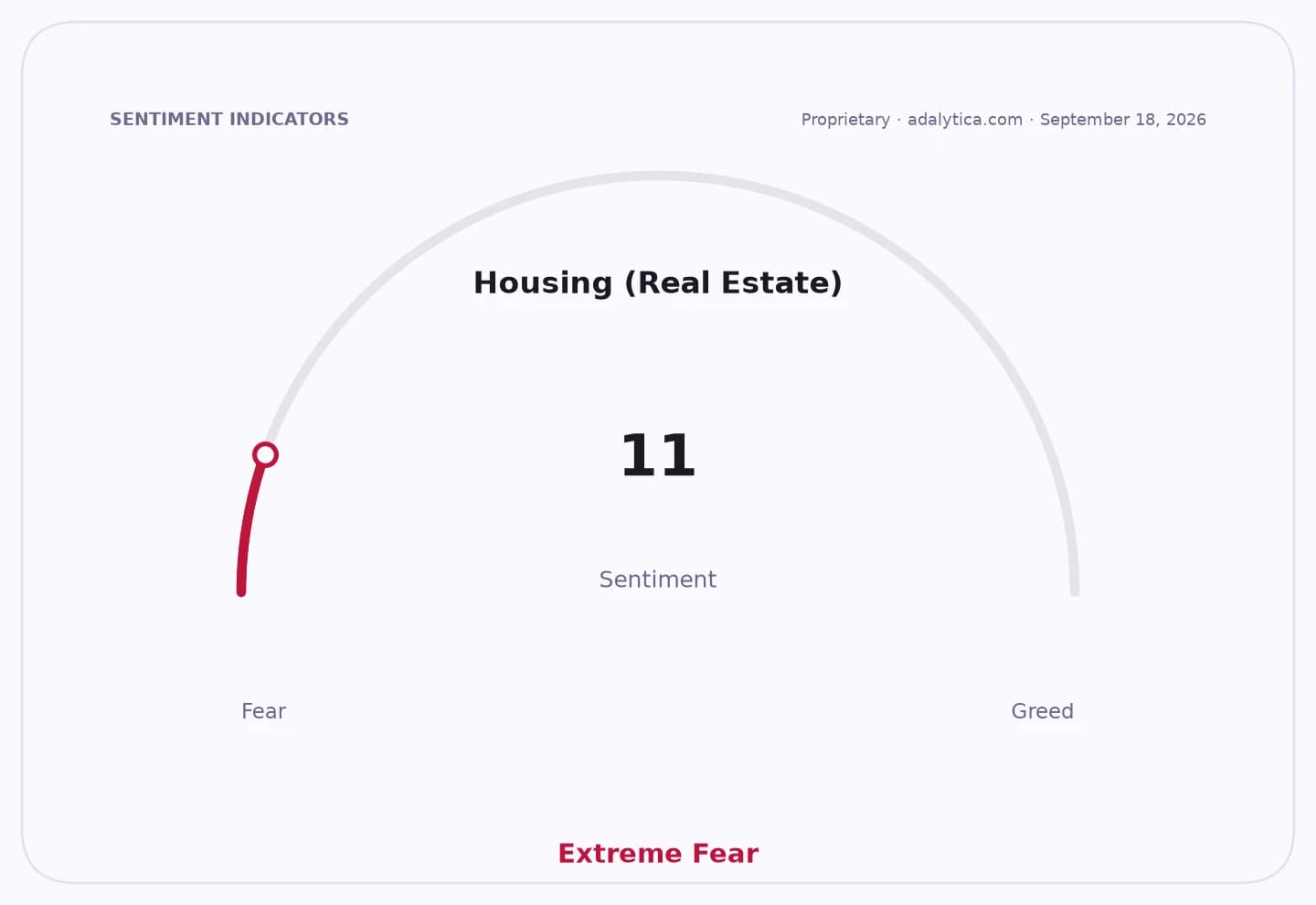
Mortgage costs are rising fast enough to change homebuying decisions, with fixed rates in Sweden climbing to levels that can add about SEK 1,250 a month to a borrower’s bill and the average U.S. 30-year mortgage now above 7% for the first time in two years.
U.S. mortgage rates top 7%, housing stocks fall

That is not a small rate move — it is an affordability shock. When financing costs jump this sharply, the effect is immediate: households qualify for less debt, sellers lose pricing power and housing turnover slows. For central banks and policymakers, the message is equally clear: even if inflation is easing, borrowing conditions remain tight enough to restrain demand and keep the housing channel transmitting monetary policy.
Sentiment IndicatorsⓘProprietary · adalytica.com · September 25, 2026
This is a snapshot — live sentiment, awareness and momentum for 130+ markets update continuously in the dashboard.Open AlphaPulse
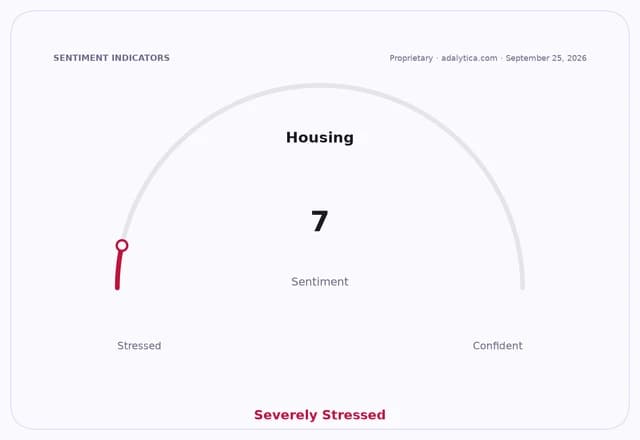
The pressure is showing up across markets. U.S. Treasury yields remain elevated, with the 10-year note around 5.08%, the 2-year at 4.84% and the 30-year near 5.37% in the latest data, a level that helps explain why mortgage rates have stayed so high. That backdrop is also weighing on rate-sensitive assets. The iShares 20+ Year Treasury Bond ETF, TLT, has fallen to 79.42 from above 88 earlier in the year, and its 50-day moving average has rolled over below the 200-day average, a sign fixed-income traders remain wary that yields will stay sticky.
Housing equities are feeling the same squeeze. The iShares U.S. Home Construction ETF, XHB, has dropped to 96.80 from more than 110 in midsummer, while the iShares U.S. Real Estate ETF, IYR, has slid to 96.81 from above 103. Both are now trading well below their 50-day moving averages, reflecting investor concern that higher mortgage costs will curb demand, stretch affordability and limit pricing power across residential real estate.
The market is still underestimating how powerful this second-order effect can be. A mortgage payment increase of SEK 1,250 a month does not just hurt buyers at the margin; it alters the entire housing ecosystem. Fewer transactions mean less fee income for lenders, weaker demand for builders and softer support for home prices, which can hit consumer confidence and spending.
There is a clear winners-and-losers setup here. Banks with mortgage books can enjoy higher nominal lending rates, but they also face slower origination volumes. Homebuilders and real estate funds lose from weaker demand and lower turnover. Bond bulls gain if growth softens enough to pull yields down later, but for now the market is still pricing a prolonged period of tight financial conditions.
The investment takeaway is straightforward: as long as mortgage rates stay near cycle highs, the most attractive opportunities are not in the most obvious housing names but in the companies that benefit from a slower, more expensive home market — and in high-quality rate beneficiaries that can compound while housing demand cools. The next catalyst will be whether yields break lower; until then, affordability remains the dominant story.
| Entity | Gains | Losses |
|---|---|---|
| Banks / lenders | ▲Higher loan yields | ▼Slower mortgage origination |
| Homebuilders | ▲— | ▼Weaker demand, fewer sales |
| REITs / housing funds | ▲— | ▼Lower pricing power, softer asset values |
| Treasury bond investors | ▲Potential later rally if growth slows | ▼Near-term mark-to-market pressure |