Vonovia shares are under renewed pressure as Germany’s highest mortgage costs in more than a decade curb homebuying, slow transactions and threaten to weaken the recovery in the country’s housing market.
Vonovia Shares Fall on Higher German Mortgage Rates

The immediate problem for the sector is not just higher borrowing costs, but the way they are feeding through into demand, pricing power and development activity. The Hamburg-based Gewos institute now expects German residential property transactions to fall 4.4% this year to about 612,000, with turnover slipping 2% to just under 211 billion euros as buyers defer purchases and banks tighten lending standards.
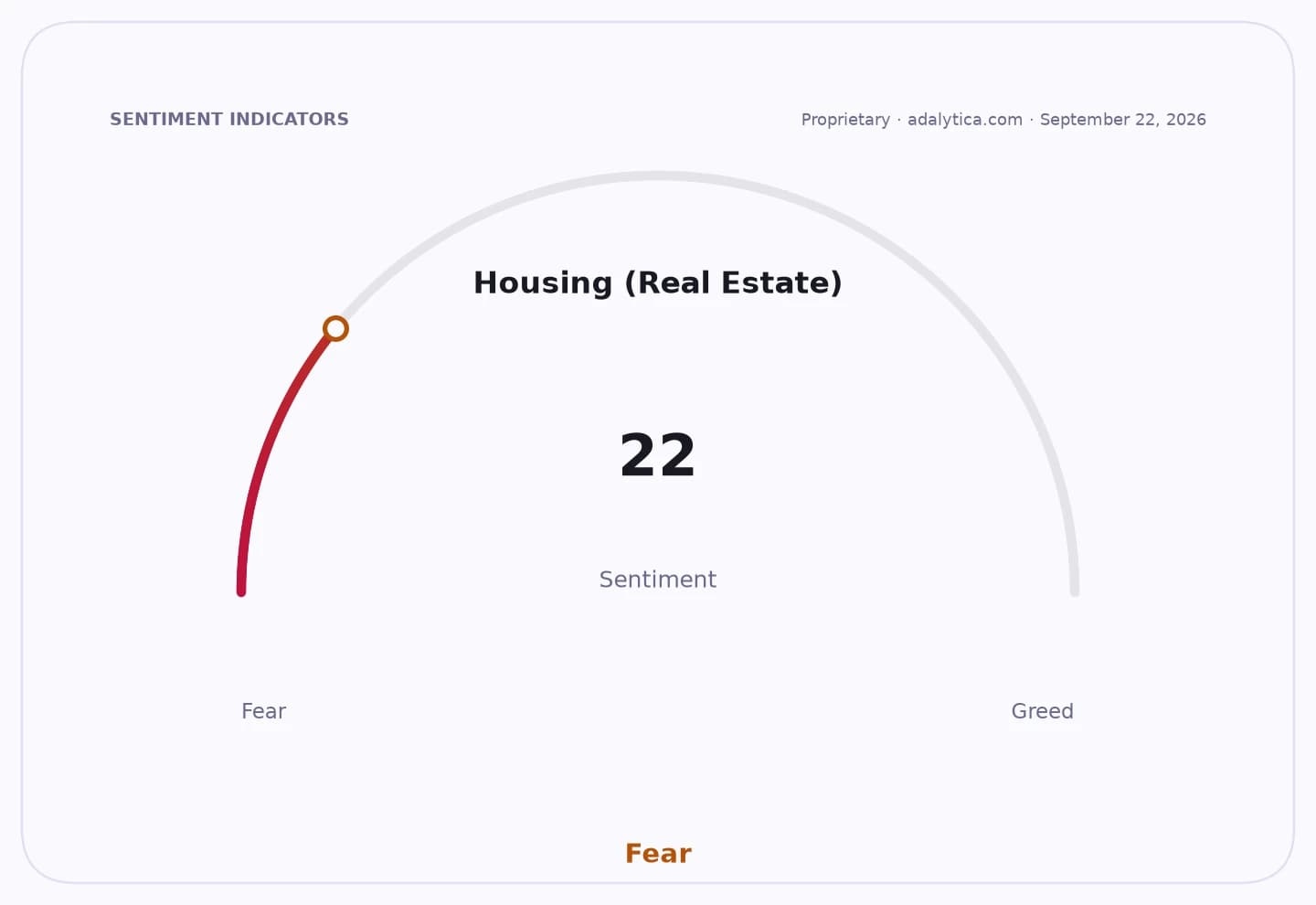
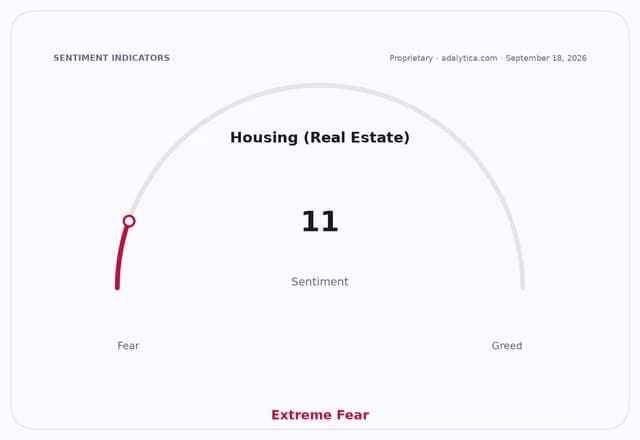
Sentiment IndicatorsⓘProprietary · adalytica.com · September 18, 2026
This is a snapshot — live sentiment, awareness and momentum for 130+ markets update continuously in the dashboard.Open AlphaPulse
That matters because housing is a rate-sensitive asset class, and the current backdrop is turning what had looked like a cyclical rebound into another period of stagnation. Ten-year German building loans have climbed to about 4.25%, the highest since May 2011, according to Barkow Consulting, with some market participants warning they could approach 4.5%. For households, even modest increases in mortgage rates can push monthly payments beyond affordability thresholds. For developers and landlords, weaker transaction volumes tend to slow price discovery, delay new projects and weigh on valuations.
Gewos said demand for home ownership took a “considerable hit” in the second quarter, reflected in fewer inquiries on property portals and longer marketing periods. It sees the sharpest decline in 2026 likely in single-family home purchases, while land sales and housing starts may also lose momentum if financing stays this expensive. Mehrfamilienhäuser, or apartment blocks, may hold up somewhat better because rising rents support investor returns, but the broader market is still being squeezed by inflation, war-related uncertainty and a more cautious banking sector.

For Vonovia, Germany’s largest listed residential landlord, the pressure is less about near-term occupancy — which remains comparatively resilient — than about the valuation and funding environment that determines its equity rating. Real estate groups across Europe have been caught in the same downward spiral as higher discount rates reduce asset values and investors demand a wider risk premium. Vonovia fell as much as 0.20% in premarket Tradegate trading to 17.81 euros, while TAG Immobilien dropped 0.61% to 11.36 euros.
The stock’s latest weakness reflects the same macro logic hitting the broader sector: when borrowing costs stay elevated, housing affordability erodes, transactions slow and the case for a faster recovery in German property prices gets pushed out. Bulls will argue that persistently tight supply and rising rents should eventually cushion landlords with large rental books. Bears will point to the risk that high financing costs keep suppressing activity, prolonging the pressure on asset values and limiting upside for the shares.
For investors, the key catalyst remains the path of rates. If borrowing costs stabilise or fall, housing demand could recover quickly from depressed levels. If they remain near current highs, Germany’s residential market may continue to underperform, leaving Vonovia and peers trading more as rate proxies than as traditional property stocks.
| Entity | Gains | Losses |
|---|---|---|
| Vonovia and peers | ▲Higher rents support income | ▼Lower valuations and weaker sentiment |
| Homebuyers | ▲Potentially more negotiating power | ▼Affordability worsens |
| Builders and developers | ▲Few, if any, near-term beneficiaries | ▼Slower sales and fewer projects |
| Banks with tighter lending | ▲Lower credit risk | ▼Lower loan growth and fees |