House prices are coming under pressure as mortgage rates stay elevated, but the ultra-prime end of the market is holding up because the world’s richest buyers are treating trophy homes less like shelter and more like a store of wealth.
Housing Market Split Between Luxury and Mass Market
That divide matters because it shows the housing slowdown is not a single market story. It is a capital-allocation story. Middle-income buyers are being squeezed out by borrowing costs and weak affordability, while buyers writing checks for villas and penthouses in the tens or hundreds of millions of dollars are largely insulated from financing conditions. In other words, the same rate environment that is crushing demand for ordinary homes is barely touching the wealthiest cohort — and that is reshaping where the money is still flowing in real estate.
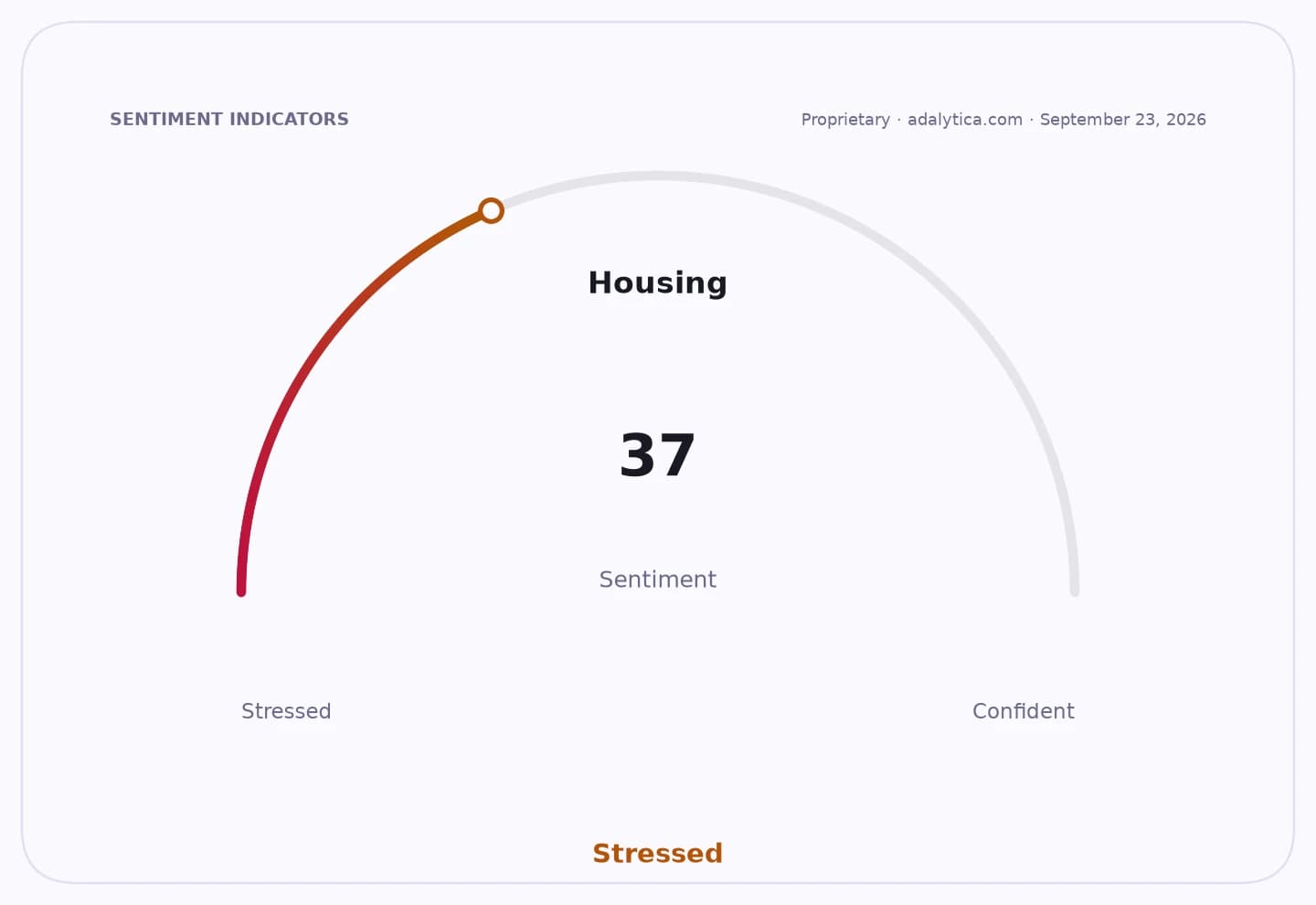
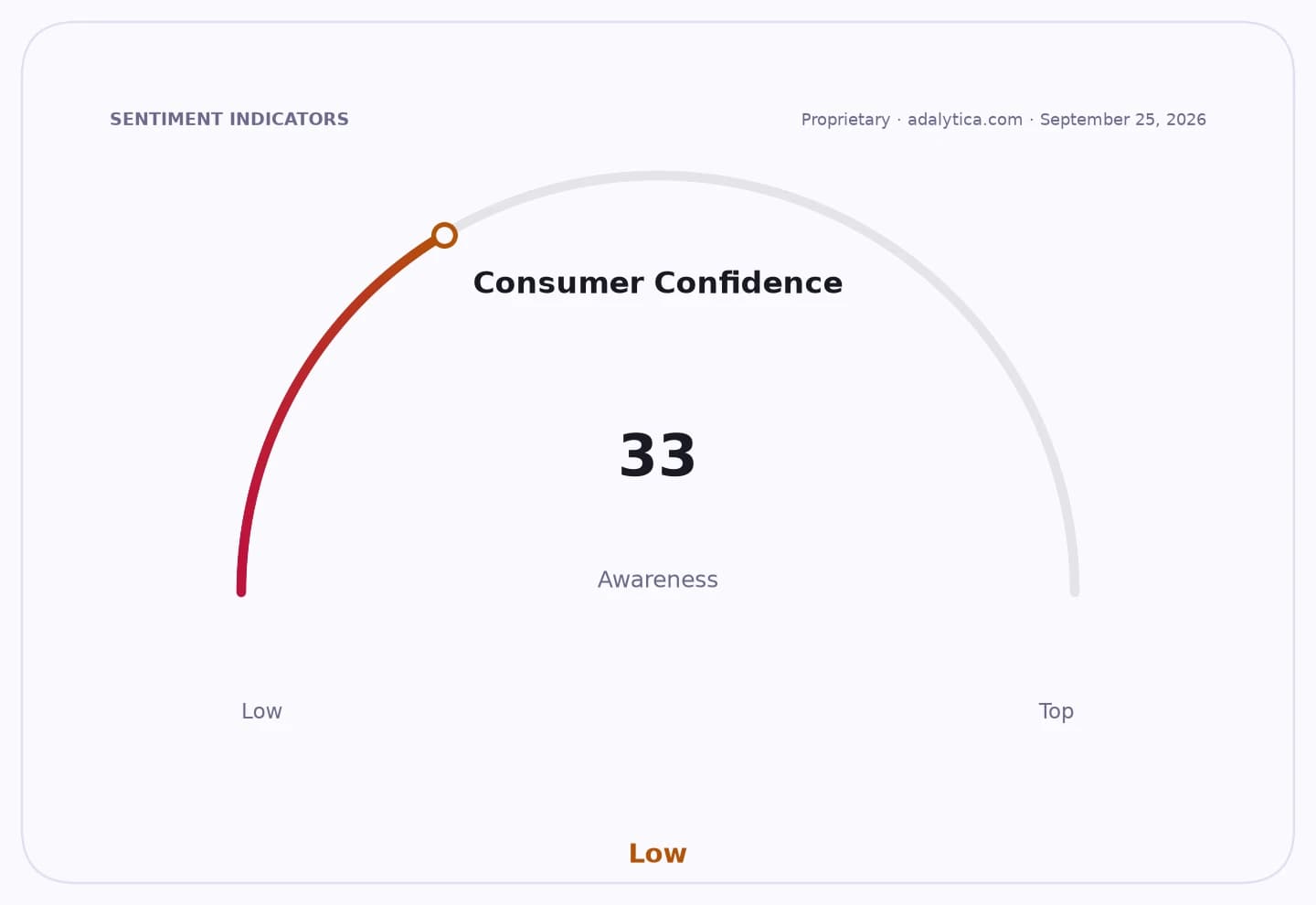
Sentiment IndicatorsⓘProprietary · adalytica.com · September 19, 2026
This is a snapshot — live sentiment, awareness and momentum for 130+ markets update continuously in the dashboard.Open AlphaPulse
The macro backdrop is straightforward. The 30-year mortgage rate is around 6.95%, up sharply from 4.99% in early 2022, while the U.S. unemployment rate remains low at 4.1% to 4.2%. That combination usually keeps the economy afloat but freezes housing turnover: buyers can afford less, sellers resist cuts, and transaction volumes fall. OpenDoor’s own filings say the U.S. housing market remains constrained by elevated mortgage rates and affordability challenges, with existing-home sales around 4 million units, a 30-year low and roughly 20% below pre-pandemic levels.
That stress is showing up in the broader housing complex. Adalytica’s Housing Fear & Greed Index for XHB is in “Fear” territory at 19, while its housing-and-rent inflation sentiment is at an “Extreme Fear” reading of 7. The message is clear: the market is pricing in continued weakness in mainstream housing demand, even if labor conditions have not yet broken badly enough to force a broader property collapse.
But luxury real estate is playing a different game. At the top end, buyers are often insulated from mortgage rates, using cash, offshore capital or balance-sheet liquidity rather than leverage. That gives trophy assets a quasi-defensive quality in periods of financial uncertainty. For wealthy families and investors, prime property can function as a portable store of value, a diversification tool and, in some markets, a hedge against currency and political risk. The result is a bifurcated market: average homes are rate-sensitive; super-prime homes are wealth-sensitive.
That is exactly why the market underestimates the second-order beneficiaries. If luxury demand stays resilient while mass-market housing weakens, the winners are not just trophy-home sellers. It also supports high-end brokers, luxury-oriented platforms, premium developers, and owners of scarce urban and resort land. By contrast, lenders, iBuyers, and transaction-heavy housing businesses remain exposed to the volume slump. Zillow’s shares, for example, have already fallen hard, and its price is now trading well below both the 50-day and 200-day moving averages, reflecting investor concern that weaker turnover will keep pressuring activity across the resale market.
The bigger narrative is that housing is splitting into two asset classes. One is a consumer market dominated by financing conditions and affordability. The other is a global wealth market driven by capital preservation, scarcity and prestige. That split should keep pressure on broad housing-linked equities, while making ultra-luxury exposure a more durable, less rate-sensitive niche.
For investors, the takeaway is simple: do not assume “housing weakness” hits every segment equally. The real opportunity is in the picks-and-shovels of scarcity — premium brokerages, luxury developers, prime-market landlords and global real estate platforms tied to the very wealthy — while avoiding businesses that need broad-based mortgage-driven turnover to grow. The next leg of this cycle belongs to capital-preservation assets, not affordability-sensitive housing.
| Entity | Gains | Losses |
|---|---|---|
| Ultra-wealthy buyers | ▲Asset preservation | ▼Mortgage sensitivity |
| Luxury brokers/developers | ▲Scarcity pricing power | ▼Mass-market slowdown |
| Zillow / open-market housing platforms | ▲N/A | ▼Lower transaction volumes |
| Homebuyers needing financing | ▲Lower prices, maybe later | ▼High borrowing costs |