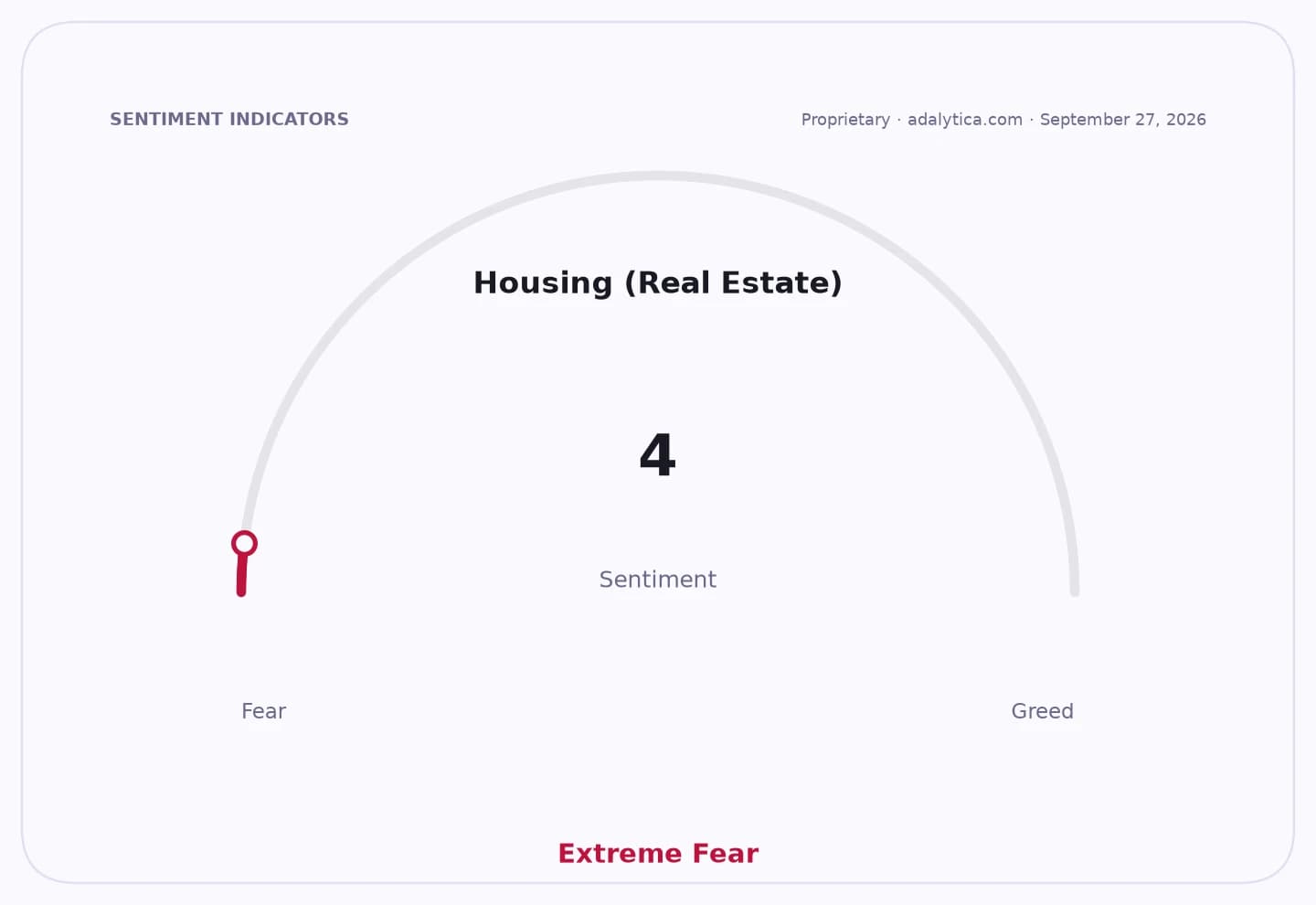
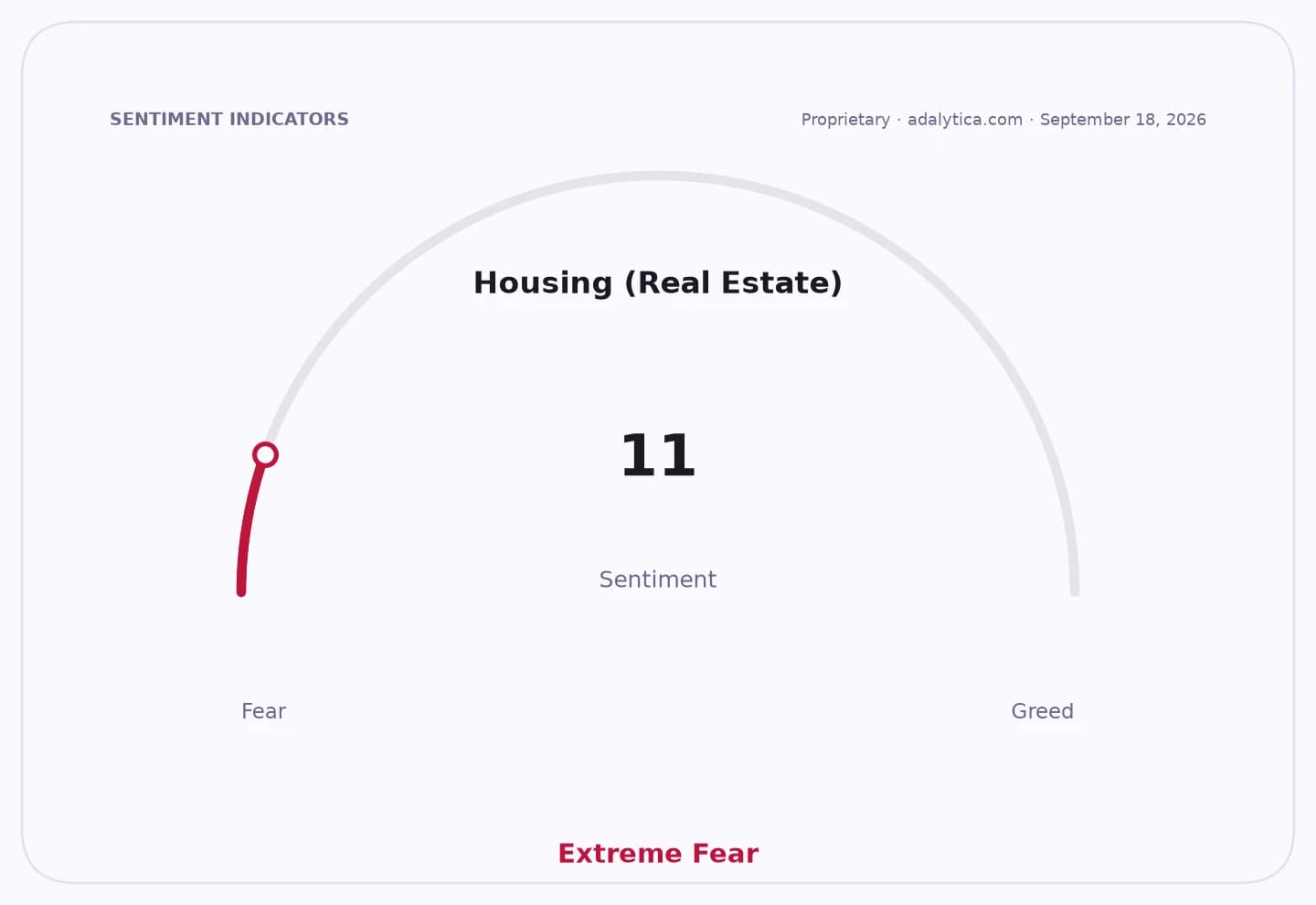
Paying off a mortgage over 25 years, and in some cases 30, is becoming the practical default as Europe’s higher-rate regime and a shortage of homes push monthly costs beyond what many households can afford.
Europe Uses Longer Mortgages to Offset Higher Rates
The shift matters because it shows how affordability is being preserved not through lower prices, but by extending debt maturities and spreading the same principal over more years. That can keep transactions alive, but it also raises the lifetime cost of homeownership, increases banks’ interest income and leaves borrowers more exposed to future rate resets.
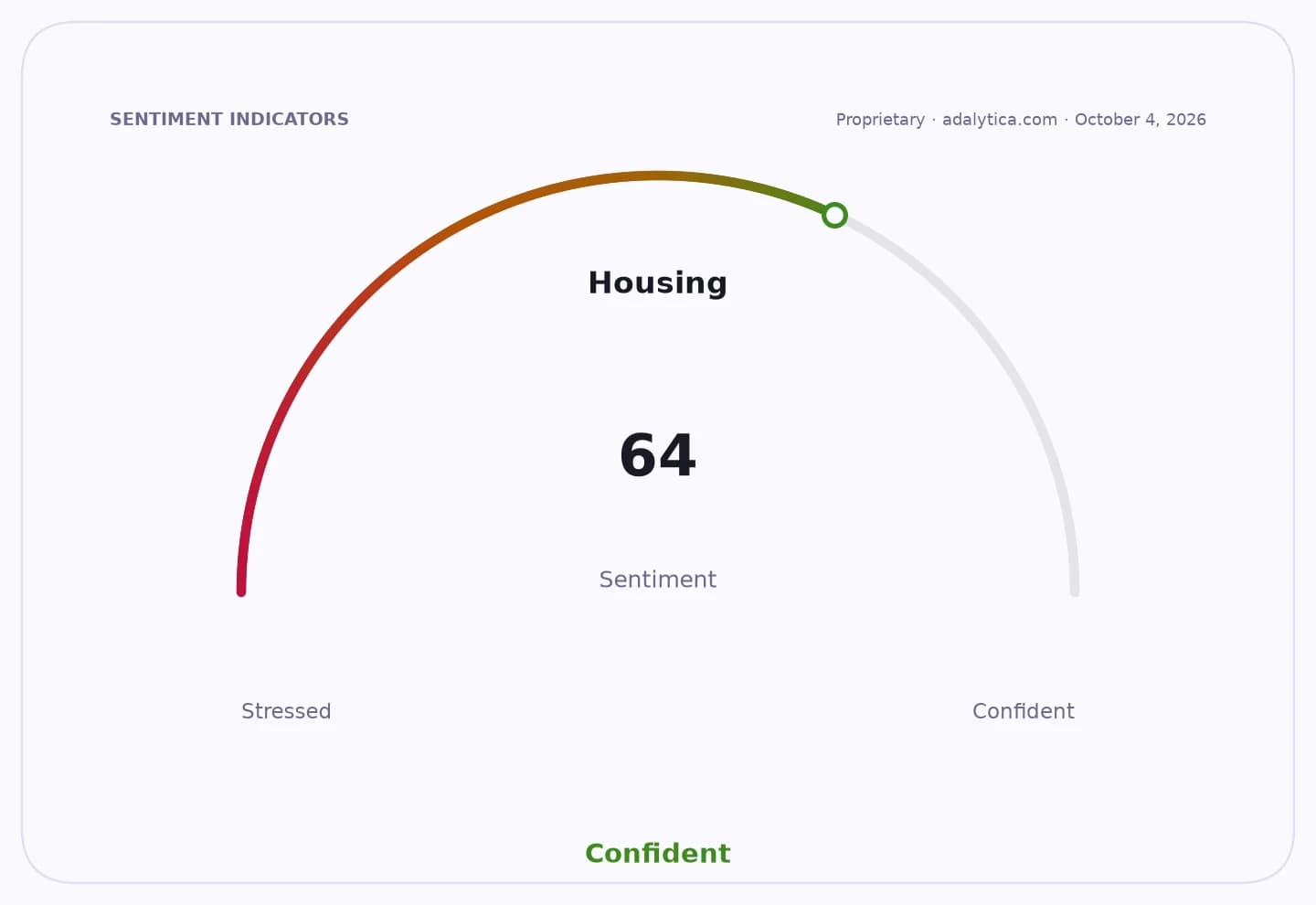
Sentiment IndicatorsⓘProprietary · adalytica.com · October 4, 2026
This is a snapshot — live sentiment, awareness and momentum for 130+ markets update continuously in the dashboard.Open AlphaPulse
In Spain, where officials say there is a “systemic housing deficit,” prices continue to rise even as Euribor has climbed above 3%, making standard monthly payments materially heavier than they were a year ago. The arithmetic is straightforward: a one-point move in Euribor on a €200,000 mortgage over 25 years adds roughly €100 a month, before accounting for any increase in the property price itself. For many buyers, that combination is enough to push them out of the market.
The macro backdrop is not confined to Spain. Across developed housing markets, higher benchmark rates have strained affordability and forced lenders and policymakers to find longer loan structures that preserve access to credit. U.S. data show mortgage rates and Treasury yields remain elevated by recent historical standards, even after a pullback from earlier peaks, keeping pressure on housing turnover. The 10-year Treasury yield has been trading around 5.3%, while the iShares MBS ETF, MBB, has slipped below both its 50-day and 200-day moving averages, a sign the mortgage bond market is still struggling with duration risk and rate volatility.
That tension is showing up in housing-related stocks. The iShares U.S. Home Construction ETF, ITB, has fallen sharply from earlier-year highs and remains below its 50-day and 200-day averages, reflecting concern that affordability constraints will cap sales volumes even if homebuilders keep using incentives and mortgage buydowns to move inventory. U.S. mortgage applications and housing activity have also remained uneven, underscoring how sensitive buyers are to every move in borrowing costs.
For banks and mortgage lenders, longer terms can support origination volumes and keep monthly payment burdens manageable, but they also mean slower principal repayment and more interest revenue over the life of the loan. For borrowers, the trade-off is less attractive: lower monthly payments now, but higher total borrowing costs and a longer period before building equity. That can be especially problematic in markets where prices are still rising, because extending the term does not solve the underlying supply shortage.
The bull case for longer mortgage maturities is that they widen access to ownership at a time when wages are not keeping pace with housing costs. The bear case is that they delay the affordability problem rather than resolve it, locking households into higher cumulative debt and making the system more dependent on cheap funding and stable employment.
Investors should watch whether policymakers and lenders keep leaning on maturity extension as the primary affordability tool, or whether housing supply measures and lower benchmark rates begin to do more of the work. Until then, 25-year mortgages — and in some cases 30-year structures — look less like an exception than a sign of a market still adjusting to a cost of money that has not returned to its old normal.
| Entity | Gains | Losses |
|---|---|---|
| Borrowers | ▲Lower monthly payments | ▼Higher lifetime interest |
| Banks/Mortgage lenders | ▲More interest income | ▼Slower principal runoff |
| Homebuilders | ▲Preserved demand | ▼Margin pressure from incentives |
| Prospective buyers | ▲Wider access to credit | ▼More years of debt |